REVIEW · ENVIGADO
Pablo and the drug trafficking world
Book on GetYourGuide →Operated by PaisaTrips · Bookable on GetYourGuide
Medellín’s dark story hits close up. This Pablo Escobar and Medellín cartel tour strings together the places where Escobar lived, hid, built his own prison, grew up, is buried, and was ultimately found—then explains how it all connected to Colombia’s violence and survival. What I especially like is the small-group feel (up to 4 people) and the use of visuals—Juan Eduardo shares photos to keep the timeline clear without turning it into sensational TV.
One thing to keep in mind: this is heavy material. You’ll be visiting real sites tied to crime and harm, and access details can vary—at La Catedral, some areas shown in promotional photos may not be reachable on the day you go.
In This Review
- Key reasons this tour works in Medellín
- What you’re really doing on a Pablo Escobar history tour
- Small-group pacing, English/Spanish, and the “no chaos” advantage
- Your route through Pablo’s world: five core stops that tell the story
- 1) A house turned memorial park
- 2) La Catedral, the prison he built for himself
- 3) The place where he grew up as a teenager
- 4) Jardínes Montesacro and Escobar’s grave area
- 5) The house where he was hiding and was shot
- The “extra stops” that add local texture (Pastelería Emmy and more)
- Why Juan Eduardo’s method works: photos, examples, and respectful tone
- Getting comfortable: timing, sun, snacks, and the “bring a copy” rule
- Transport and safety: why the car route feels better than public transit
- Optional add-on: meeting his brother
- Price and value: is $50 fair for this Medellín itinerary?
- Who should book this tour (and who might want to skip it)
- Should you book Pablo and the drug trafficking world in Medellín?
- FAQ
- How long is the Medellín Pablo Escobar history tour?
- Where do I get picked up for the tour?
- Is the tour available in English and Spanish?
- How many people are in the group?
- What’s included in the price?
- What should I bring with me?
- Is the optional meeting with Escobar’s brother included?
Key reasons this tour works in Medellín
- Up to 4 people means more time to ask questions and less rushing between stops
- 5 main Pablo-related sites give you the full arc, not just the highlights
- Juan Eduardo uses photos and example-based explanations so names and events make sense
- Car-based route helps you cover important areas without long public-transit hops
- A pacing built for “tour as lesson”: you’ll have time to take photos and absorb what you’re seeing
What you’re really doing on a Pablo Escobar history tour
A lot of Medellín tours show pretty views and quick photo stops. This one does something different: it builds context around why this city was once so hard—and why people still remember the damage.
Escobar’s story isn’t only about a single man. On this tour, you connect the dots between his rise, the tactics of the Medellín cartel era, and what those choices did to neighborhoods, institutions, and everyday life. The goal isn’t to glorify. It’s to help you understand how a city can be reshaped by fear, power, and money—and then rebuild its way forward.
You can also read our reviews of more tours and experiences in Envigado.

Small-group pacing, English/Spanish, and the “no chaos” advantage
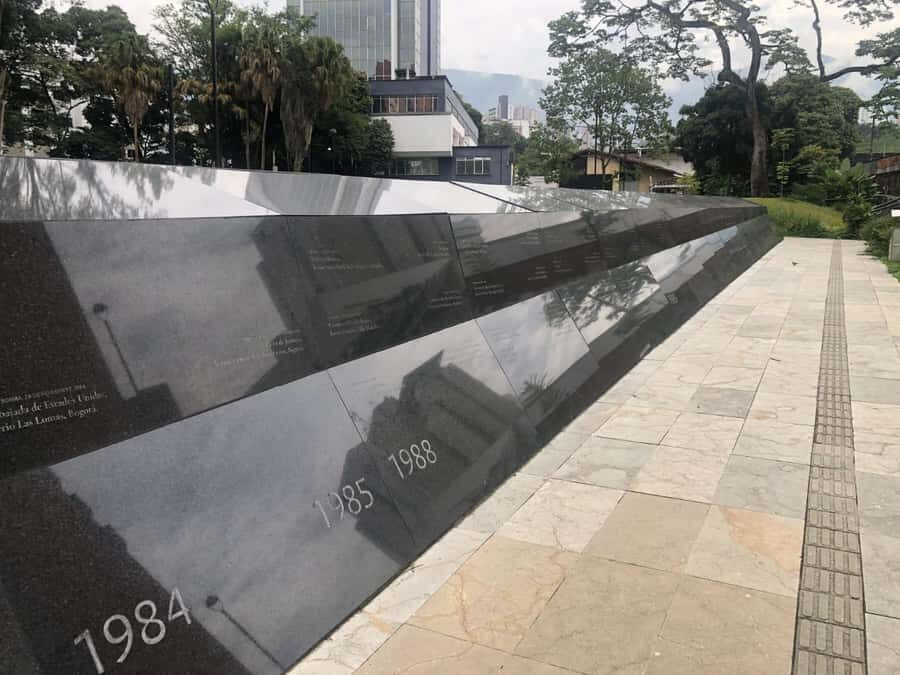
This tour runs about 270 minutes (roughly 4.5 hours) and it’s designed as a manageable plan rather than a frantic checklist. You’ll start with pickup from two options: Laureles (Primer Parque de Laureles) or Poblado (Éxito Wow Poblado). In the afternoon, they shift you to Primer Parque de Laureles to handle rush-hour flow more efficiently.
The small group limit (max 4 participants) changes the whole experience. You’re not squeezed into a big bus where questions get swallowed by noise. In the car, the guide can slow down when something matters to you—like a detail about how Escobar operated or why a certain place became significant.
You’ll also have English/Spanish support on the day of your booking. If you’re splitting languages (friends or family with mixed Spanish/English), this setup can be a big plus because you won’t feel left behind.
Your route through Pablo’s world: five core stops that tell the story
The tour is structured around five main Pablo Escobar sites, then adds a couple of practical local pauses so the day doesn’t feel like pure driving.
1) A house turned memorial park
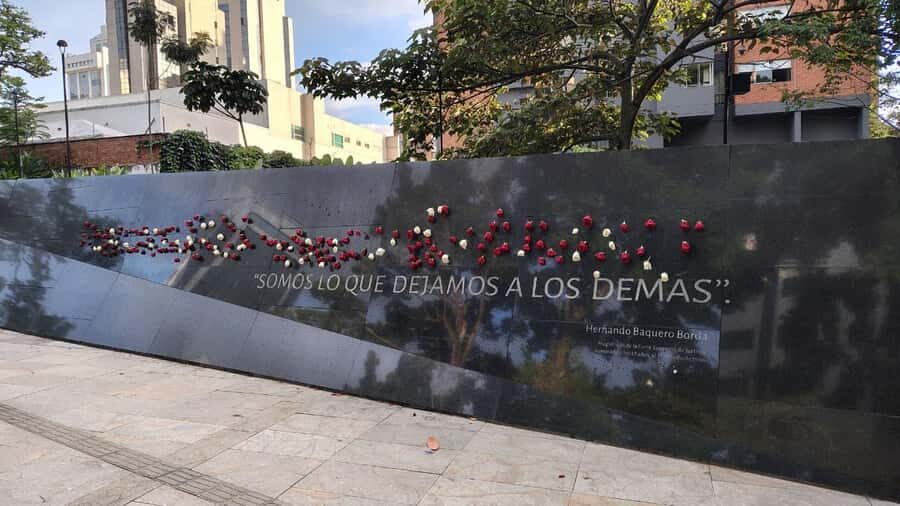
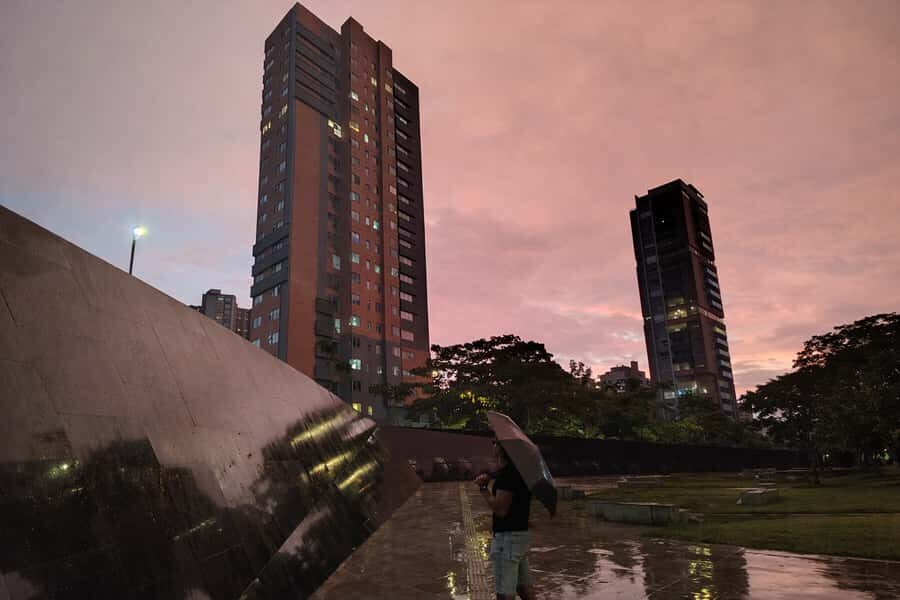
Your first major stop is one of Escobar’s houses, which today functions as a memorial park. Standing there helps you understand how the past stays physically present. It’s not just an idea from a documentary—it’s a location people can visit, reflect on, and compare against how Medellín looks now.
2) La Catedral, the prison he built for himself
Next is La Catedral, the prison Escobar built and used as his own controlled space. If you only visited Medellín’s usual tourist viewpoints, you’d miss this key piece of the story: the contradiction of power—how someone could be both hunted and protected by systems he influenced.
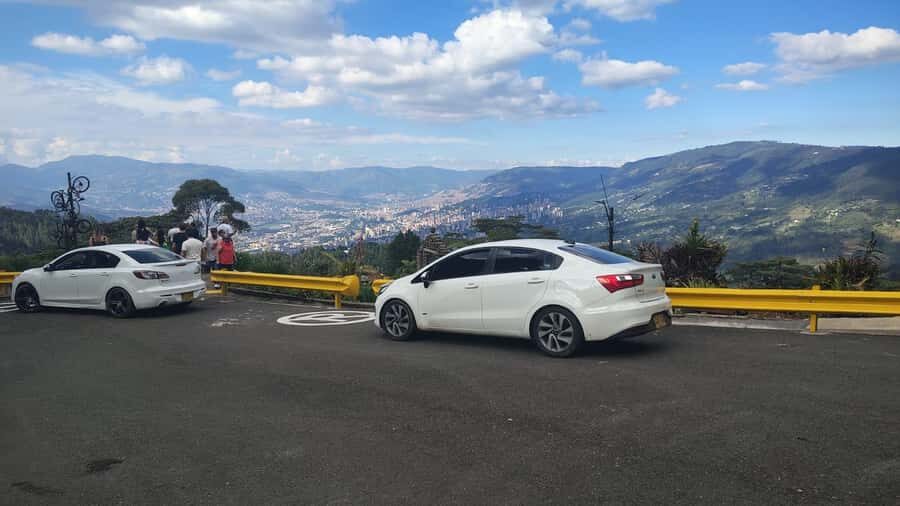
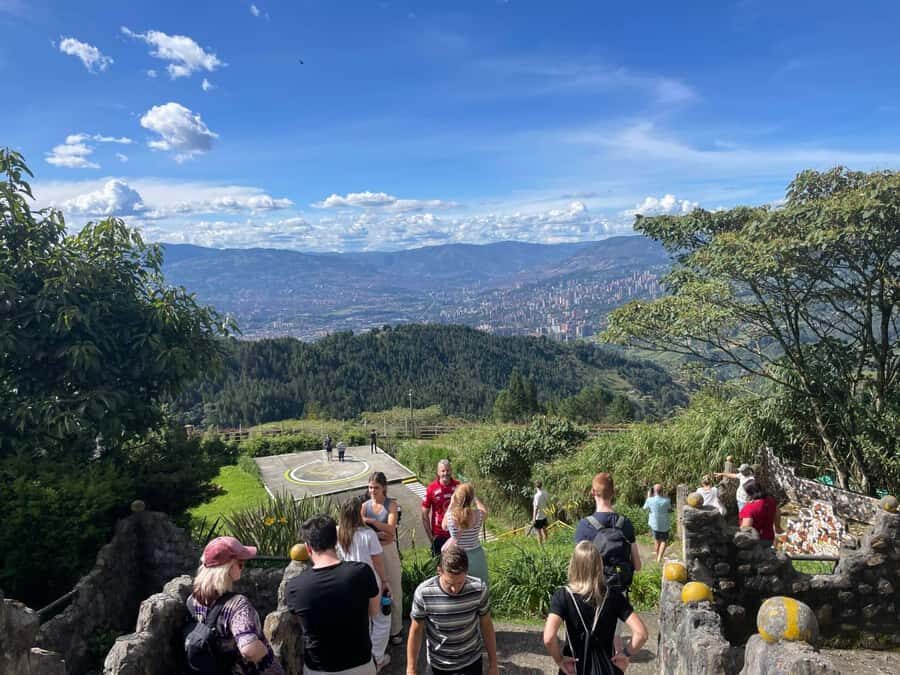
This stop also matters because it gives you a sense of scale and location. Many people love La Catedral for the combination of historical weight and the outward-looking views from the mountain setting, even when you keep your focus on what happened there.
Practical note: access can be limited depending on conditions. In other words, don’t build your expectations around one specific photo angle you’ve seen online.
3) The place where he grew up as a teenager
Then you move to the neighborhood/site where he grew up as a teenager. This is an important balance point. It answers a question documentaries sometimes dodge: how does a person go from local life to cartel power?
Seeing the area in real time helps you connect early environment with later choices—without needing to turn it into an excuse story. It’s simply part of the full timeline.
4) Jardínes Montesacro and Escobar’s grave area
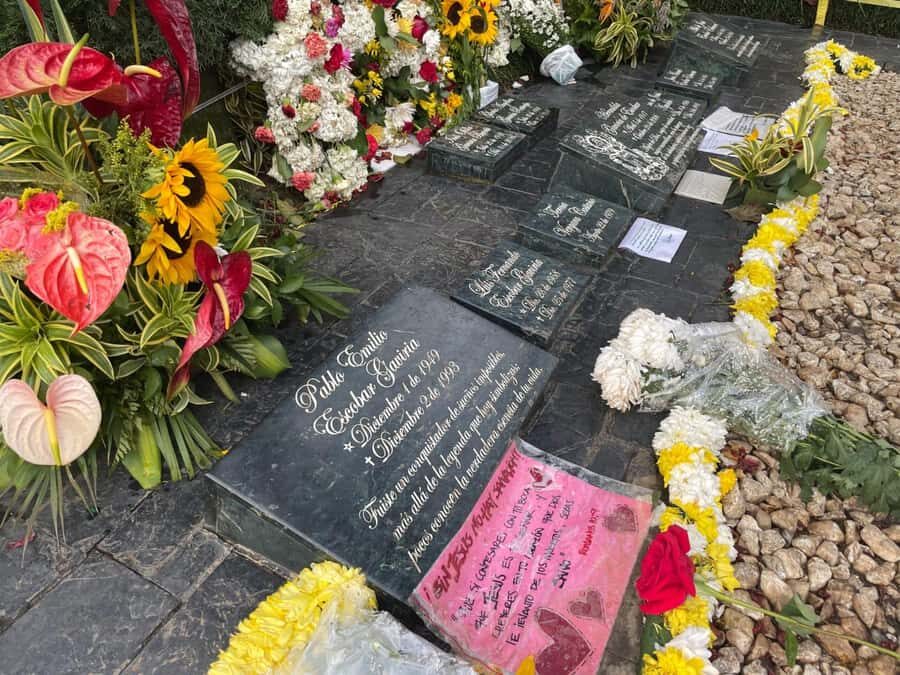
You’ll visit his grave—listed as part of the core five sites—and the route includes a stop at Jardínes Montesacro. This is where the story stops being abstract. Whether you agree with the hype around him or not, his final resting place underlines how long the impact has lasted.
This isn’t the place for shock tourism. Go in calm. I found it helps to remember this is also about mourning and memory for the victims and communities affected by cartel violence.
5) The house where he was hiding and was shot
The final major site ties to the ending: the house where Escobar was hiding and found—the place where he was shot. You’ll feel the story tighten here. The guide’s explanations connect the final chase with earlier patterns, so the end doesn’t come out of nowhere.
The “extra stops” that add local texture (Pastelería Emmy and more)
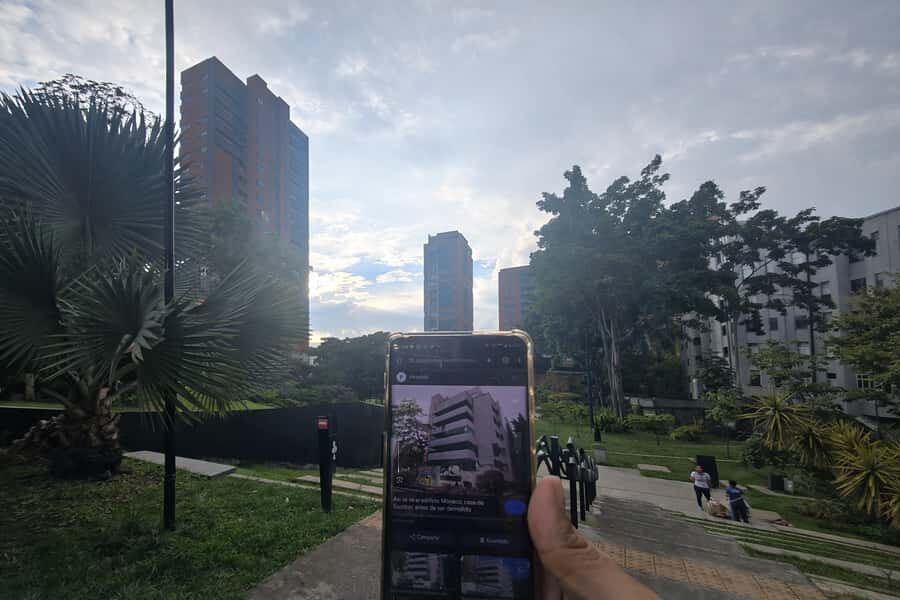
Not every stop in the schedule is one of the five headline sites, but each one has a job.
For example, the itinerary includes a visit at Restaurante Pastelería Emmy (25 minutes). That kind of pause does two things: it gives you time to regroup, and it grounds the day in Medellín’s normal rhythm. You’re not only moving through crime-history locations—you’re moving through a living city.
There’s also a stop at Cancha El Dorado (15 minutes) and another map-point stop with a specific location code (25 minutes). Since these are treated as meaningful stops on the route, the guide uses them to explain context as you pass through or stand near the area—often with a focus on how the cartel era shaped local spaces.
If you’re the kind of person who likes your history with real-world bearings, these pauses are useful.
Why Juan Eduardo’s method works: photos, examples, and respectful tone
This is the part that makes a big difference between a basic Pablo Escobar tour and one you remember.
Juan Eduardo’s approach centers on clarity. He explains how Escobar became a drug dealer and frames it with pictures, examples, and a timeline you can actually follow. The visual support isn’t decoration—it helps you map names, dates, and places to what you’re seeing outside the window.
I also like how the tour keeps the tone serious. The subject is rough, but it’s handled as history and consequence, not as entertainment for shock value. You’ll hear the story explained in a way that gives you room to think, not just react.
And because you’re in a small group, you can ask follow-up questions. That matters in Medellín, where people’s opinions vary and the details can get complicated fast.
Getting comfortable: timing, sun, snacks, and the “bring a copy” rule
Even though this is mostly car-based, it’s still a few hours in the sun. They recommend you bring sunscreen, and that’s real advice—early stops can get intense.
Here’s what I’d do to make the day easier:
- Bring a passport copy (accepted) in case you’re stopped and need ID information
- Pack personal medication if you use any
- Have some cash on hand for water or small needs
- Wear something that handles sun and a bit of outdoor standing
Bathrooms are practical, not guaranteed everywhere. There is bathroom access at the third stop, but if you need one before or after, you can ask. For anything like this, don’t wait until it’s urgent—ask the driver early.
Food-wise, snacks and drinks aren’t included. You can stop somewhere if you need something, but you should assume you’re responsible for your own water.
Transport and safety: why the car route feels better than public transit
The tour uses transportation included from the pickup points. That means you’re not stitching together buses and trains between scattered sites. It’s also easier to handle timing when sites are farther apart.
Safety-wise, the experience is run in a careful, organized way. People mention a calm driving style and smooth communication before pickup, including a message the day before and instructions you’ll confirm on WhatsApp so you don’t get stuck searching.
One small consideration: the subject is sensitive, and the locations can feel emotionally heavy. A private car can help, because it reduces the stress of moving through crowded areas while you’re trying to take in what’s in front of you.
Optional add-on: meeting his brother
There’s an optional extra: you can request meeting Escobar’s brother if you want. It’s treated like another tour and there’s an additional fee. If that’s something you’re interested in, ask ahead so you can decide if you want the main history route only or to extend the experience.
Price and value: is $50 fair for this Medellín itinerary?
At $50 per person for about 270 minutes, the value comes down to what you’re getting beyond “just getting driven around.”
You’re paying for:
- A focused, historically structured tour (not a random mix of stops)
- English/Spanish guide with explanations built around places
- Small-group size (up to 4), which you won’t see with big buses
- Time at each meaningful site (including photo moments)
- Transportation from two neighborhoods, which matters in Medellín traffic
If you’re comparing it to cheaper tours, the difference usually isn’t the basic concept. It’s the pacing, the amount of context you get, and the chance to ask questions. If you care about understanding more than taking photos, this price is in the right zone.
Also, they run special month promotions with a 20% discount (when it applies). If your dates line up, that’s a straightforward win.
Who should book this tour (and who might want to skip it)
This is a good fit if you:
- Want a history-driven Medellín experience
- Like learning with visual aids and clear explanations
- Prefer a small group over a crowd
It may not be your best choice if you:
- Feel uncomfortable with crime history that directly connects to real victims and suffering
- Need a trip that’s purely light and scenic
Age-wise, the tour isn’t suitable for children under 8 and people over 75.
Should you book Pablo and the drug trafficking world in Medellín?
If your goal is to understand Medellín beyond the usual surface-level highlights, I think you’ll like this tour. The best part is the combination of real places plus a guided story that keeps the timeline straight, supported by photos and examples. The small-group format makes it feel like a personal history lesson in a car that gets you where you need to be without wasting hours.
I’d book it if you can handle sensitive subject matter and you want context you can carry with you the rest of your trip. Skip it if you’re looking for something only upbeat and carefree, because this tour doesn’t pretend the dark chapter was small.
FAQ
How long is the Medellín Pablo Escobar history tour?
The tour lasts about 270 minutes, which is roughly 4.5 hours.
Where do I get picked up for the tour?
Pickup is available from two meeting areas: Éxito, Primer Parque de Laureles (Laureles) and Éxito Wow Poblado (Poblado). The guide texts the exact pickup location in advance.
Is the tour available in English and Spanish?
Yes. The tour guide offers English and Spanish during the experience.
How many people are in the group?
The group is limited to a maximum of 4 participants for a more personal and unhurried experience.
What’s included in the price?
Transportation from the meeting points is included, plus time at each stop for photos, and the live English/Spanish guide.
What should I bring with me?
Bring sunscreen, a passport or a copy of it, and your personal medication if needed. It’s also smart to bring some cash for water or small purchases.
Is the optional meeting with Escobar’s brother included?
No. Meeting his brother is optional and is treated like another tour with an additional fee.