REVIEW · CARTAGENA
Shore Excursion: 4-Hour Cartagena Walking Tour
Book on Viator →Operated by Quality Guided Tours · Bookable on Viator
Cartagena does not do one era. It does layers. This private, 4-hour walking tour is a smart way to see Punic and Roman remains while you still have time for the modern streets around them, and the guides like Daniel or Ula tend to adjust for families and mixed ages. The only catch: Cartagena can feel brutally hot during the walk, so plan for heat.
I like that you’re not stuck with a rigid script. You’re moving as a group with a guide who can slow down, speed up, or reroute a bit based on your pace and who’s in your party. That kind of flexibility matters when you have kids, older legs, or anyone who needs more breaks.
The other reason I’d book this is the view. The Ascensor Panorámico gives you a glass-cabin lift with big sightlines over the Roman theater area and even the way later buildings sit on top of earlier ones. It turns a few stones into a real sense of how the city grew.
In This Review
- Key highlights worth making time for
- Why Cartagena’s layers fit a 4-hour walking tour
- Getting started at Mare Nostrum without wasting cruise-port time
- Stop 1: Punic Wall—where Cartagena’s defensive past still shows
- Stop 2: Casa de la Fortuna—Roman Cartagena in a home setting
- Stop 3: Ascensor Panorámico—glass views with Roman clues
- Stop 4: Museum of the Roman Theater—capacity, use, and what to look for
- Price and value: what $384.94 buys your group
- Heat reality check—and how to handle it like a local
- Who should book this private Cartagena walk
- Should you book this 4-hour Cartagena walking tour?
- FAQ
- FAQ
- Is this tour private?
- How long is the Cartagena walking tour?
- What’s included in the price?
- Are entrance fees included?
- Where does the tour start?
- What language is the tour offered in?
- What physical level is required?
- When will I get confirmation after booking?
- Can I cancel for a refund?
Key highlights worth making time for
- Private group tour (up to 15), so your guide can pace the day instead of herding you
- Port pickup and drop-off included, which helps a lot if you’re on a cruise
- Ascensor Panorámico for panoramic views tied directly to Roman remains
- Punic Wall stop that’s one of the rare surviving Punic defensive traces in Spain
- Roman Theater of Cartagena museum visit with context for how the space worked
- English guide plus a mobile ticket for an easier arrival
Why Cartagena’s layers fit a 4-hour walking tour
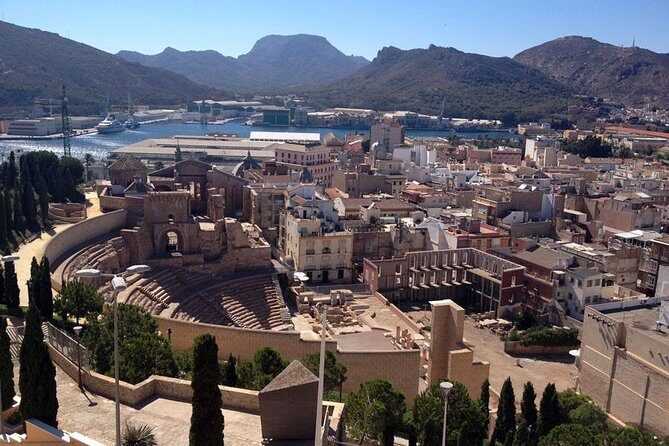
Cartagena is a city built like a time machine. You walk past modern facades, and then you spot older structure lines, different materials, and excavations that explain what’s underneath. This tour works well because it picks four anchors that tell the story in order: defensive roots, Roman domestic life, a dramatic city-view moment, then the theater where public life really shows up.
Because it’s private, it doesn’t feel rushed the way some cruise-port group tours do. The tour is designed for a solid chunk of walking within roughly four hours, and you’ll have enough time to stop and look without feeling like you’re sprinting between photo ops.
Just remember the walking component. The experience calls for moderate physical fitness, and the practical reality is that Cartagena can get very warm. If you’re sensitive to heat, you’ll want to treat water and shade as part of the plan, not an afterthought.
You can also read our reviews of more walking tours in Cartagena

Getting started at Mare Nostrum without wasting cruise-port time
Your tour begins at Mare Nostrum, Puerto deportivo de, on P.º Alfonso XII. The best part for cruise days is that port pickup and drop-off are included, and the tour ends back at the same meeting point. That means you’re not trying to coordinate your own return while your ship’s schedule ticks down.
You’ll also use a mobile ticket, which is handy if you’re juggling passports, excursion paperwork, and phone battery management. The tour notes it’s near public transportation, which is useful as a backup if you ever need to reorient yourself before the guide finds you.
The start-to-finish structure is simple: meet, walk, view, learn, and finish at the same point. For a port stop, that clarity is worth its weight in sunscreen.
Stop 1: Punic Wall—where Cartagena’s defensive past still shows
The first stop is the Punic Wall, an archaeological site from the 3rd century BC. This is one of the few remaining Punic defensive constructions in Spain, so even if you’re not a hardcore archaeology person, it has an immediate value: you’re looking at a physical reminder that Cartagena mattered long before the Roman era.
Plan for about 45 minutes here. Admission is not included, and the site lists €16.00 per person. That cost matters for your budget, so I’d treat it as a line item when you decide if this tour fits your travel style.
What I like about starting with the Punic Wall is that it gives you a baseline. When you later see Roman structures and later overlays, you understand they’re not just random ruins. They’re part of a city that kept defending and reinventing itself.
One practical note: wear shoes you can trust. Archaeological areas often mean uneven footing, and you’ll be on your feet longer than you expect once you start reading the structure and looking for details.
Stop 2: Casa de la Fortuna—Roman Cartagena in a home setting
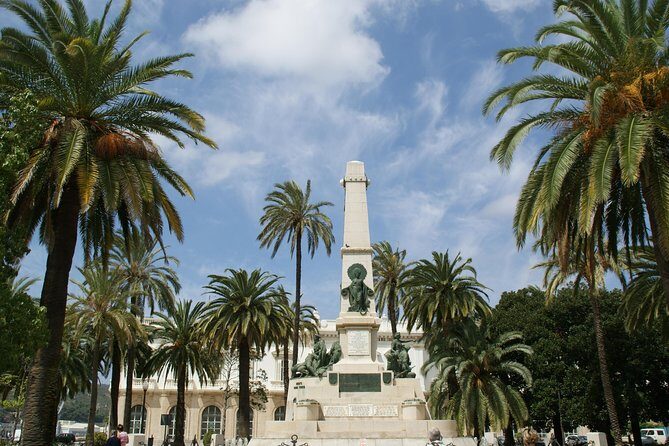
Next is Casa de la Fortuna, the House of Fortune, which is designed to show you Roman domestic life in 1st-century Cartagena. This is a different kind of stop than the wall: instead of defense, you’re stepping into the feel of everyday space—how people lived, not just how they fought.
You’ll spend around 30 minutes here, and again, admission is not included. The exact entrance fee for this stop isn’t listed in the tour info you provided, so the safest move is to assume there will be additional ticket costs for the museum-related locations.
Why this stop matters on a walking tour: it helps you avoid the common trap of only thinking about big public monuments. The Roman world wasn’t only theaters and ceremonies. Homes like this tell you about the quieter rhythms—how a city’s wealth and culture played out inside ordinary walls.
Also, this is a good time to ask questions. When your guide is pointing out how layout and features connect to daily life, the learning sticks better than when you’re just collecting dates.
Stop 3: Ascensor Panorámico—glass views with Roman clues
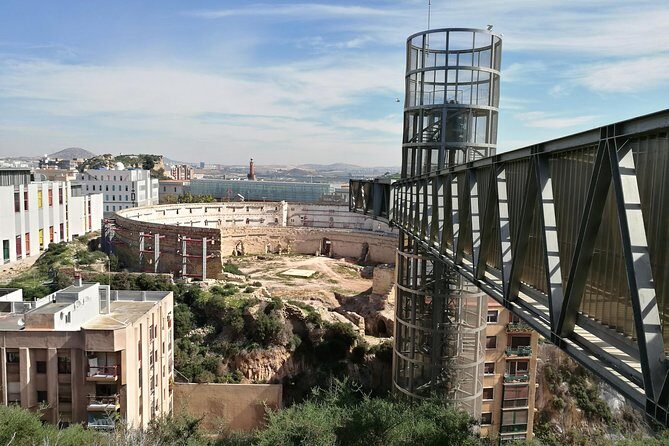
Then comes the moment that feels like a mini-break: the Ascensor Panorámico. This is a panoramic glass cabin lift, and the view is not just pretty. It’s interpretive.
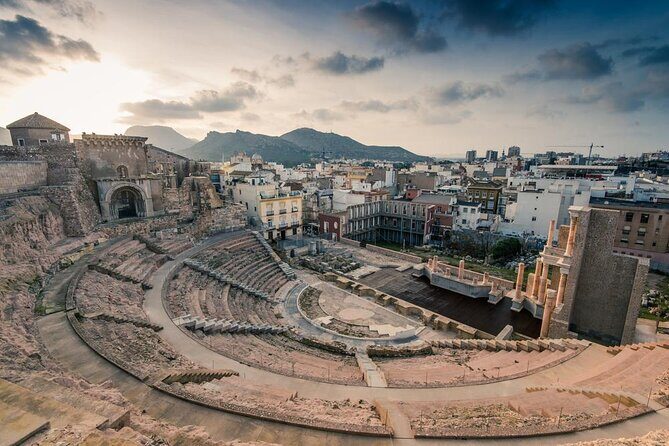
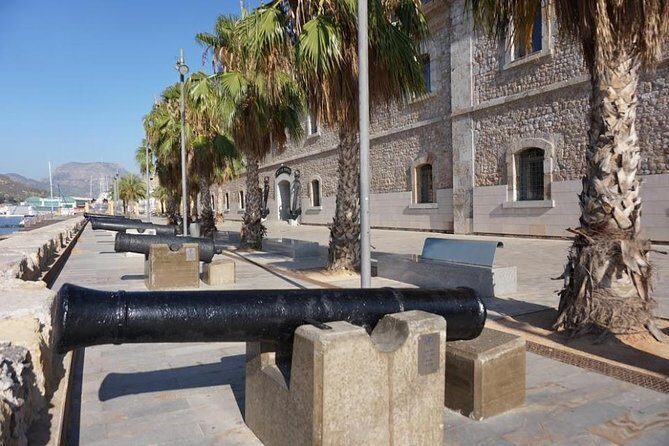
You’ll be able to see emblematic buildings and, importantly, the way later structures relate to Roman remains—like the remains of the Roman amphitheater with the superimposed bullring, plus 18th-century military constructions.
You’re on this stop for about 30 minutes, and admission isn’t included. The lift is one of those activities that changes your perspective fast. From street level, it’s hard to imagine how the theater area sits within the city. From the cabin, the geometry makes more sense.
For planning: treat this as your “photo and orientation” window. If you’re with family, it also helps energy levels. The ride gives your legs a breather while still keeping you inside the story of the city.
A few more Cartagena tours and experiences worth a look





Stop 4: Museum of the Roman Theater—capacity, use, and what to look for
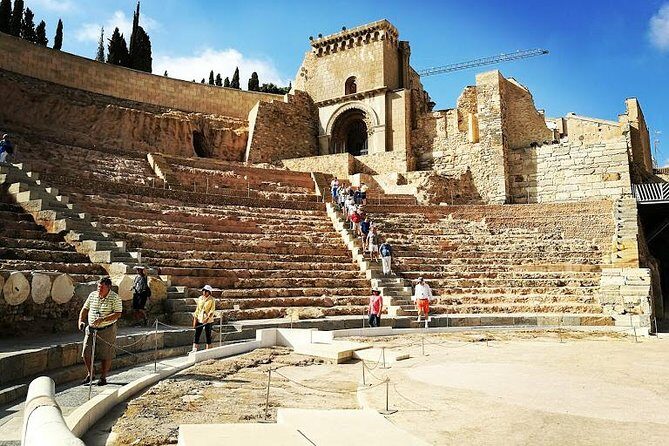
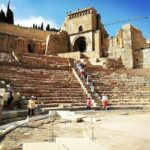
The final anchor is the Museum of the Roman Theater of Cartagena. The Roman theater was built between 5 and 1 BC in the city then known as Carthago Nova. It held about 7,000 spectators, and it was used until the 3rd century.
You’ll spend about 45 minutes here. Admission fees are not included, but this is the kind of stop where a ticket tends to pay off because it puts the outdoor remains into context. A theater is not just a pile of stone; it’s an engineered space for sound, viewing, and public events.
What you’ll likely appreciate is how the guide connects the excavations to what you can see. Some guides on this route, like Jordi or Jorde (spelled that way in different bookings), are known for tying the architecture to what it meant for daily city life. Daniel and Alisa are also associated with strong explanations of how the old amphitheater and theater story fits the city’s layout.
When you’re inside, keep your eyes open for:
- how the space is described (audience capacity and time period)
- what the museum helps you understand beyond what’s visible from outside
- any clues about how long it was in use
If you’re heat-fried, this is also your best indoor pause. You still finish the tour with your head in the right place, understanding what you saw earlier instead of just collecting sights.
Price and value: what $384.94 buys your group
The tour price is $384.94 per group, up to 15 people, for around 4 hours. That sounds steep if you’re thinking per-person. But for a private tour, the math changes based on group size.
If you’re a duo or small group, the cost is more about convenience and guide access. If you’re traveling with family or a small circle, it becomes better value fast, especially because the tour includes port pickup and drop-off and stays private for your group.
Here’s the practical part: entrance fees are not included for the Punic Wall plus the Roman House, the elevator, and the Roman Theater. The only specific fee listed is the Punic Wall at €16.00 per person. Since the other fees aren’t listed, you should budget for add-on tickets once you see the final amounts on the day or on the tour’s ticketing details.
To decide if this is worth it for you, ask yourself:
- Do you want the extra cost of a private guide to skip frustration and keep the pace right?
- Are you interested in the city’s mixed timeline—Punic, Roman, then later overlays?
- Do you have a group that would benefit from flexibility?
If yes, the price makes more sense. If you just want a quick photo walk with minimal explanation, you might find cheaper options. But if you want the stops to connect into a real story, this tour is built for that.
Heat reality check—and how to handle it like a local

One review-style detail that matters: the walking can feel extremely hot. That’s not a complaint about the guide. It’s just weather and stone.
You’ll feel that heat most during outdoor stretches, like when you’re working your way between sites and pausing to look at details. So I’d plan like this:
- bring water and keep sipping
- wear a hat and sunscreen
- build in a slower pace when the guide is pausing to explain
The good news is that the tour includes shorter stops and a lift moment with the Ascensor Panorámico, which can provide relief. Still, treat it as an active day. If you go in the hottest part of the day, you’ll need a stronger heat plan.
Who should book this private Cartagena walk
This is a good match if:
- You want Roman + Punic context without turning your day into a museum marathon
- Your group includes kids or mixed ages and you want the pace adjusted
- You like walking tours that connect what you see to why it matters
- You’re stopping at Cartagena from a cruise and need straightforward logistics
It’s also a solid choice if you enjoy views and perspective shifts. The Ascensor Panorámico helps you understand the city’s shape in a way you can’t get from a single street-level angle.
Where I’d be cautious: if your group struggles with walking in heat, you might still enjoy the story, but you’ll want to go prepared or consider a more rest-heavy option.
Should you book this 4-hour Cartagena walking tour?
I’d book it if your goal is a guided day that ties together the Punic Wall, Roman domestic life at Casa de la Fortuna, big panoramic orientation from the Ascensor Panorámico, and then the Roman theater museum where the pieces make sense.
Skip it only if you’re trying to minimize costs and you mainly want surface-level sightseeing. Entrance tickets add to the total, and the walk is still a walk. But if you value a private guide that can handle real-world group needs and help you read Cartagena’s built-in timeline, this is a strong fit.
FAQ
FAQ
Is this tour private?
Yes. It’s a private tour/activity, and only your group participates.
How long is the Cartagena walking tour?
It runs about 4 hours.
What’s included in the price?
The tour includes a private tour and port pickup and drop-off.
Are entrance fees included?
No. Entrance fees for the Punic Wall, Casa de la Fortuna, the Ascensor Panorámico, and the Roman Theater museum are not included. The Punic Wall fee is listed as €16.00 per person.
Where does the tour start?
It starts at Mare Nostrum, Puerto deportivo de, P.º Alfonso XII, 30202 Cartagena, Murcia, Spain.
What language is the tour offered in?
The tour is offered in English.
What physical level is required?
You should have a moderate physical fitness level.
When will I get confirmation after booking?
Confirmation is received within 48 hours of booking, subject to availability.
Can I cancel for a refund?
Yes. You can cancel up to 24 hours in advance for a full refund. Cancellation less than 24 hours before the start time isn’t refundable.