REVIEW · MEDELLIN
Comuna 13 & Downtown: From violence to innovation
Book on Viator →Operated by Colombian Ambassadors · Bookable on Viator
Walking here feels like a city reset. This 4 to 4.5 hour small-group outing shows Medellín through art, street creativity, and smart infrastructure, moving from downtown landmarks to Comuna 13 by metro, cable car, and bus. I like that it keeps things practical and not just scenic, with a guide (Sebastián, in the best-rated cases) who explains how the city got here.
Two things I really like: you get to see 23 Botero works fast in Plaza Botero, then switch gears to Comuna 13 street art and the electric stairs without spending extra money on entry. The second win is how you travel through real Medellín systems, not a private car bubble—so you leave with a better sense of how people actually move around.
One thing to consider: the timing is tight, and it requires good weather. If skies are rough, the plan can change, and you’ll want comfortable shoes for walking plus short rides.
In This Review
- Key highlights you’ll care about
- Why this tour feels like Medellín in 4 hours
- Plaza Botero: 23 works, no time wasted
- Graffitour in Comuna 13: street art as a message system
- Electric stairs of Comuna 13: infrastructure you can feel
- How the transit makes this tour feel authentic
- What’s included (and what to plan for)
- Price and value: why $39 is more than a bargain
- Where to start and where you end
- Who should book this tour
- Should you book Comuna 13 & Downtown?
- FAQ
- How long is the tour?
- Where does the tour start?
- Where does the tour end?
- What’s included in the price?
- Is alcohol included?
- How many people are in a group?
- What happens if the weather is bad?
- Can I cancel for a full refund?
Key highlights you’ll care about
- 23 Botero works at Plaza Botero with free admission during the stop
- Comuna 13 Graffitour focused on the area’s most concentrated graffiti and a major Latin American gallery
- Electric stairs (Escaleras Electricas) as a real example of infrastructure and innovation
- Metro + metrocable + bus included, so you see more routes without extra planning
- Small group limit (max 9) for a calmer pace and easier questions
- Snacks and soda/pop included, with no need to hunt for food mid-tour
Why this tour feels like Medellín in 4 hours
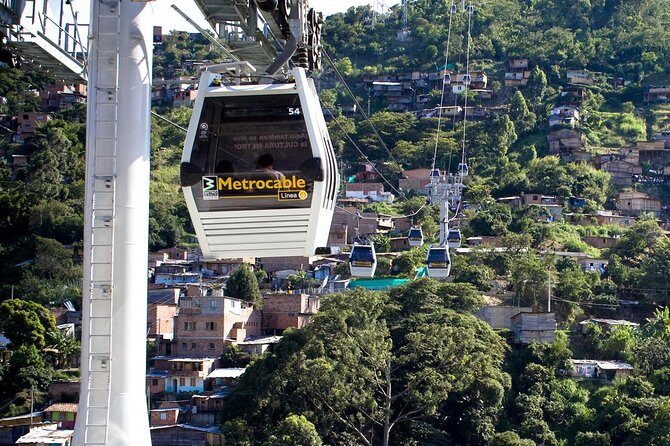
Medellín is a city of layers. Downtown can look like classic Latin American urban life, then a short ride later you’re in Comuna 13, where public works, art, and daily routines tell a different story.
This tour’s strength is how it stitches those layers together in one loop. You start near the Basilica of Our Lady of Candelaria in La Candelaria, then you head into the Comuna 13 area using the city’s transit network: metro, metrocable (cable car), and bus. The result is that you don’t just look at places—you get a sense of how the city connects them.
Also, the group size matters. With a maximum of 9 people, you get more back-and-forth with your guide instead of a rushed line. In the standout experiences, Sebastián is the guide, and his angle is especially helpful if you like city design and how built spaces shape life.
You can also read our reviews of more tours and experiences in Medellin.


Plaza Botero: 23 works, no time wasted
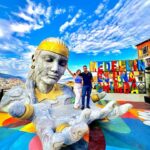
The tour begins with Plaza Botero, where you’ll see 23 sculptures by Fernando Botero. The stop is short—about 10 minutes—but that’s the point. You get the key “Botero moment” without turning the tour into a museum day.
Why this stop works even if you’re not an art person: Botero is instantly readable. You’ll notice how his oversized figures change the mood of a square full of everyday movement. It’s a quick way to set your eye on Medellín’s relationship with visual culture before you switch to street art.
Practical tip: since the stop is timed, wear shoes that let you move fast and scan the plaza in small circles. Don’t worry about trying to read every detail. Use the time to find a few pieces that pull you in, then carry that eye into Comuna 13 where the art gets louder and more personal.
Graffitour in Comuna 13: street art as a message system
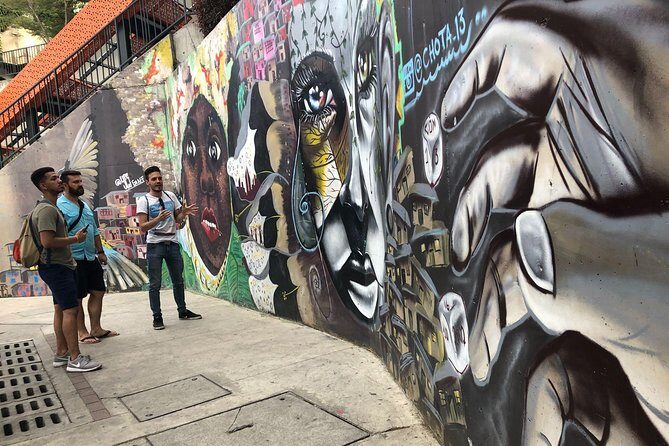
Next you move into Comuna 13 for a dedicated Graffitour. This part is about 30 minutes and focuses on covering a large number of graffiti spots in the area, plus visiting one of the city’s major gallery spaces for this scene.
This is where the title makes sense: the neighborhood’s past is tied up with conflict, but today you’ll see walls used like communication boards—pieces that respond to identity, memory, and social life. Even if you don’t speak Spanish, graffiti can be understood through color, composition, and repetition. You’ll start noticing how different murals talk to different audiences.
A key value here is the contrast. Botero’s figures are sculptural and formal. In Comuna 13, the art is often fast, bold, and directly attached to real streets. It feels more like a live conversation than a curated exhibit.
Potential drawback: because the stop is timed, you won’t have hours to linger at every wall. If you want ultra-slow art time, you might want to return later on your own. For a first taste, though, this stop is efficient and hits a lot of visual ground.
Electric stairs of Comuna 13: infrastructure you can feel
Then comes one of Medellín’s most talked-about public works: the Escaleras Electricas de la Comuna 13. This is another 30-minute stop, and it’s less about walking past something pretty and more about understanding how design changes movement.
Electric stairs are practical. They help people go up and down steep terrain with less strain. And beyond the physical function, they’re also a symbol of a city investing in accessibility and connection—turning hard geography into something you can navigate.
In the best-rated experiences, Sebastián talks about the built environment through the lens of how a city planner thinks. That’s useful because it gives you a framework: you’re not just looking at stairs. You’re seeing a piece of Medellín’s broader idea of innovation in daily life.
What I recommend while you’re there: don’t just take photos at the first view. Pause to watch people move through the stairs. How they use the space tells you more than any sign.
How the transit makes this tour feel authentic
A big part of the value is that you’re not in a private car for the whole thing. You travel by metro, metrocable, and bus, plus walking. That mix gives you two wins.
First, you learn Medellín’s rhythm. You’ll see how transit serves different areas and how the city’s system handles elevation changes—especially with the cable car segment.
Second, it removes the guesswork. Transit tickets are included, so you don’t need to figure out routes while also trying to enjoy the sights. This is one of those small planning headaches you can skip.
The included transit also helps the price feel fair. At $39 per person, you’re getting a guided tour plus transportation coverage for multiple systems. If you tried to piece this together alone, you’d likely spend more time planning and add costs for rides and entry.


What’s included (and what to plan for)
This tour covers more than just the guide.
Included:
- Metro, metrocable, and bus tickets
- Soda/pop and snacks
- Admission at the main stops (Plaza Botero is free during the stop, and the Comuna 13 and electric stairs stops are also listed as free)
Not included:
- Alcoholic beverages
That sounds simple, but it matters in practice. When snacks and soda are handled, you avoid the usual mid-tour energy dip. And when transit is covered, you can spend your attention on the story the places are telling.
Food note: snacks are provided, but it’s still smart to think of this as a 4 to 4.5 hour outing, not a full meal stop. If you get hungry easily, bring a little extra something, but only if it fits comfortably with the group’s pace.
Price and value: why $39 is more than a bargain
At $39 per person, this tour is priced as a practical way to see a lot of Medellín without paying for individual logistics.
Here’s why it adds up:
- You’re getting a structured experience across multiple key stops
- You’re also getting public transit tickets that cover different modes
- You receive snacks and soda/pop
- The group cap at 9 people helps keep the experience personal
If your usual travel style is “see the highlights, but don’t overpay for transport,” this fits nicely. You also get time efficiency: Plaza Botero in 10 minutes, then Comuna 13 art and electric stairs each in about 30, all within a single half-day plan.
The only catch is that short stops mean you get a solid overview, not unlimited time at any one location. If you’re the type who wants to read every mural, sketch every sculpture, and spend an hour watching people in one spot, you’ll feel the pace. For most people, though, this is a smart way to get oriented fast.
Where to start and where you end
You’ll start at the Basilica of Our Lady of Candelaria in La Candelaria (C. 50 #49 – 112).
You’ll end at Graffitour13 in the 20 de Julio neighborhood (San Javier) at Cra. 109 #38 a 11.
This end location is important for planning. The tour wraps in a different neighborhood than where it starts. The good news: the plan is designed so you can take a Taxi or Uber back to your hotel. If you’re budgeting time, you’ll want to keep that in mind rather than expecting an easy walk back to downtown.
Who should book this tour
I think this is a great fit if:
- You want a first-time Medellín experience that goes beyond downtown postcard views
- You like guided context, especially how urban design affects real life
- You’re comfortable with short walks and some public transit
- You want a small group pace (up to 9 people)
It may be less ideal if:
- You need long, slow time at a single attraction
- Your schedule allows only a tight return window and you don’t want to end in a different neighborhood
- Weather is unpredictable and you can’t be flexible, since the experience is weather-dependent
Should you book Comuna 13 & Downtown?
If you want value and real context in a half-day, I’d say yes. This tour connects art and infrastructure in a way that feels grounded, not performative. You see Plaza Botero, then jump into Comuna 13 graffiti, then understand the role of the electric stairs—and you do it using Medellín’s transit, with tickets included.
My booking advice:
- Book it if you like practical sightseeing with a guide like Sebastián, who brings a planning mindset and keeps the story clear.
- Wear comfortable shoes and plan for a timed pace.
- Have a backup mindset for weather, since the tour needs good conditions.
If that matches how you travel, this is one of the most sensible ways to understand Medellín’s shift from violence to innovation without turning it into a full-day commitment.
FAQ
How long is the tour?
The experience lasts about 4 hours to 4 hours 30 minutes.
Where does the tour start?
It starts at the Basilica of Our Lady of Candelaria, C. 50 #49 – 112, La Candelaria, Medellín, Antioquia, Colombia.
Where does the tour end?
It ends at Graffitour13, Cra. 109 #38 a 11, Veinte De Julio, Medellín, San Javier, Medellín, Antioquia, Colombia.
What’s included in the price?
The price includes soda/pop, snacks, and metro, metrocable, and bus tickets, plus admission for the listed stops.
Is alcohol included?
No. Alcoholic beverages are not included.
How many people are in a group?
The tour has a maximum of 9 travelers.
What happens if the weather is bad?
The experience requires good weather. If it’s canceled due to poor weather, you’ll be offered a different date or a full refund.
Can I cancel for a full refund?
Yes. You can cancel up to 24 hours in advance for a full refund. If you cancel less than 24 hours before the start time, the amount paid is not refunded.