REVIEW · MEDELLIN
Medellin Commune 13: art, war, love, hate and resilience.
Book on GetYourGuide →Operated by Colombian Roads Tours SAS · Bookable on GetYourGuide
Comuna 13 hits fast: you start at Medellín’s Poblado metro, then glide up by cable car before the streets start talking. What makes this tour special is that it mixes transport, walking, and hands-on art with a local guide explaining how war, memory, and everyday life shaped the neighborhood.
I like the focus on seeing more than the usual sights. You’re also heading to places where the past is physical, like the area that was once a prison and is now a university, school, and library—plus memorial murals for victims. The one drawback to consider: this is a guided walk with real stairs and public-hub movement, and it’s not suitable for people over 70.
In This Review
- Why this tour feels real (and where to be careful)
- Key things to know before you go
- First Step: From Estación Poblado to Comuna 13 by metro and cable car
- The 110-minute guided walk: prison past, memory murals, and war-to-resilience stories
- Escalators of Comuna 13 and terrace views: seeing the city from where you’re standing
- Art that you participate in: drawing your own graffiti on a wall
- Mango ice cream and everyday life: the small moment that adds humanity
- Price and logistics: what $17 buys in a short Medellín tour
- About the guide experience: Santiago Sanjuan, and why you should still show up early
- Meeting point you can actually find: Virgin Mary on the ticket office side
- Who this is best for (and who should skip it)
- Should you book Medellín Comuna 13 with Colombian Roads Tours?
- FAQ
- How long is the Comuna 13 tour?
- What’s included in the tour price?
- Are metro tickets included?
- Where do we meet in Medellín?
- What transport is used during the tour?
- Is the tour in English?
- Can I draw graffiti during the tour?
- Is the tour suitable for older travelers?
Why this tour feels real (and where to be careful)

Two things I really value: the story is told from inside the neighborhood, and the route includes the cable car views plus the famous escalators of Comuna 13. You’re also not just looking at graffiti from a distance—you’ll be guided to key pieces and you can even draw your own on a wall.
The consideration: there have been situations where a guide didn’t show up at the meeting point. So I’d treat the meeting spot as non-negotiable, arrive a bit early, and keep your booking details ready in case anything feels off.
Key things to know before you go
Real neighborhood focus: The tour aims to go beyond the standard tourist route.
Local guidance: You’ll get a story told by a local guide, in Spanish or English.
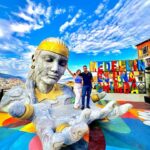
Transport with views: Cable car ride is part of the plan, and you’ll see Comuna 13 from the air.
Escalators + terrace views: You’ll visit the escalators and get city views from a terrace area.
Art participation: You can draw your own graffiti on one of the walls.
You can also read our reviews of more tours and experiences in Medellin.

First Step: From Estación Poblado to Comuna 13 by metro and cable car

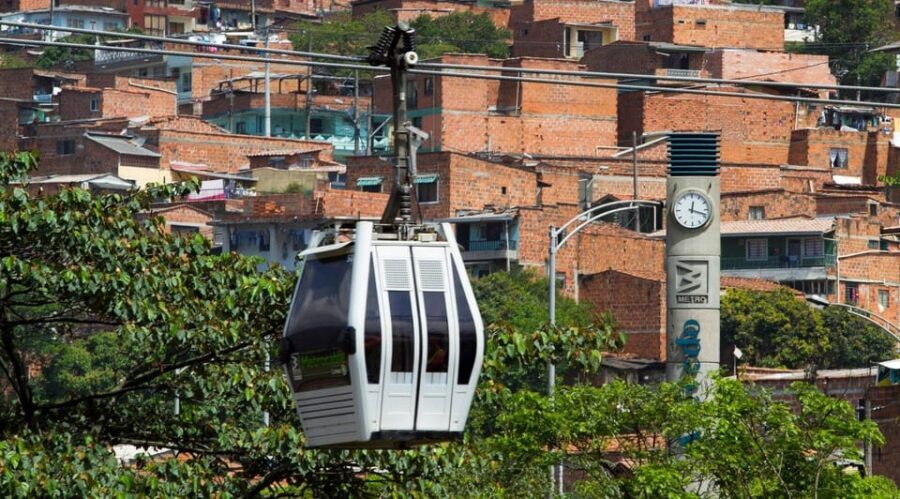
Your tour starts at Estación Poblado on the metro. The pacing is practical: a short metro ride gets you set in motion, then you switch to a cable car ride that lasts about 40 minutes. That cable car stretch matters because it changes how you read the neighborhood. From above, you get context for the slopes, the street layout, and why the infrastructure like escalators became so important.
You’ll also get that split-second feeling of arriving in a place that still has its own rhythm, not just a show for visitors. The view from the cable car isn’t just scenery—it’s a way to understand the geography that shaped daily life here.
Timing note: the whole tour is about 3 hours, so you’ll be moving steadily rather than stopping to linger all afternoon. If you’re someone who likes slow pacing, plan to slow down on your own after the tour.
The 110-minute guided walk: prison past, memory murals, and war-to-resilience stories
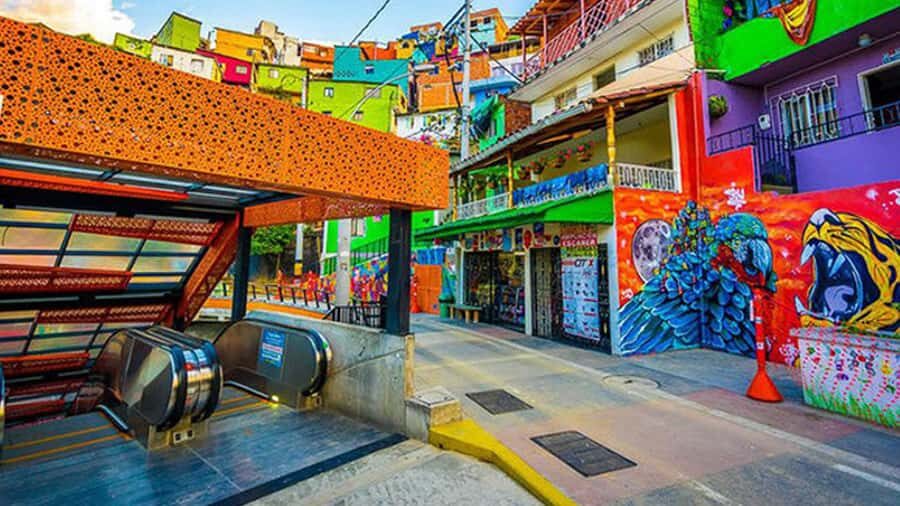
The core of the experience is a guided tour inside Comuna 13 (about 110 minutes). This is where the tour earns its emotional weight, because you’re shown how the neighborhood tells its history street by street.
One moment that stands out in the plan is the shift from incarceration to community use. You’ll walk through an area described as once being a prison that now functions as a university, school, and library. That’s not a vague concept here—it’s presented as a tangible transformation you can see while you’re walking.
You’ll also visit memorial art. There’s a stop focused on murals that commemorate victims. The point isn’t just to photograph the artwork; it’s to understand why people paint memory into public space and how art becomes a kind of record when official narratives are painful.
The tour also addresses the history of war that was experienced about 20 years ago. Expect the guide to connect those events to what you see now: the struggle, the grief, and then the ways people built something new out of damage. I appreciate that this doesn’t stay abstract. It’s linked back to specific places you pass through.
Practical drawback to keep in mind: this is heavy subject matter. If you prefer purely light sightseeing, you may find the war and victims portion intense. If you can handle it, you’ll come away with a deeper sense of what you’re looking at.
Escalators of Comuna 13 and terrace views: seeing the city from where you’re standing
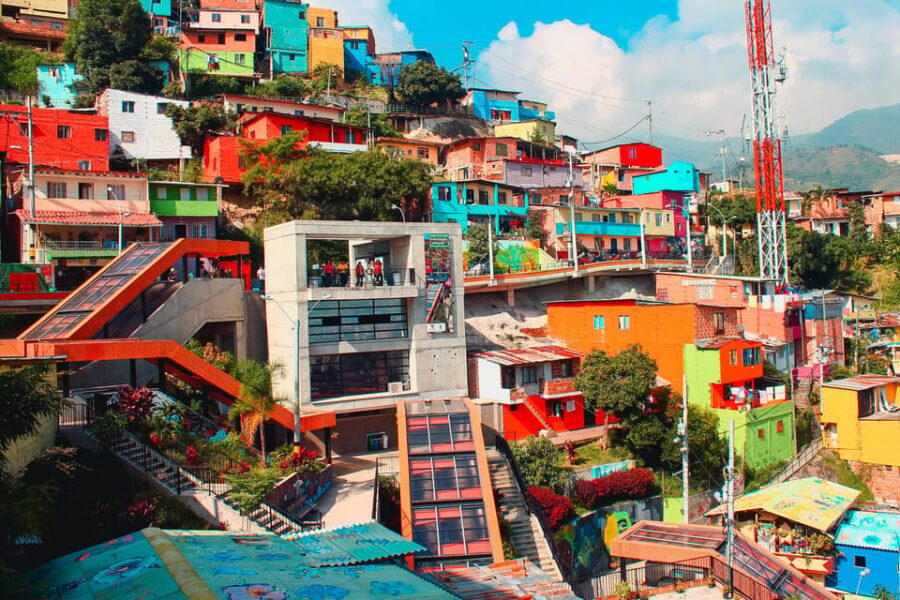
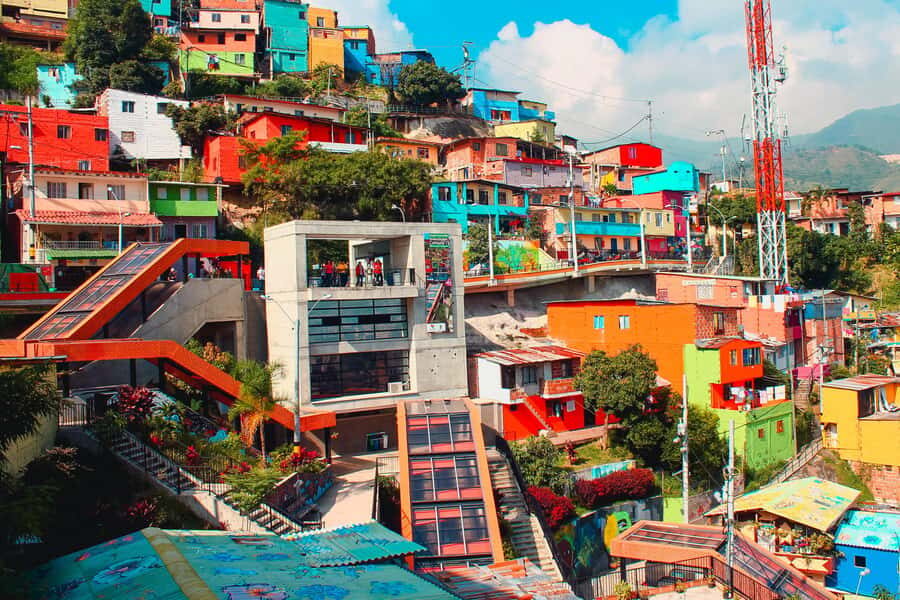
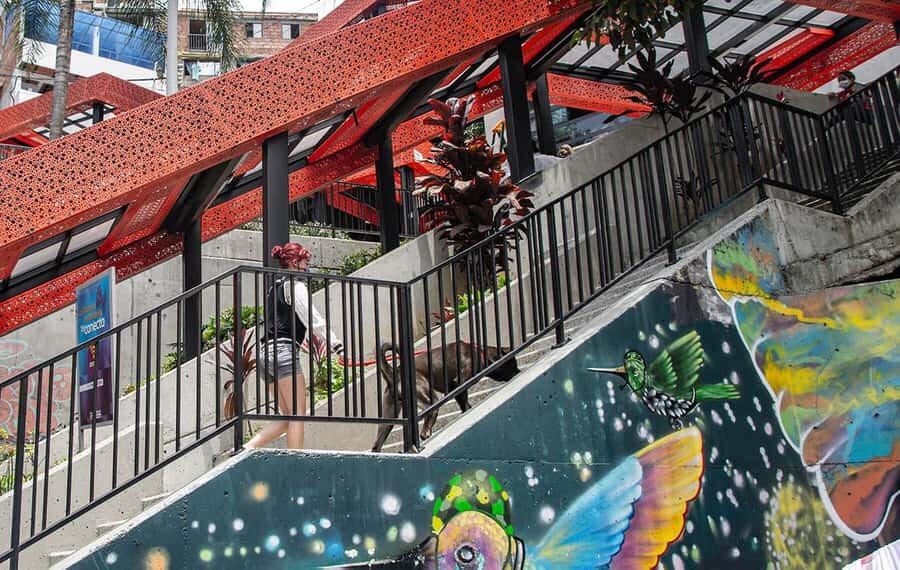
A big part of this tour isn’t just art or stories. It’s movement—and the famous escalators of Comuna 13 are built into the experience. You’re visiting them as part of the official route, and that gives you a clearer understanding of how residents navigate steep terrain and how solutions can reshape daily life.
From there, you’ll head to a terrace in the suburbs of Comuna 13 for city views. This is the moment where the tour’s message clicks visually. From a distance, Medellín looks like one city. But when you see it from the hill edges of Comuna 13, you understand the neighborhood’s perspective: the city isn’t just something above you—it’s something you live next to, climb toward, and connect with.
Because the tour is only about 3 hours total, these viewpoints won’t eat your day. They’re positioned as a reward for the walking and transitions you’ve already done.
Art that you participate in: drawing your own graffiti on a wall
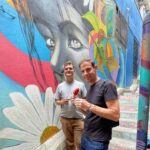
One of the highlights is simple and hands-on: you’ll draw your own graffiti on one of the walls. That’s a strong value-add compared to tours that only point at street art.
Why it matters: when you make a mark yourself, the artwork stops being just an image on a wall. You start noticing how lettering, placement, and style communicate something—identity, memory, protest, love, hate, and resilience, all mixed together like the title promises.
To make this enjoyable, treat it as more of a guided art moment than a test of talent. Go in with curiosity. If you’re not comfortable with art, still do it—your participation is part of how the tour explains the neighborhood’s relationship to expression.


Mango ice cream and everyday life: the small moment that adds humanity
There’s also a unique detail built into the experience: you’ll be able to enjoy mango ice cream from the same lady who sold them during the war. This is the kind of stop that helps you remember you’re not only touring murals and memorials—you’re visiting a place with ongoing routines, vendors, and small joys.
I like moments like this because they balance the weight of the history. Even if you’re learning about violence and loss, you still see how people keep living. It’s a reminder that resilience isn’t just a theme word—it shows up in the ordinary.
Price and logistics: what $17 buys in a short Medellín tour
At $17 per person, this is an affordable way to pack in metro, cable car, and an organized guided walk into Comuna 13. The big value is that the tour includes the most time-consuming transport piece—the cable car ride—and also includes key stops like the escalators and terrace views.
What’s not included is important: metro tickets and tips. You’ll need to budget for metro entry separately, and you should plan to tip if your guide does a good job (even if it’s not required by the operator).
Also note that the tour runs in Spanish and English with a live guide. If you want the story explained clearly rather than read through photos, that language support is part of the value.
About the guide experience: Santiago Sanjuan, and why you should still show up early
The tour experience can hinge on the guide. One name you may see associated with this tour is Santiago Sanjuan—he’s described as bringing the story to life with his own experience, and his explanations connect Medellín and Comuna 13 in a way that feels personal rather than rehearsed.
At the same time, there’s a practical risk worth mentioning: there have been cases where a guide didn’t meet the group at the planned time and location, or people ended up joining a different group. Because of that, I strongly recommend you arrive at the meeting point early and make sure you’re in the right place.
Meeting point you can actually find: Virgin Mary on the ticket office side
Your meeting point is specific. Go up to the station ticket office, and you’ll meet the Colombian Roads Tours guide in the image of the Virgin Mary. That level of detail helps a lot in busy metro areas.
If you’re traveling solo, it’s still manageable—just go straight to the ticket office and look for the guide match. And if anything feels unclear, don’t wait. Ask right away.
Who this is best for (and who should skip it)
This tour is a strong match if you want:
- a guided Comuna 13 walk with local storytelling
- the cable car component (so you understand the geography)
- street art that includes an activity, not only viewing
- a short, focused commitment (about 3 hours)
It may not be the best fit if:
- you’re sensitive to war and memorial content
- you don’t like walking in public areas with stairs and steps
- you’re over 70, since the tour isn’t suitable for that age group
Should you book Medellín Comuna 13 with Colombian Roads Tours?
I’d book this if you want an organized, narrative-focused introduction to Comuna 13 that goes beyond postcard graffiti. The mix of cable car + escalators + memorial murals + hands-on graffiti makes it a complete package for a half-day.
I would also book it with a bit of common-sense caution. Make it easy for the guide to find you at the meeting point under the Virgin Mary image, arrive early, and keep your booking details handy in case schedules get messy.
If you want Comuna 13 in a short, practical window and you’re ready for serious history mixed with art and resilience, this is a good choice for your Medellín day plan.
FAQ
How long is the Comuna 13 tour?
The tour duration is 3 hours.
What’s included in the tour price?
It includes a story told by a local guide, travel and views of Comuna 13 on the cable car, explanation of the most important graffiti, a visit to the escalators, and city views from a terrace in the suburbs of Comuna 13.
Are metro tickets included?
No. Metro tickets are not included.
Where do we meet in Medellín?
Meet at Estación Poblado. Go up to the station ticket office, where you will meet the Colombian Roads Tours guide near the Virgin Mary image.
What transport is used during the tour?
You’ll take a train (about 15 minutes), a cable car ride (about 40 minutes), then another train (about 15 minutes).
Is the tour in English?
Yes. The live guide offers Spanish and English.
Can I draw graffiti during the tour?
Yes. A highlight of the experience is that you can draw your own graffiti on one of the walls.
Is the tour suitable for older travelers?
It is not suitable for people over 70.