REVIEW · CARTAGENA
Private 4-hour walking tour of Cartagena with official tour guide
Book on Viator →Operated by Tour Travel & More · Bookable on Viator
Cartagena walks like a living museum, and this private route keeps it moving. You get a focused half-day with an official guide, morning or afternoon, so you can see the Roman and Punic highlights without doing mental cartography. Private touring also means questions get answered on the spot, not later.
I love two things right away: the tour includes Roman Theatre and its museum entry, and the route mixes paid and free stops so you’re not constantly counting euros. You’ll also get a smarter sense of the city layers, from the Spanish Navy’s maritime story to ancient Carthage-Rome drama.
One consideration: not every entrance is covered. Punic Wall entrance is listed as not included, and a couple of stops are mainly viewpoints, so set expectations that some moments are shorter and more photo-focused.
In This Review
- Key things to know before you go
- Why this private Cartagena walk makes sense for a half day
- Hotel pickup and how the route actually feels on your feet
- Museo Naval (Naval Museum): the sea story before the ruins
- What to expect
- Castillo de la Concepción and Torres Park: a panoramic pause
- Practical note
- Teatro Romano de Cartagena: why the Roman Theatre keeps stealing the show
- What you’ll remember
- Consistorial Palace and an 18th-century streetscape: where Cartagena shifts tone
- Why this interlude is worth it
- Cerro del Molinete Archaeological Park: the forum under your feet
- How to get the most from it
- Punic Wall: the fast, dramatic hit of the Punic Wars
- Practical expectation
- Price and value: what you’re paying for (and what you’ll pay extra)
- Who this tour suits best
- Should you book this private Cartagena walking tour?
- FAQ
- How long is the private walking tour of Cartagena?
- Is this tour private or shared?
- What language is the tour offered in?
- Are entrance fees included?
- Does the tour include hotel pickup?
- Do I need to arrange transportation during the tour?
- Can I cancel for a full refund?
Key things to know before you go
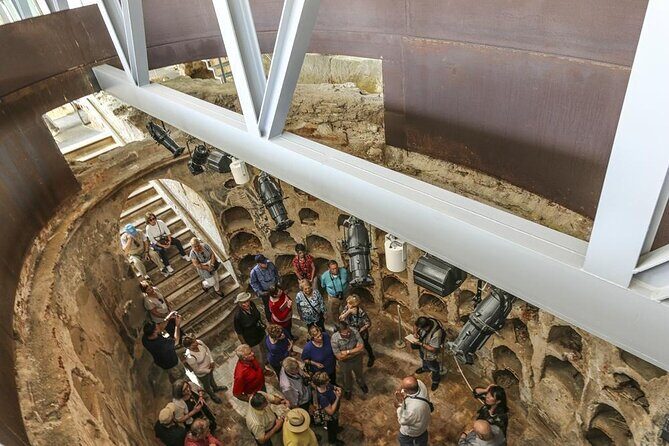
- Roman Theatre admission included: you’ll get into the monument and its museum, designed by Rafael Moneo
- Official private guide time: you’ll walk with full attention for about 4 hours
- Free history stops built in: Museo Naval and Cerro del Molinete are free-entry stops on this route
- Punic Wars context, not just ruins: the Punic Wall ties to Qart Hadast and the Dances of Death imagery
- Mostly walk-and-see pacing: you’re outdoors a lot, with short, efficient stops like the 15-minute Punic Wall visit
Why this private Cartagena walk makes sense for a half day
If you only have a few hours in Cartagena, you need two things: the right sites and a clean route. This tour is built for that. Instead of bouncing between disconnected landmarks, you follow a logic that moves from naval history into medieval/Islamic-era remnants, then straight into Roman and Punic remains.
I also like the value angle. At $260.07 per person for a private 4-hour experience, you’re paying for time with an official guide plus one major paid entrance (Roman Theatre). When your itinerary also includes free-entry stops like Museo Naval and Cerro del Molinete, the day feels less like a ticket bundle and more like a guided education where the guide does the heavy lifting.
You can also read our reviews of more walking tours in Cartagena


Hotel pickup and how the route actually feels on your feet
You get picked up from a centrally located hotel, which is a real time-saver in a city where the best views often sit in pedestrian lanes and uphill nooks. The tour also notes it’s near public transportation, so there’s usually flexibility if you’re not staying exactly where pickup is.
The route is designed around short visits: about 40 minutes at the naval museum and Roman Theatre, a quick 20 minutes for the Castillo de la Concepción exterior view, and shorter windows elsewhere. That matters because Cartagena’s streets can be steep. A good guide should pace it so you’re not rushing. One guide known for adapting to people’s walking and stair comfort is a clue that this tour can be adjusted in real time.
Museo Naval (Naval Museum): the sea story before the ruins
Your first stop is Museo Naval, and it sets an underrated theme: Cartagena’s identity isn’t only ancient stone. This museum focuses on the Spanish Navy’s history, shipbuilding, nautical science, and the tools behind navigation—things like cosmography and cartography.
You also get coverage that connects the dots forward in time: maritime voyages and discoveries, plus underwater archaeology and intangible maritime heritage. It’s not just helmets-and-swords history. It’s the “how people traveled, measured, built, and explored” layer that helps the rest of the city make more sense.
Time check: about 40 minutes.
Entrance: admission ticket free.
What to expect
Plan to look at displays and explainers rather than treating it as a quick photo stop. If you like context (and not just postcard angles), this is a strong opener. It’s also a good “starter museum” because free entry keeps it low-pressure.
Castillo de la Concepción and Torres Park: a panoramic pause
Next comes Castillo de la Concepción—also called Asdrubal—where the experience is less about entering and more about seeing. You ride a panoramic elevator to Torres Park and get an exterior view of the castle.
This is one of those stops where history stacks. The castle is medieval (13th or 14th century), but it sits on older Roman and Arab foundations. Even the Arab period has a visible leftover: the lantern that once served as a lighthouse. So you’re not just looking at one era. You’re looking at a place that repeatedly mattered.
Time check: about 20 minutes.
Entrance: not included (and you’re mostly viewing/exterior-based here).
You can also read our reviews of more guided tours in Cartagena






Practical note
Because this is a viewpoint-focused stop, you’ll get the most out of it if your guide gives you the “what you’re seeing” explanation—what angle shows the relationship between the old city and the defensive rise. If you prefer every stop to be a full interior visit, you may feel this one is lighter than the Roman sites.
Teatro Romano de Cartagena: why the Roman Theatre keeps stealing the show

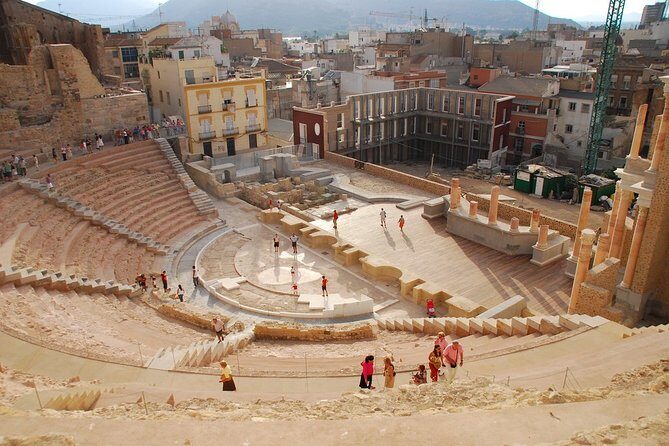
If one stop defines Cartagena’s ancient swagger, it’s the Roman Theatre. Built between 5 and 1 BC, it once held around 7,000 spectators. It stayed in use until the third century, then later buildings piled over it—until it was exhumed in 1988.
Here’s where the tour gets practical: you’re not just looking at an exterior ruin. The Roman Theater Museum takes you inside the monument, turning the theatre into its final big “room.” The museum was designed by architect Rafael Moneo, which is a nice clue that this isn’t a barebones display. It’s meant to help you understand how the space worked.
Also, the size matters. It was among the largest in Roman Hispania and was excavated almost entirely in the rock—meaning the setting is part of the story, not an afterthought.
Time check: about 40 minutes.
Entrance: included.
What you’ll remember
You’ll walk away with a stronger feel for how a theatre shapes a city: visibility, sound, gathering places, and the political “show” culture of Rome. It’s the kind of site where even short explanations can totally change how you view the stones.
Consistorial Palace and an 18th-century streetscape: where Cartagena shifts tone
After the deep antiquity, the route moves into the city’s more modern face—without leaving the old streets entirely.
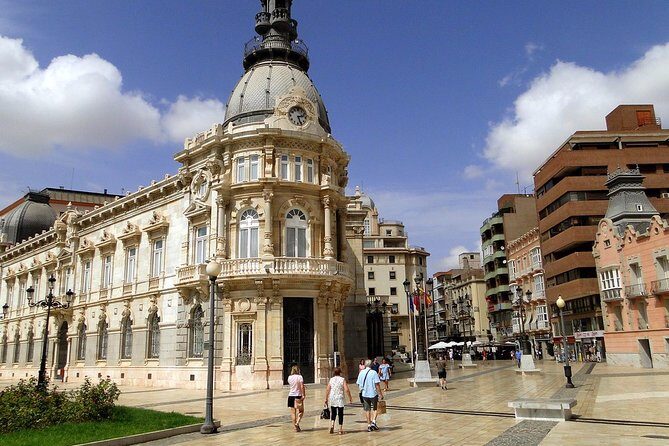
You’ll see the Consistorial Palace of Cartagena (Cartagena City Hall), a major modernist building built between 1900 and 1907. It’s triangular in shape, with a façade of white marble and zinc domes on the roof. The exterior is decorated repeatedly with city emblems tied to the castle of la Concepción and the coat of arms. One of the more specific details to watch for is the mural crown awarded by Roman general Scipio Africanus when he took the city of Carthago Nova.
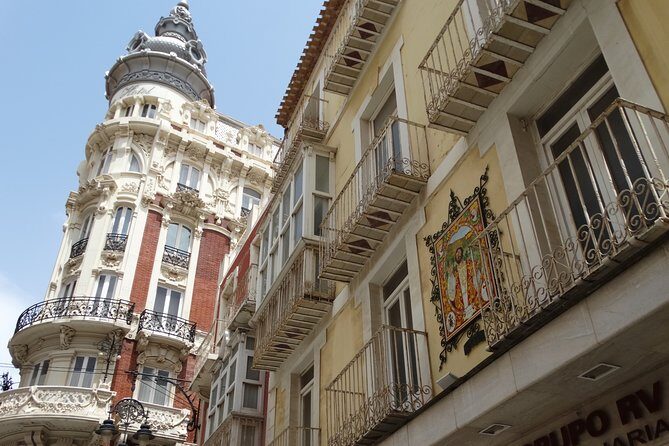
Then there’s time for an impressive 18th-century building in the main pedestrian street of the old city centre. This part of the walk is less about entering and more about resetting your eyes. Ancient stone is heavy; modernist marble gives you a breath and reminds you this is a working city, not a theme park.
Why this interlude is worth it
These stops help you understand how Cartagena curates its identity. You’re seeing the ancient past echoed in later symbols, then looking at a city street where people still move daily. That “then and now” contrast is exactly what makes a guided walk click in a place like this.
Cerro del Molinete Archaeological Park: the forum under your feet
Next is Cerro del Molinete Archaeological Park, and this is where the tour gets extra satisfying if you like Roman city planning. Carthago Nova was one of the big Roman success stories. The site references republican-era ambitions, including a large amphitheater, and the Roman forum located between main roads and near the mountains.
This forum sits roughly under what’s now San Francisco square, and only part of it is excavated. But the important thing is that you’re shown the types of buildings you’d expect in a Roman civic and religious hub.
Among the key finds you’ll hear about:
- a temple dedicated to the Capitoline triad (Jupiter, Juno, Minerva)
- the augusteum
- the curia (seat of government of the colony)
- baths and palestra of the low imperial period
- the temple of Isis
Time check: about 40 minutes.
Entrance: free.
How to get the most from it
Cerro del Molinete can feel abstract if you just look at open space. Ask your guide to connect what you’re seeing to what a forum actually did: politics, worship, and daily civic life. A strong guide will help you mentally place the buildings where the ground now looks calm.
Punic Wall: the fast, dramatic hit of the Punic Wars
The final major ancient stop is the Punic Wall. This is where the story pivots from Rome’s theatre and civic structures to the earlier Mediterranean clash: the Punic Wars between Carthaginians and Romans.
You’ll learn about Qart Hadast, a legendary Cartagena founded by General Asdrubal in 229 BC. The wall itself is one of the few Carthaginian remains found in Spain, so it carries extra weight. And then you get an added layer right beside it: a burial crypt of the hermitage of San Jose built in the 16th and 17th centuries. Its walls feature a visual program known as the Dances of Death.
Time check: about 15 minutes.
Entrance: not included.
Practical expectation
This is a shorter stop by design. If you want a lingering look, you’ll probably need to use the guide’s context early, then slow down after the explanation. Also, budget for the wall entrance since it’s not covered in the included fees.
Price and value: what you’re paying for (and what you’ll pay extra)
At $260.07 per person for 4 hours, the big question is: what am I actually buying with a private guide?
Here’s how I’d frame it:
- You’re paying for private time with an official guide, which matters in steep old areas and at sites that need interpretation.
- You’re paying for included entry to Teatro Romano and its museum, which is the biggest ticket moment on the route.
- You get free-entry stops at Museo Naval and Cerro del Molinete, so the day doesn’t become a chain of extra charges.
What’s not included is also clear: other entrance fees, transportation, and food & drinks. That means if you plan to eat in between stops, you’ll want to factor in a casual break you control rather than one built into the tour.
Also, the tour offers pick up and uses a mobile ticket, so it’s set up for convenience. It’s also reportedly booked far in advance (on average, 87 days), which is a hint that the private format is popular—especially for people who want the Roman Theatre without juggling crowds.
Who this tour suits best
This private 4-hour route is a great fit if you:
- want high-value interpretation more than “stand and read” sightseeing
- like Roman and Punic history but also want the naval and medieval layers that explain how the city formed
- prefer a half-day plan with short, efficient stops and no group shuffle
- want your guide to help you pace around steep streets and stairs (the tour format allows adjustment)
It’s also smart for couples, small families, and friends who’d rather pay for comfort and time than manage multiple museum tickets and navigation on their own.
If you’re the type who wants long museum wandering and deep independence in every stop, you might find the time windows feel tight—especially with the 15-minute Punic Wall visit.
Should you book this private Cartagena walking tour?
I’d book it if your top goal is to see Cartagena’s Roman Theatre and the main ancient story beats with real explanations, in a tight 4-hour window, and you value having an official guide instead of piecing things together.
Skip—or at least temper expectations—if you hate paying extra for entrances beyond the Roman Theatre, or if you need long, unstructured time in each stop. The route does exactly what it promises: a well-paced highlights walk with meaningful context and a few lighter viewpoint moments.
If you’re planning your day around ancient sites and want the city to make sense while you’re there, this is a solid choice.
FAQ
How long is the private walking tour of Cartagena?
The tour runs for about 4 hours.
Is this tour private or shared?
It’s private. Only your group participates.
What language is the tour offered in?
The tour is offered in English.
Are entrance fees included?
The entrance fee to the Roman Theatre and its museum is included. Other entrance fees are not included.
Does the tour include hotel pickup?
Yes. Pickup is included from centrally located hotels.
Do I need to arrange transportation during the tour?
Transportation is not included, so you’ll be walking during the experience.
Can I cancel for a full refund?
Yes. You can cancel for free up to 24 hours in advance for a full refund.