REVIEW · CARTAGENA
Shared Getsemani Art District Tour with Wireless Live System
Book on GetYourGuide →Operated by Beyond Colombia · Bookable on GetYourGuide
Cartagena’s alley stories hit harder with audio. I like the wireless live audio system (you keep hearing the guide even when you step aside), and I like how the walk links Getsemaní street art, music, and resistance. One thing to plan for: it’s a solid walk, about 8 km, so comfy shoes matter.
This is a shared neighborhood tour in Bolívar that lasts about 2.5 hours and focuses on the key squares and streets that shaped modern Cartagena culture. You get an English- or Spanish-speaking guide plus English/Spanish audio, and the price feels like a bargain for the amount of context you’ll pick up.
In This Review
- Key things you’ll notice on this Getsemaní walk
- Getsemaní’s street art is really political (and you’ll feel that fast)
- Wireless audio in Cartagena: why it changes the whole tour
- Before you go: what to bring (and what will make your life easier)
- Centenario Park and Cartagena independence: where commemoration meets street life
- Trinidad Artistic Square after dark: culture takes over the edges
- The Afro Uprising thread: resistance is present tense
- Cultural street art: wide and narrow streets as a history lesson
- The Well Square: a reminder that gathering spaces hold memory
- San Felipe Fortress viewpoint: battles, victories, and a big-city perspective
- Cost and value: why $9 can feel like a steal
- Who should book this Getsemaní tour
- Should you book Beyond Colombia’s shared Getsemaní Art District tour?
- FAQ
- How long is the Getsemaní Art District tour?
- What languages are available for this tour?
- Does the tour include a wireless audio system?
- Where do I meet the guide in Cartagena?
- Is any food or drink included?
- Is the tour suitable for people with mobility impairments or wheelchair users?
Key things you’ll notice on this Getsemaní walk
- Wireless live audio so you don’t lose the story when the group slows or you drift for photos
- Independence memory at Centenario Park tied to Cartagena’s larger resistance narrative
- Trinidad Artistic Square at night where culture becomes the soundtrack
- Afro Uprising themes showing resistance as something living, not just history on a wall
- Street art across wide and narrow lanes where shape, space, and tradition connect
- San Felipe Fortress viewpoint for battle-and-victory stories plus dramatic city views
Getsemaní’s street art is really political (and you’ll feel that fast)
If you only look at Getsemaní as a photogenic corner of Cartagena, you’ll miss the point. This tour is built around the idea that art here is not decoration. It’s a record of how people lived, pushed back, and made culture out of struggle.
The practical win is the wireless live audio system. You can step away for a picture, pause at a wall, or regroup with the group without missing the next chunk of the explanation. That matters a lot in Cartagena, where crowds and traffic noise can swallow a normal walking tour.
And because it’s a shared tour, you’ll hear the history through a wider mix of people and questions. That can make the experience feel less like a lecture and more like a conversation in motion.
One more value point: the guide is not just naming landmarks. The focus is on why these places matter—folklore, colors, music, and community—so the neighborhood starts to read like a living museum.
You can also read our reviews of more tours and experiences in Cartagena.

Wireless audio in Cartagena: why it changes the whole tour
Walking tours work when you can actually follow the guide. In Getsemaní, you’ll often be moving through narrow streets and busy squares. With a standard tour, it’s easy to miss lines when someone stops to point, or when you fall a few steps behind.
Here, the wireless system is included, and it’s designed so you don’t lose words even from a distance. For you, that means:
- You can keep your eyes up instead of constantly trying to locate the guide.
- You can take photos without turning your brain off.
- You’ll spend more time absorbing the stories and less time guessing what you missed.
Tip: arrive a few minutes early so you can get the wireless audio system before you start moving. If you show up late, you’ll just end up stressed, and then the whole point of the system is gone.
Before you go: what to bring (and what will make your life easier)
This is a walking tour, and the route covers about 8 km with listening stops. It’s not a sit-and-stare program.
Bring:
- Comfortable shoes (non-negotiable)
- A hat and sunscreen
- A water bottle or your preferred hydration
- Camera for squares and viewpoints
Not allowed includes smoking, alcohol, drugs, and littering. Keep it simple: you’ll be out long enough that you want your day to stay smooth.
Not suitable for people with mobility impairments or wheelchair users, so if that’s you, it’s best to look for a different format.
Centenario Park and Cartagena independence: where commemoration meets street life
Your tour begins by heading through Getsemaní’s emblematic streets and representative squares, and one early anchor is Centenario Park. This spot is tied to the commemoration of Cartagena’s independence. The lesson here is bigger than one date on a sign.
You’ll come away understanding why Getsemaní became known for resistance and why people here held onto a fighting spirit that didn’t disappear after independence. The idea is that freedom wasn’t just declared—it was lived through neighborhoods, routines, and cultural expression.
This is also where you start noticing how the neighborhood’s identity shows up in everyday life: the way locals move, the way public spaces feel shared, and how the “history places” are still used rather than sealed off like a theme park.
A small caution: parks and squares can get busy, so if you’re a fast walker, you’ll still need patience while the group listens.
Trinidad Artistic Square after dark: culture takes over the edges
Next up is Trinidad Artistic Square, known for the cultural movement that shows up at night time. Even if you’re not a nightlife person, this stop is important because it explains a very specific Cartagena truth: art here isn’t reserved for galleries.
You’ll connect the dots between resistance, identity, and creative expression. In this neighborhood, the story runs through cinema, painting, sculpture, dancing, and—very importantly—music. This tour doesn’t treat those as separate categories. It treats them as branches of the same root.
If you’re traveling with someone who wants “real Cartagena” instead of postcard shots, this is where you’ll both feel satisfied. The square gives you atmosphere, and the guide gives you the why.
Practical note: it’s a walking tour, so night can mean cooler air but still lots of steps. Keep moving at a pace that lets you hear the audio.



The Afro Uprising thread: resistance is present tense
One of the most compelling parts of this tour is the focus on the Afro Uprising—and the way it shows resistance as alive to the present day. That framing matters. It prevents the common mistake of treating resistance like an old story that ended years ago.
You’ll learn how communities formed power and pride through struggle, and how that energy later fed artistic movements. The tour’s emphasis is that the neighborhood’s legacy isn’t only historical. It’s cultural. It’s in what people celebrate, create, and pass down.
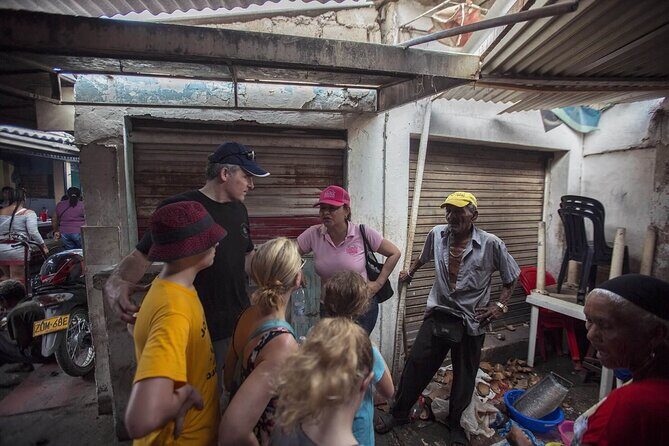
This is also where you may feel the tour’s strongest “human” element. One of the reviews you’ll likely relate to is the chance to speak with older locals and hear stories that don’t sound like textbook history. Even if the conversation isn’t long, it adds a real texture that pictures can’t give.
Also, keep your curiosity switched on here. This isn’t a stop for passive viewing. It’s a stop where the guide’s storytelling links events to identity.
Cultural street art: wide and narrow streets as a history lesson
Getsemaní street art isn’t random. The tour highlights cultural street art and the idea of wide and narrow streets as a way to represent traditions and history.
What that means for you on the ground:
- You’ll start seeing how space shapes movement and community.
- You’ll notice how corners, walls, and lane width can feel like part of the story, not just the backdrop.
- You’ll understand why graffiti and murals work as public communication when private channels were limited.
If you’ve ever walked past a mural and wondered what it meant, this tour helps you read it. You’ll connect symbols and themes to the larger narrative of resistance, pride, and continuity.
One more reason this stop is a value add: street art can be the kind of thing you see and forget. With context, it sticks. You’ll remember specific themes long after you leave the neighborhood.
The Well Square: a reminder that gathering spaces hold memory
The tour also includes The Well square. This kind of place is important because squares are where community life shows up in daily repetition—people meet, talk, and move through shared space.
When the guide brings in the neighborhood’s deeper layers here, it turns a simple stop into a pause for meaning. You start to understand that the history is not only in famous buildings. It’s in how people gather and how public space supports culture and solidarity.
If you like photos, this is also one of those stops where you can frame the streets and architecture without needing a big landmark. Keep an eye on details—doorways, walls, and the way the square opens up around people.
San Felipe Fortress viewpoint: battles, victories, and a big-city perspective
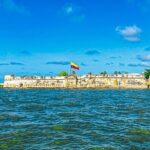
The final highlight is the San Felipe Fortress viewpoint. Even if you’re not a military-history person, this stop works because it gives you a visual understanding of why battles mattered.
You’ll hear stories of fights and victories, and the viewpoint helps the story make sense. From up here, the city’s layout becomes easier to read. You can connect the idea of strategy and movement with what you see below.
This is a great moment to take photos, breathe for a second, and let the tour’s theme click into place: Getsemaní’s identity isn’t separate from Cartagena’s broader story. The neighborhood’s resistance and cultural output connect to the larger history of the city.
If the group is larger when you arrive, expect a bit of waiting for the best angles. Plan for that and don’t rush—your audio still keeps you in the story while you wait.
Cost and value: why $9 can feel like a steal
At $9 per person, this tour offers a lot of value for three reasons.
First, you’re not just paying for a walk—you’re paying for interpretation. The tour is built around history, resistance, and art as a single thread, with key stops like Centenario Park, Trinidad Artistic Square, and San Felipe Fortress.
Second, you get the wireless audio included. That’s not a small upgrade in a city where noise and crowding can derail a traditional tour. It makes the experience easier to follow and more comfortable.
Third, you get a real local touch: the tour includes a courtesy Corozo natural home-made shot, plus recommendations for where to eat, buy coffee, and shop for souvenirs. Then you also get a wristband at the end for benefits and discounts with recommended friends. That can stretch your day’s budget more than you’d expect.
The one thing to be aware of is what’s not included: food beyond the drink, drinks (besides the courtesy shot), transportation to and from your hotel, and any tickets/entrances. If you expect to pay for one fixed-price attraction, this is not that kind of tour. It’s a guided neighborhood experience.
Who should book this Getsemaní tour
This is a strong fit if you:
- Want to understand why Getsemaní looks the way it does, not just where to take photos
- Like street art and music-related history
- Prefer tours with wireless audio for easier listening
- Enjoy walking tours that still include story-rich stops
You might want to skip it if you can’t handle about 8 km of walking, or if mobility limitations make a neighborhood walk hard.
Language-wise, it runs in English or Spanish with an audio system in the same languages, so you won’t be stuck with silence if you don’t catch every word.
Should you book Beyond Colombia’s shared Getsemaní Art District tour?
I’d book it if you want Cartagena’s Getsemaní side with context. The tour’s best ingredients are the connection between resistance and culture, and the fact that the storytelling is easy to follow thanks to the wireless live audio system.
If you’re on a budget and still want a meaningful experience—history that explains the walls and squares you’ll walk past—this one makes a lot of sense for the money. Just come ready for the walk, hydrate, and wear shoes that forgive cobblestones and long stops.
FAQ
How long is the Getsemaní Art District tour?
The tour lasts about 2.5 hours. Starting times vary by availability, so you’ll want to check the schedule when you book.
What languages are available for this tour?
You can join with an English- or Spanish-speaking tour guide. The wireless audio guide is also available in English and Spanish.
Does the tour include a wireless audio system?
Yes. The tour includes a wireless live system so you can hear the guide clearly even when you’re farther away.
Where do I meet the guide in Cartagena?
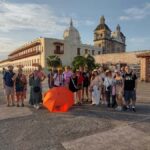
Monday to Friday, you meet in Plaza de la Proclamación next to the statue of the Pope. On Saturdays and Sundays, you meet in Plaza de la Santo Domingo next to Botero’s statue Gertrudis. You’ll look for the guide with red umbrellas.
Is any food or drink included?
You get a courtesy Corozo natural home-made shot. Drinks, food, and souvenirs are otherwise not included, but the guide will share recommendations.
Is the tour suitable for people with mobility impairments or wheelchair users?
No. This walking tour is not suitable for people with mobility impairments and is not suitable for wheelchair users.