REVIEW · MEDELLIN
Do Not Say That Name
Book on Viator →Operated by Colombia Travel Operator SAS · Bookable on Viator
Medellín has layers, and this tour helps you read them fast, especially through the Commune 13 transformation and the city’s memory sites. I like that it’s a private experience with a bilingual guide, so the pace and explanations can actually match your questions.
The big catch: the amount of time spent on specific cartel-linked landmarks can feel light compared with what some people expect from a TV-inspired search for big-name places.
In This Review
- What you’ll enjoy most in 4 hours
- Key highlights at a glance
- Medellín’s cartel story, handled the right way
- Morning vs. afternoon: picking the slot that fits your energy
- Stop 1: Parque Memorial Inflexión and the old Edificio Mónaco lot
- Shrine of the Virgin Mary: a quick stop with living faith
- Stop 2: Cementerio Jardines Montesacro and a grave visit
- Stop 3: Parque San Antonio and the shift in the cartel war
- Commune 13: escalator views, murals, and the metro cable ride
- A note on what Commune 13 can teach you
- Guides make or break the tour (and names matter)
- What the itinerary feels like on the ground
- Included value: why $78 can make sense here
- Possible drawbacks to keep in mind
- Who this tour suits best
- Should you book this Medellín tour?
- FAQ
- How long is the tour?
- How much does it cost?
- Is this tour private?
- Does the guide speak more than one language?
- Is transportation included?
- Is medical assistance included?
- Are admission tickets included for the stops?
- Is food included?
- Can I choose a morning or afternoon time?
- Is free cancellation available?
What you’ll enjoy most in 4 hours
I really value how the tour mixes places of grief and reflection with everyday public-works that changed life. If you want Medellín context beyond headlines, you’ll likely enjoy the way the route pairs short memorial stops with views, murals, and rides that show how the city kept moving.
You should also know this is an active route. Expect some walking and time on public transportation style components like the metro cable and neighborhood escalator, built for steep streets and big crowds.
Key highlights at a glance
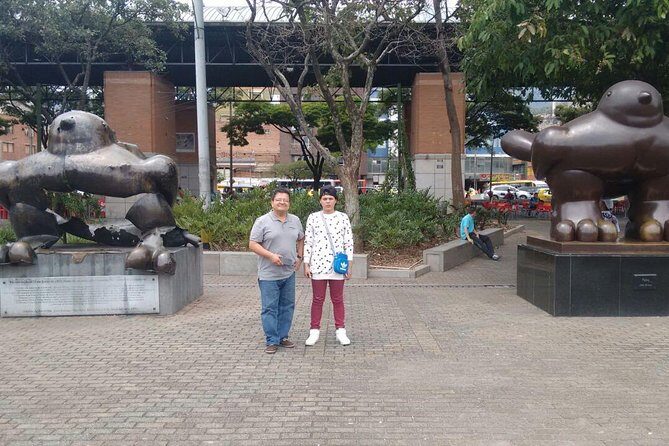
- Private group, bilingual guide: you’ll get your own guide and transport for a more personal pace
- Commune 13 rides: escalator and metro cable views that explain how access changed daily life
- Memorial stops with free entry: you’ll visit significant sites without paid museum fees
- Clear Medellín history through “the war years”: the guide frames conflict and community change
- Medical assistance included: built-in safety support for a 4-hour neighborhood-heavy tour
- Morning or afternoon timing: you can choose the slot that fits your day
You can also read our reviews of more tours and experiences in Medellin.



Medellín’s cartel story, handled the right way
This is a history tour focused on the reality behind a notorious cartel era, without turning it into a trivia contest. The memorial sites bring the emotional weight, while Commune 13 shows the long after-effect: how people rebuild and how public projects can reshape a neighborhood.
What I like is the tone. You’re not asked to cheer for anyone. Instead, you’re guided through a chain of places where the city remembers harm—and where it learned to move forward.
Morning vs. afternoon: picking the slot that fits your energy
You can choose between a morning or an afternoon tour. In Medellín, timing matters because steep neighborhoods can feel more tiring under bright midday heat, while mornings often feel calmer for walking.
If you’re pairing this with other activities in the city, I’d pick the time when you can give it full attention. This tour works best when you don’t rush it, especially during the memorial portions where the story needs time to land.
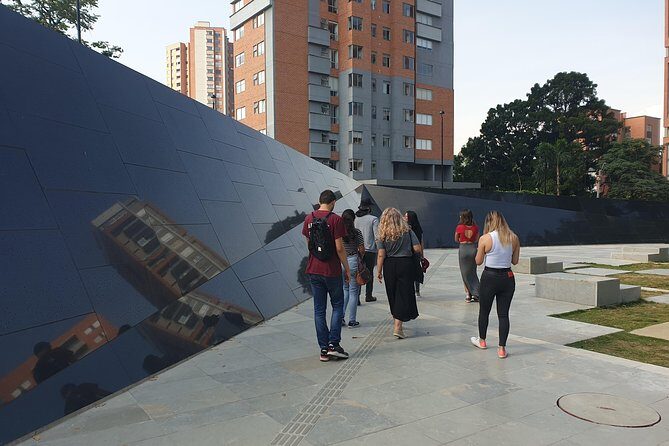
Stop 1: Parque Memorial Inflexión and the old Edificio Mónaco lot
The tour starts at Parque Memorial Inflexión, set on the site of the former Edificio Mónaco—an icon tied to violence and a major turning point in the cartel story. The key here isn’t “seeing a famous building,” because the emotional point is the location and what the memorial explains.
You’ll spend about 15 minutes here. That’s enough time to understand the theme—pain, consequence, and remembrance—without dragging the day into something exhausting.
Practical note: this is a moment to slow down. You’ll get more out of it if you ask your guide how the memorial connects to the wider neighborhood story later on.
Shrine of the Virgin Mary: a quick stop with living faith
Between major stops, the route includes a visit to a shrine of the Virgin Mary. Pilgrims come here asking for miracles, so the mood shifts from historical reflection to something more personal and present-day.
The stop is brief, so don’t expect a museum-level experience. Think of it as a pause that reminds you: Medellín isn’t only about the worst chapters. It’s also about what people pray for now.



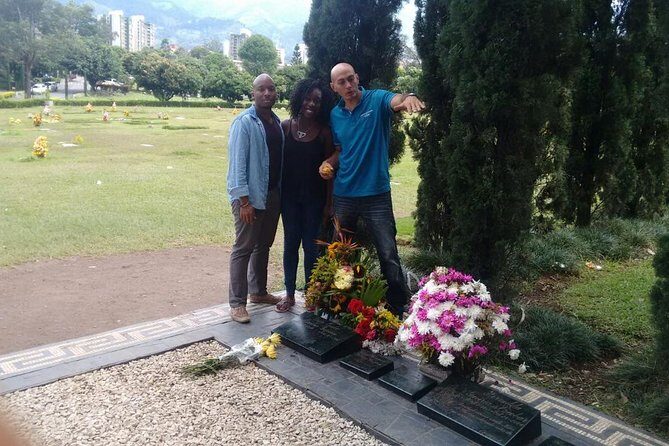
Stop 2: Cementerio Jardines Montesacro and a grave visit
Next up is Cementerio Jardines Montesacro, with a short stop in a gravesite area. Admission is free, and the time on-site is around 20 minutes.
A cemetery visit can go two ways on a tour: either it becomes a quick photo stop, or it becomes a real story moment. With the right guide, it turns into context—why this particular place matters and how families and communities process a violent legacy.
If you’re bringing teens (or you’re the teen in spirit), this stop can also be a useful reality check. It’s hard to keep treating cartel history like Netflix plot when you’re standing in a real place of grief.
Stop 3: Parque San Antonio and the shift in the cartel war
At Parque San Antonio, the guide explains how the conflict changed. This is the kind of stop that works like a timeline anchor: you connect what you’ve just learned at the memorials with how the war years evolved in Medellín.
You’ll usually have about 15 minutes here. Since it’s short, your best move is to ask one targeted question—something like what changed on the ground and why that mattered to ordinary people.
Commune 13: escalator views, murals, and the metro cable ride
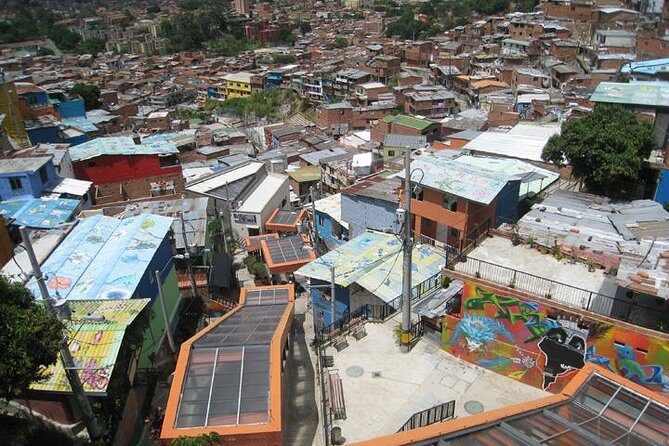
Where the tour often feels most meaningful is Commune 13, a neighborhood that transformed through public improvements and community energy. In practice, this part is where you’ll see Medellín’s grit and creativity side by side: murals, city views, and the public works that help people travel through steep terrain.
One reviewer highlighted riding the escalator all the way up and how it opened up private lives and remarkable murals. That tracks with what I’d expect here: the escalator isn’t just a ride, it’s a symbol of how access can change a neighborhood.
You’ll also likely take part in a metro cable experience, a cable car-style public transit route that helps you understand the geography of the valley. In reviews, that ride is described as a clear window into how people live above and around the tracks of daily movement.
A note on what Commune 13 can teach you
This portion isn’t only about sightseeing. You’ll usually hear how conflict and culture tangled together over the years. One guide framing mentioned how Medellín’s hip hop growth and community life connected to the cartel era, and how that influence shaped local identity.
Even if you don’t remember every detail, you’ll come away with the big idea: the city’s violence is part of its history, and the city’s community projects are part of its response.
Guides make or break the tour (and names matter)
This is one of those experiences where guide skill shows up quickly. You’ll see that in the reviews—especially with English clarity, storytelling flow, and how much time the guide spends on each theme.
- Juan Carlos stood out as an enthusiastic guide who made the experience feel “magnificent” by combining story with entertainment and strong delivery.
- Hector impressed one group with pride in Medellín and an energetic pace, connecting the escalator and cable system to real neighborhood change.
- On the other end, Nicolas Zapata was mentioned by a different group where English skills and narration pacing were described as lacking, with details left out and answers given too briefly.
How does that help you? It means you should treat this as a guide-driven tour. If you care most about the cartel narrative specifically, ask your guide early how much time they spend on that side of the story versus the neighborhood transformation.
What the itinerary feels like on the ground
Even with named stops, the day has a rhythm: short memorial visits, a faith shrine pause, then the shift toward city transformation through Commune 13 activities. That structure makes sense because it moves you from consequence to change.
Also, you’re getting private transportation, so you’re not stitching together taxis between steep sectors. That matters in Medellín, where getting around fast can be its own mini-adventure.
Included value: why $78 can make sense here
Let’s talk value, because this isn’t just a “sit in a car and listen” price tag. For $78 per person (about 4 hours), the tour includes:
- a bilingual guide
- private transportation
- medical assistance
- free admission at the named stop sites
That combination can add up quickly if you tried to copy it yourself. Even if you could reach the neighborhoods on your own, you’d still likely pay for a guide to connect memorial locations and neighborhood redevelopment into one coherent story, and you’d still want comfortable logistics between steep areas.
If you’re visiting Medellín with limited time, this kind of guided route is often the highest-effort-per-hour option. You’re paying for focus and flow.
Possible drawbacks to keep in mind
The biggest consideration is expectation management. This tour is strongly Medellín-focused, and Commune 13 often carries more weight than people anticipate for the cartel-famous landmarks side.
One group described the historical parts as brief compared with what they hoped for, and they felt some narrative details were missing. Another group said there wasn’t much directly linked to the drug lord era beyond the memorial and the cemetery area, even though Commune 13 was still interesting and credited to local transformation.
So here’s my practical advice: if your goal is purely to chase well-known cartel filming locations or specific “must-see” sites, you might end up wishing for more time at those kinds of stops.
But if your goal is to understand how Medellín remembers, mourns, and rebuilds, you’re in the right place.
Who this tour suits best
This fits best if you:
- want a guided history walk that connects memorial sites to real neighborhood change
- like public-works sightseeing, like the escalator and metro cable
- travel with teens or friends who want more than a surface-level Netflix-style story
It may be less ideal if you:
- only care about one celebrity-linked narrative and want every famous related location in one trip
- need long, detailed narration on every stop and don’t want short site visits
Should you book this Medellín tour?
If you’re spending limited time in Medellín and want a smart mix of memorial reflection and real-life community change, I’d book it—especially because it’s private with a bilingual guide and includes transportation.
Before you go, set your expectation that Commune 13 is usually the payoff section, while the memorial stops are shorter but meaningful. If you’re detail-obsessed about specific cartel-related landmarks, message the operator or ask your guide how the day balances the story sides—so you don’t walk in with the wrong mental checklist.
FAQ
How long is the tour?
It runs for about 4 hours.
How much does it cost?
The price is $78.00 per person.
Is this tour private?
Yes. It’s a private tour/activity, and only your group participates.
Does the guide speak more than one language?
Yes, a bilingual guide is included.
Is transportation included?
Yes. Private transportation is included.
Is medical assistance included?
Yes, medical assistance is included.
Are admission tickets included for the stops?
The listed memorial sites show admission as free, and the tour includes those stops.
Is food included?
Food and drinks are not included unless specified.
Can I choose a morning or afternoon time?
Yes, you can choose between a morning or afternoon tour.
Is free cancellation available?
Yes. You can cancel up to 24 hours in advance for a full refund.