REVIEW · CARTAGENA
Gabriel Garcia Marquez Shared Tour: the magical Cartagena
Book on Viator →Operated by Beyond Colombia Free Walking Tour Bogota · Bookable on Viator
Gabo’s imagination turns Cartagena into a living page. This magical realism walking tour threads through historic squares and landmarks tied to Gabriel García Márquez, from daily-life scenes to the author’s own world of absurd, imaginary moments. I love how it makes you look at familiar streets with new eyes, even if you’re not chasing museums.
Two things I like a lot: the García Márquez-focused route through places like Plaza Santo Domingo and the Claustro de la Merced Mausoleum, and the included typical drink test, which keeps the whole experience from feeling purely academic. The small group size (up to 20 people) also helps the guide keep the story line moving without the tour turning into a shuffle.
One consideration: two stops may involve admission not included (like the Sofitel area and the house finish), so you should be ready for parts of the experience to be outside or limited depending on access/open hours that day.
In This Review
- Key highlights before you go
- Gabo’s Cartagena: why this tour feels different than a normal walk
- Price and logistics: what $13 really gives you
- Where it starts: Plaza de Santo Domingo to get your bearings
- Stop 1: Plaza Santo Domingo and the daily-life inspiration
- Stop 2: Claustro de la Merced Mausoleo de Garcia Marquez
- Stop 3: Iglesia de Santo Toribio as a story symbol
- Stop 4 and 5: Parque Fernández Madrid and Plaza de San Diego
- Stops 6 and 7: Sofitel Legend Santa Clara Cartagena and Hotel Makondo
- Stop 8: Casa de Gabriel García Márquez to finish the loop
- The included typical drink test (and how to plan around it)
- How the small group size changes the tour
- Who should book this magical Cartagena tour
- Should you book the Gabriel Garcia Marquez Shared Tour: the magical Cartagena?
Key highlights before you go
- A Gabo route built around squares and corners you can picture from his work
- Claustro de la Merced Mausoleo de Garcia Marquez for a proper tribute stop
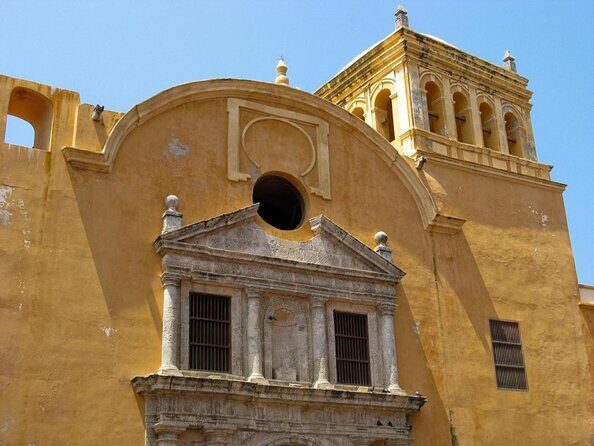
- Colonial architecture and author-linked public spaces, like Iglesia de Santo Toribio and Parque Fernández Madrid
- Hotel stops that connect fiction to real streets, including Hotel Makondo
- A guided typical drink test that fits the Cartagena rhythm
- Shared tour format with a capped group size of 20 for smoother pacing
Gabo’s Cartagena: why this tour feels different than a normal walk
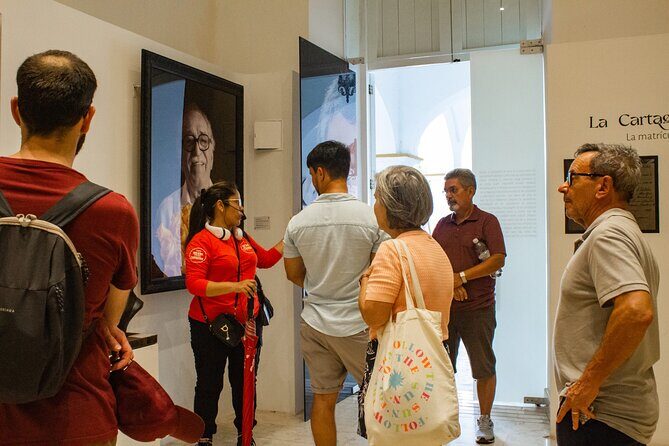
This is the kind of tour that changes how you see the city. Instead of treating Cartagena as a postcard set, the guide frames it as a set of story stages. You’ll move from square to square, balcony to balcony, with the author’s life and the ideas behind magical realism shaping what you notice.
That storytelling angle matters, especially in a place like Cartagena where the buildings and street layouts can make you feel like you’re walking in circles. Here, the loop has a plot. You’re not just passing landmarks; you’re following a narrative thread tied to Gabriel García Márquez and the way his imagination worked.
If you’ve read his books, you’ll recognize the mood fast. If you haven’t, you still get the point: the tour uses real locations to explain how fiction can feel like memory. Either way, you end up with “I see it now” moments rather than “I saw a building” moments.
You can also read our reviews of more tours and experiences in Cartagena.



Price and logistics: what $13 really gives you
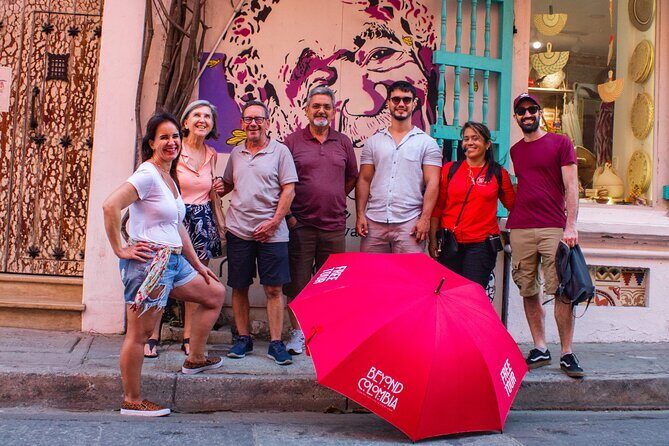
The price is $13.00 per person, and it’s a shared Free Walking Tour style experience. You pay through Viator, and that payment matches the suggested tip amount for the guide’s job (minus Viator’s commission). In plain terms: you’re funding a guide-led walk, not buying a ticket to a fixed museum route.
For value, that’s a strong deal in Cartagena because you get several structured stops across the historic center and nearby areas. The duration is about 2 hours 56 minutes, long enough to feel like you actually covered ground, not a quick “checklist loop.”
Booking tends to happen in advance (around 18 days on average), which tells me demand is steady for this theme. If you want a specific day/time, plan ahead instead of gambling.
Practical notes that help you enjoy it:
- It’s a mobile ticket, so you can keep everything on your phone.
- Start time is 4:00 pm, which is a smart slot for evening wandering without the strict midday intensity.
- Maximum group size is 20 travelers, which usually means you can hear the guide and keep up.
Where it starts: Plaza de Santo Domingo to get your bearings
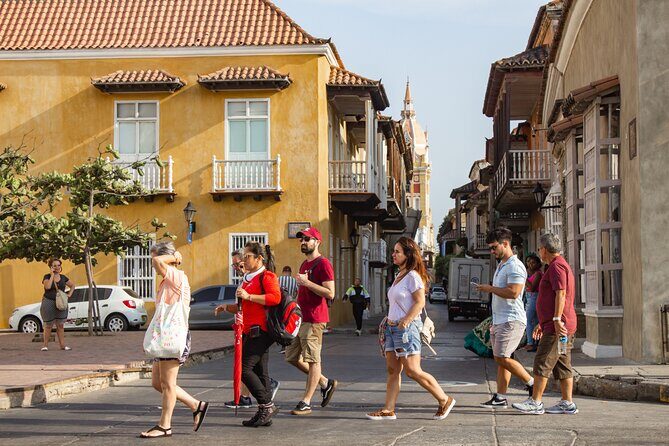
The meeting point is Plaza de Santo Domingo, on Cl. 35, El Centro. This is a good starting choice because it anchors the tour in the everyday life of Cartagena—not just architecture. The guide begins with why this plaza shows up in García Márquez’s imagination and daily Carthagenera life.
You’ll get a feel for the walking rhythm right away. The tour’s stop pattern is consistent, with about 22 minutes per stop. That structure helps you mentally reset between locations, instead of feeling like you’re waiting around while the guide finds the next story.
If you’re the kind of person who likes to understand context before you move on, this start does the job. You’re not dropped into the middle of facts—you’re given a lens.
Stop 1: Plaza Santo Domingo and the daily-life inspiration
At Plaza Santo Domingo, the guide ties the place to García Márquez’s work and the pulse of daily life for locals. I like this stop because it’s not trying to be a “look at this facade” moment. It’s about why people gather, how a public square becomes part of someone’s imagination, and how that can later turn into literature.
One practical benefit: after this stop, you’ll be able to interpret what you see in the next locations. You’re trained to look for the human details—where routine happens, where stories begin, and how public space shapes identity.
Stop 2: Claustro de la Merced Mausoleo de Garcia Marquez
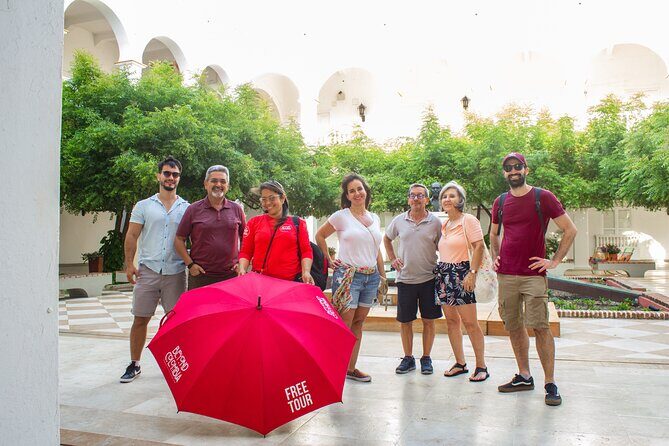
Next is the Claustro de la Merced Mausoleo de Garcia Marquez, which is a tribute and also a meeting point for lovers of his work. This is where the tone shifts from “inspiration” to “legacy.”
I like that the stop doesn’t just point at a monument. It frames the mausoleum as a place for reflection, connecting his life and legacy to why we still walk these streets through his eyes. It also gives you a pause in the middle of an active walk, which matters when you’re doing a long, story-heavy itinerary.
If you’re a Gabo fan, this is likely your anchor moment. It’s also a good test of whether this tour’s format will work for you: if the literary focus feels meaningful, you’ll enjoy the rest much more.



Stop 3: Iglesia de Santo Toribio as a story symbol
The tour moves to Iglesia de Santo Toribio, described as an example of Cartagena’s colonial architecture and a setting for many of García Márquez’s novels. Even without going deep into dates or art-history details, the guide makes the church feel like a symbol inside the broader narrative world.
A possible drawback here: if you’re expecting a full interior visit, the data only guarantees the stop and story time, not a specific inside tour. So treat this stop as a guided interpretation experience that may be mostly based on what’s visible and accessible on the day.
Still, the payoff is strong if you’re curious about how writers use real places as backdrops. You’ll likely start noticing how the same location can carry multiple layers at once: spiritual function, architectural presence, and story memory.
Stop 4 and 5: Parque Fernández Madrid and Plaza de San Diego
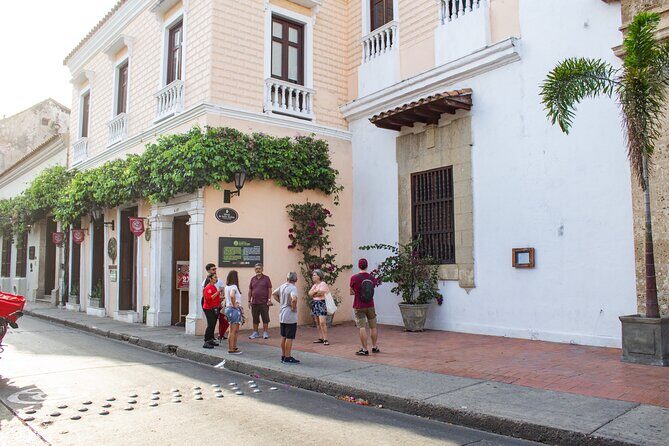
After the church, you’ll land in Parque Fernández Madrid, a quieter, welcoming break spot. The guide explains how it inspired Gabo to create iconic characters. I like this kind of stop because parks can easily become “just a pause.” Here, it’s a story pause. You’re resting your feet while learning why a calm place can generate strong ideas.
Then comes Plaza de San Diego, where the guide talks about daily life in Cartagena at the time García Márquez was young and how that experience influenced his work. For me, this combination works well: you go from character creation in a park to youth-era daily scenes in a plaza, creating a timeline feel without making it a lecture.
If you’re traveling with people who worry about literary tours being too slow, this section helps. It mixes quieter downtime with clear narrative progression, so the walk doesn’t feel like constant talking.
Stops 6 and 7: Sofitel Legend Santa Clara Cartagena and Hotel Makondo
This is where the tour leans hard into the fiction-real connection.
First, Sofitel Legend Santa Clara Cartagena appears as a scene tied to many of García Márquez’s characters, with legends and mysteries surrounding the place. Then you move to Hotel Makondo, described as inspired by García Márquez’s work and as a tribute to magical realism.
I like the logic of these stops: you go from public spaces and religious/colonial settings into locations where the “mystery of a place” becomes part of the story experience. It’s the tour’s biggest theme made physical. These stops help you understand magical realism as more than a writing label—it’s a way of reading the ordinary as strange, meaningful, and emotionally true.
Worth knowing: admission to these hotel-related stops is marked as not included for at least Sofitel Legend Santa Clara, while the Makondo stop is listed as free. That means you should expect that what you can do inside may depend on access and what’s open.
Stop 8: Casa de Gabriel García Márquez to finish the loop
The tour ends at Casa De Gabriel Garcia Marquez, in the Getsemaní area, at Homenaje a García Márquez, Cl. 27 #10b-2 a, Cra. 10b #120. This is the finish point, and it’s the most personal stop: the house where he lived.
Here, the practical approach is best. The info says you can visit some spaces if it’s open to the public, but admission isn’t included. So consider this a guided finish that may or may not include inside access.
Even if you can’t go inside, the tour’s last stop matters because it ties everything back to the person behind the stories. You’ve seen the public-life inspiration points, then the places that carry fictional energy, and you end at the author’s home—so the theme closes cleanly.
The included typical drink test (and how to plan around it)
One of the included items is a typical drink test. I like this detail because it turns the tour into a senses experience instead of only a story experience. It also fits the Cartagena vibe: even when you’re focused on literature, you’re still in a place with a local rhythm.
Snacks and lunch aren’t included, so plan your timing accordingly. Since the tour starts at 4:00 pm and runs just under 3 hours, you might want a light bite earlier so you’re not thinking about food while you’re listening.
Also, because this is a walking tour through multiple stops (with about 22 minutes at each), wear comfortable shoes and keep water in mind. That’s not “tour advice,” it’s basic physics. Cartagena streets can make even a calm afternoon feel like you walked farther than you planned.
How the small group size changes the tour
With a maximum of 20 people, this kind of guided walking experience stays human. You’re less likely to get lost in the crowd, and you can hear the guide’s connections between places and stories.
That matters a lot for a concept tour like this. Magical realism works best when the guide can point out the tiny “why this place” connections. In a large group, those details can get swallowed. Here, you’re more likely to get the full thread: where you are, what it meant to the author, and why that becomes part of the magical feel.
Who should book this magical Cartagena tour
This is an easy yes if you fit one of these:
- You love literature, especially Gabriel García Márquez.
- You want to see Cartagena in a story-first way, not only a photo-first way.
- You enjoy guided walking tours where the guide’s narration shapes your route.
It’s also a good pick if you’re the kind of traveler who likes “meaning” built into your afternoon. This walk gives you themes you can carry with you after you leave. When you later see a balcony, a square, or a church facade, you’ll likely remember the connections the guide built for you.
If you’re more into pure architecture facts and prefer strictly factual tours, you might find the tone more interpretive than academic. The premise here is literature-led storytelling, not just stone-and-dates.
Should you book the Gabriel Garcia Marquez Shared Tour: the magical Cartagena?
Book it if you want Cartagena with a plot. The 5/5 track record and strong recommendation rate (100% recommended, based on 82 ratings) make sense for a theme this specific. This tour is for readers and for people who like to understand how writers turn places into emotion.
Skip it if you’re only looking for quick sightseeing with zero story focus, or if you dislike walking through an itinerary that includes hotel areas where access can vary.
My practical verdict: if you’re in Cartagena for a short time and want one experience that’s clearly different from the usual “historic center highlights,” this one is a smart use of your afternoon—especially because it blends guided narrative with a real taste of local life through the typical drink test.