REVIEW · MEDELLIN
Graffiti Tour comuna 13 and cable car (made by local guides)
Book on GetYourGuide →Operated by World Lion VIP Tours Medellin · Bookable on GetYourGuide
Cable car first, then graffiti with deep meaning. I love the cable car views over Medellín and how the day turns into graffiti storytelling about social change. One thing to plan for: there are lots of steps, and the history you’ll hear can be heavy.
The tour is led by local people, and that local perspective really matters. You may meet guides like Laura, Samuel, Jonathan, Fernanda, or Leandro, and the common thread is energy plus respect—people who explain the art without sugarcoating it. You’ll start at the San Javier metro station, outside exit B near red public phones, wearing a red shirt or jacket if you can.
In This Review
- Key Highlights That Make This Tour Different
- San Javier Metro Start: Easy to Find, Easy to Settle In
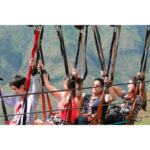
- The Cable Car Over Medellín: More Than a Viewpoint Ride
- Bus to 20 de Julio and the Independence Sectors Walk
- Understanding 1990–2002: How the Tour Frames the Walls
- Graffiti and Murals: Seeing Artists as Part of a Community
- Break Dance and Rap Shows: Performance That Explains Identity
- The Soccer Pitch Stop: Pop Culture Meets Real Streets
- Casa Neon / Casa 3D and the Escalator Lift to Views
- Mass Grave Mountain: The Part You Should Take Slow
- Food and Drinks Included: Quick Stops That Keep the Day Human
- Price and Value: Why $33 Can Feel Like a Bargain
- Who This Tour Is Best For (and Who Might Prefer Something Else)
- Should You Book the Comuna 13 Graffiti and Cable Car Tour?
- FAQ
- FAQ
- How long is the Graffiti Tour Comuna 13 and cable car?
- Where do I meet for the tour?
- What’s included in the tour price?
- What languages are the tours offered in?
- Does the tour run in bad weather?
- Are there any items you can’t bring?
- Is there free cancellation?
- Can I reserve and pay later?
Key Highlights That Make This Tour Different
- Cable car + escalators: two different “Medellín in motion” experiences, not just one viewpoint stop
- Independencia sectors 1, 2, and 3: graffiti routes tied to real neighborhood change
- Armed conflict context (1990–2002): you’ll understand why the walls look the way they do
- Break dance and rap shows: performance that connects street art to identity and hope
- Casa Neon / Casa 3D: playful stop that gives your brain a breather before the heavier parts
- Mass grave mountain visit: one of South America’s biggest mass graves, discussed respectfully and clearly
San Javier Metro Start: Easy to Find, Easy to Settle In
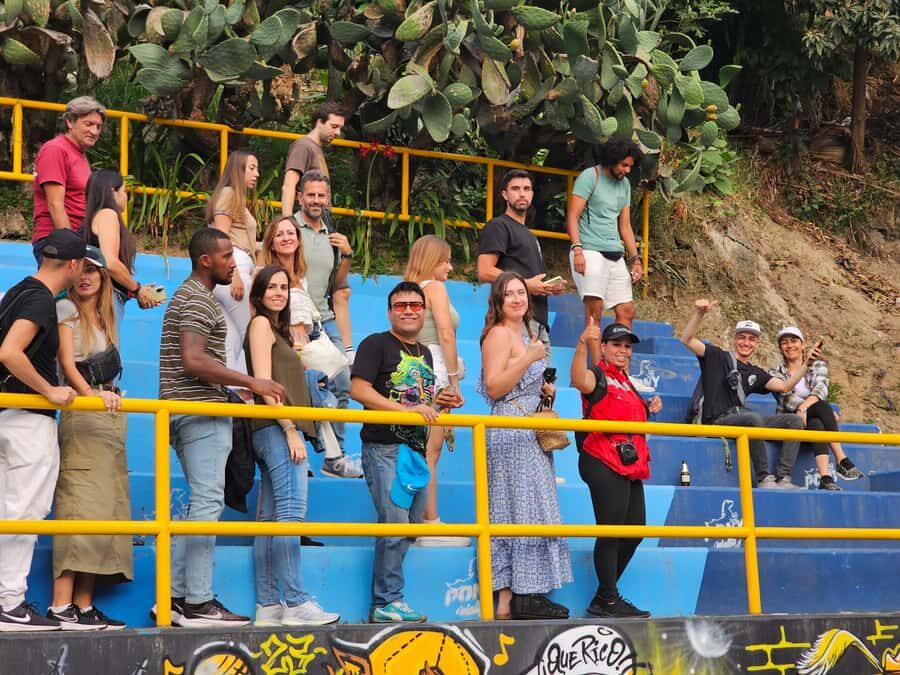
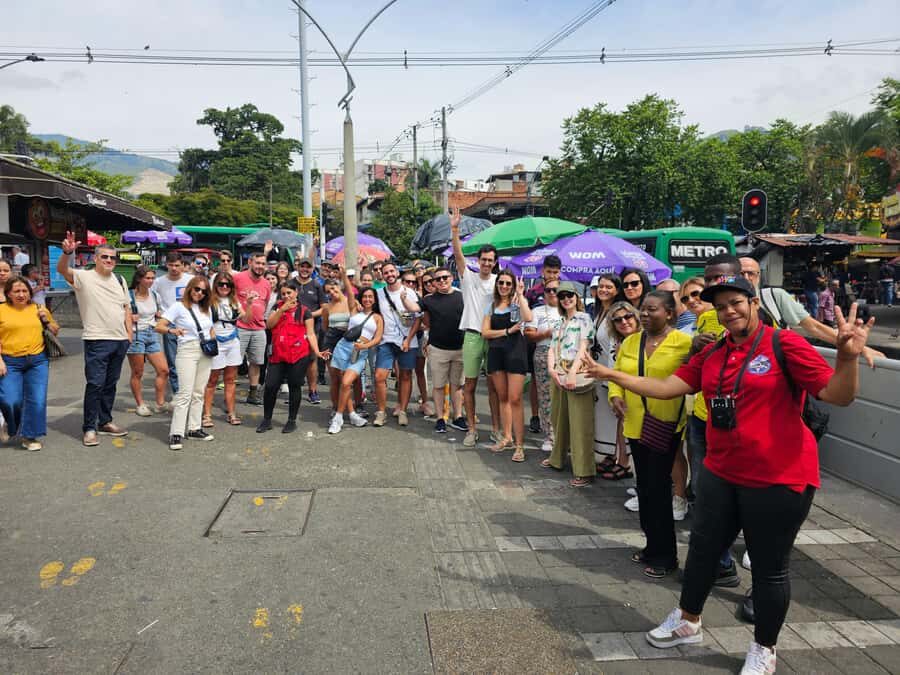
This tour begins at Estación metro San Javier. Meet outside the station at exit B, close to the red public phones, and look for your guide’s group sign—often a red T-shirt or red jacket.
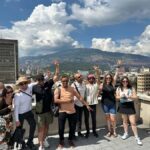
Once everyone is together, there’s a quick meet-and-greet. It sounds small, but it helps you get your bearings fast, especially on day tours where you’re moving through multiple spots in a short window. It also sets the tone: the guide talks with you, not at you.
From there, the first big move is the cable car. If you’re the type who likes photos, this is where you’ll start gathering them. If you’re not, it still works because it changes how you see the neighborhood right away—height, angles, and scale.
You can also read our reviews of more tours and experiences in Medellin.

The Cable Car Over Medellín: More Than a Viewpoint Ride
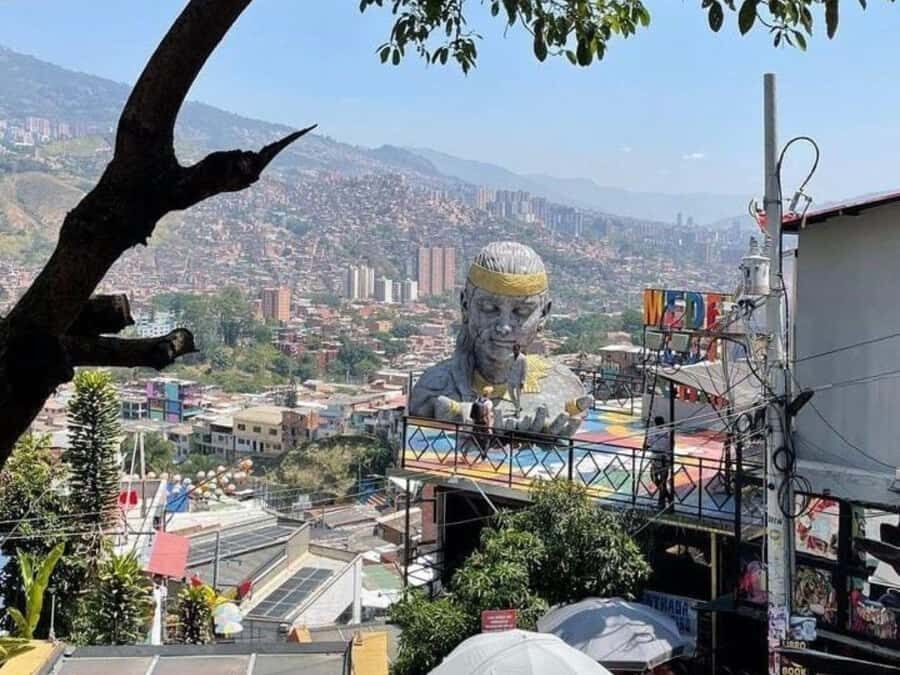
The included cable car ride is one of the best “value per minute” parts of the day. You don’t just look at Medellín—you get a sense of the terrain, how steep the streets are, and why walking and escalators matter in Comuna 13.
Here’s the practical part: dress for comfort. Even if the cable car feels smooth, the rest of the tour involves walking and climbing stairs. I’d treat the cable car as your warm-up and your chance to spot the shapes of the hills you’ll be moving through later.
Also, if your schedule allows you to do this tour in different time slots, you might enjoy seeing it in different light. The “feel” can shift a lot between daytime and late afternoon—especially when you’re heading toward murals and viewpoints.
Bus to 20 de Julio and the Independence Sectors Walk
After the cable car, you’ll head toward 20 de Julio by bus. This transfer is helpful—it keeps the tour moving and lets you spend more time on the walking route where the art and stories live.
Then you’ll walk through the neighborhood areas known as Independencia sectors 1, 2, and 3. That’s where the tour becomes more than sightseeing. You’ll learn how Comuna 13’s transformation is written into the streets: not only in murals, but in the social changes people fought for after years of violence.
This is also where you’ll notice the pace. There are steps and small climbs, and you’ll be outside most of the time. If you get tired easily, slow down intentionally. The guide is there to keep you together, but your body is your real schedule.
Understanding 1990–2002: How the Tour Frames the Walls
Before you start reading the art, the guide explains the armed conflict Comuna 13 faced from 1990 until 2002. This isn’t a dry lecture. It’s the framework that makes later stops make emotional sense.
Why this matters: graffiti can look like decoration if you only treat it as aesthetics. With the conflict context, you start seeing it as communication—sometimes personal, sometimes political, and sometimes a claim to space when communities needed a voice.
The tone stays respectful. Still, be ready for moments that feel heavy. If you’re the type who likes to keep things light all day, you might want to mentally prepare yourself for that contrast: art and music later, after the reality is acknowledged first.
Graffiti and Murals: Seeing Artists as Part of a Community
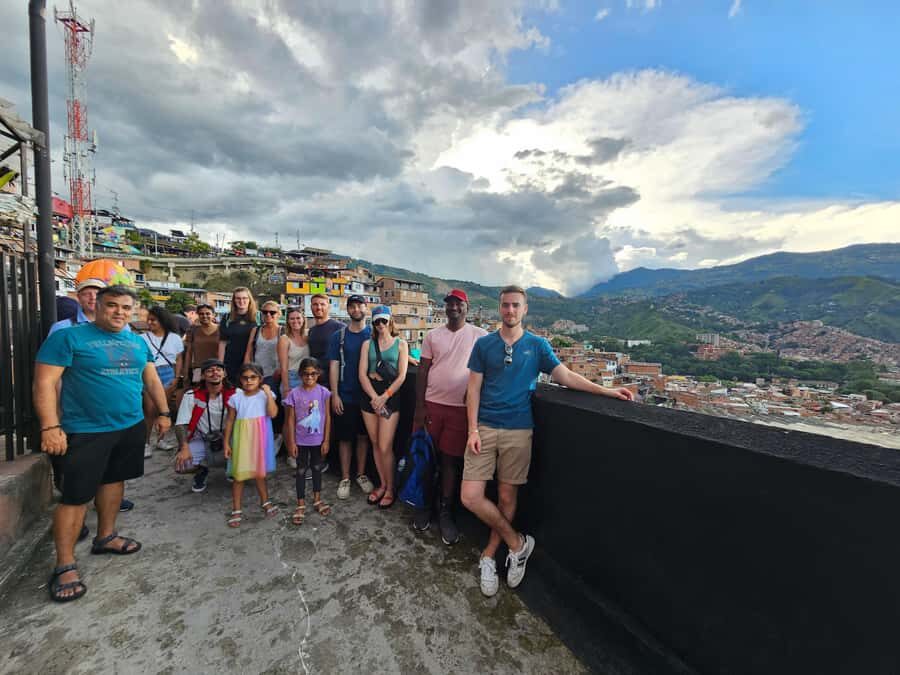
Now you get to the part people come for: the graffiti. You’ll learn about murals made by different artists from Comuna 13, and the guide helps you connect what you’re seeing to the people and values behind it.
What I like about this approach is that it doesn’t treat street art like a random photo stop. Instead, the guide points out how murals work like public storytelling. You’ll notice symbolism, community references, and messages that feel designed for locals first—and visitors second.
If you love art, you’ll probably linger mentally, even when you’re moving quickly with the group. If you don’t, you’ll still understand that the walls here carry memory, grief, pride, and rebuilding. That’s a lot for a short tour, and it’s exactly why it’s considered a must-do in Medellín.


Break Dance and Rap Shows: Performance That Explains Identity
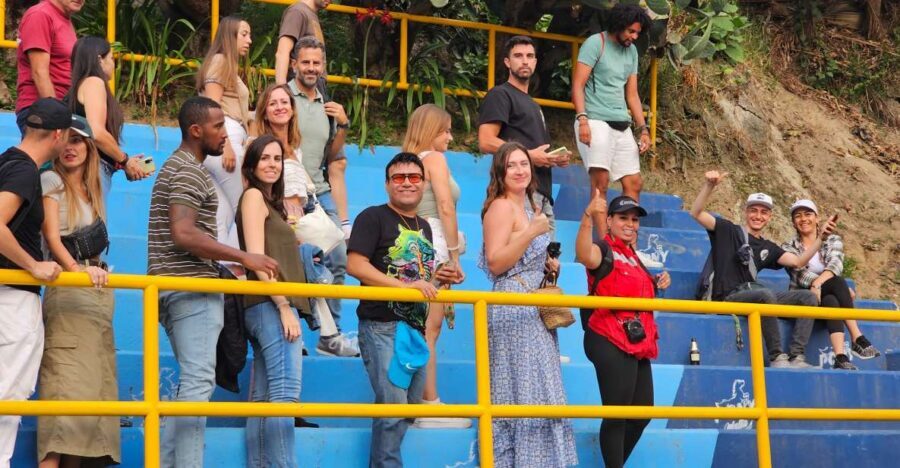
After the street viewing, the tour shifts into music and movement. You’ll enjoy performances of break dance and rap, tied to the neighborhood’s transformation story.
This is one of the most effective “translation tools” on the itinerary. When you watch dance and hear rap in the community context, the meaning of murals stops being an idea and turns into energy. It’s also a break from constant walking—your body rests while your brain keeps learning.
If you’re worried about whether this will feel staged, it helps to remember the point: these performances are part of the way the community expresses itself. You’re not just watching—it’s part of how Comuna 13 speaks.
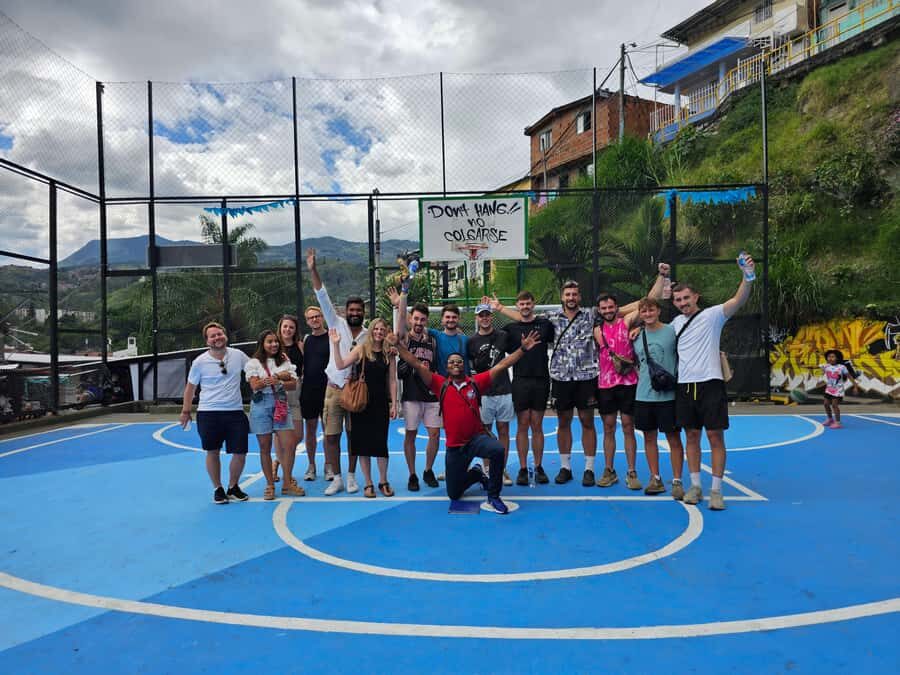
The Soccer Pitch Stop: Pop Culture Meets Real Streets
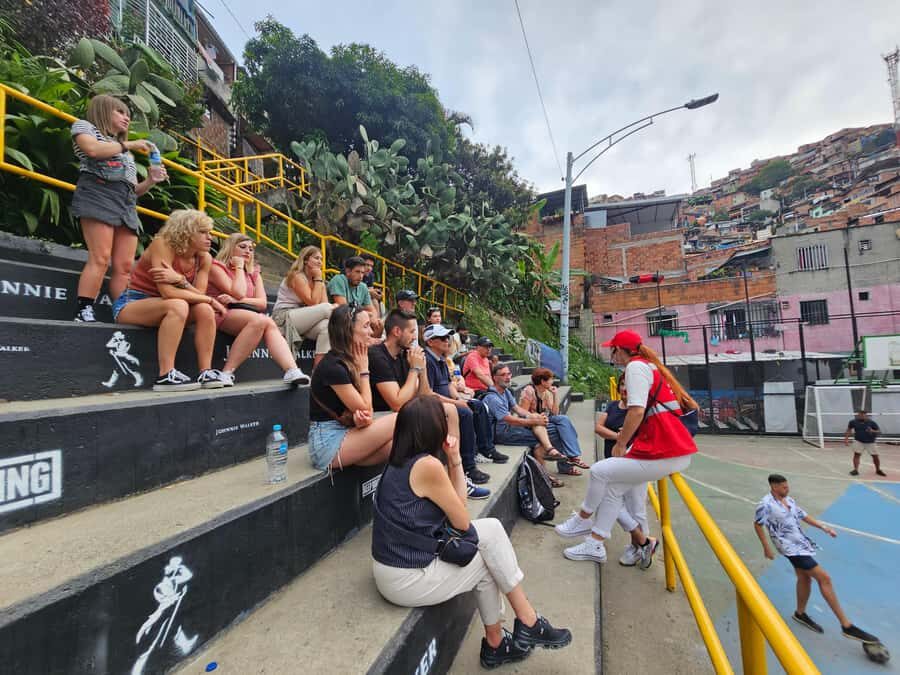
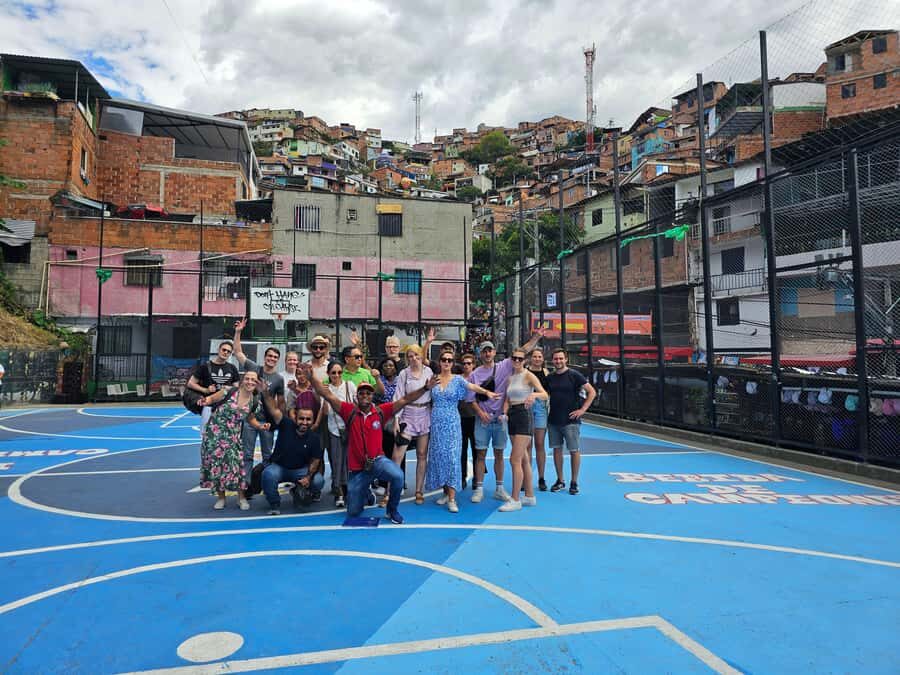
Next is the visit to a famous soccer pitch where celebrities recorded some video clips. It’s a classic city-tour moment—spotting a place you’ve seen in screens, not just in guidebooks.
The useful thing about this stop is the contrast. You go from history-heavy streets to a sports setting that brings a different kind of pride. Even if you don’t care about soccer, it’s a moment where the neighborhood identity is front and center.
Take a few photos if you like, but don’t rush it. It’s a good point in the tour to remind yourself that transformation isn’t only about the past. It’s also about daily life that continues to grow.
Casa Neon / Casa 3D and the Escalator Lift to Views
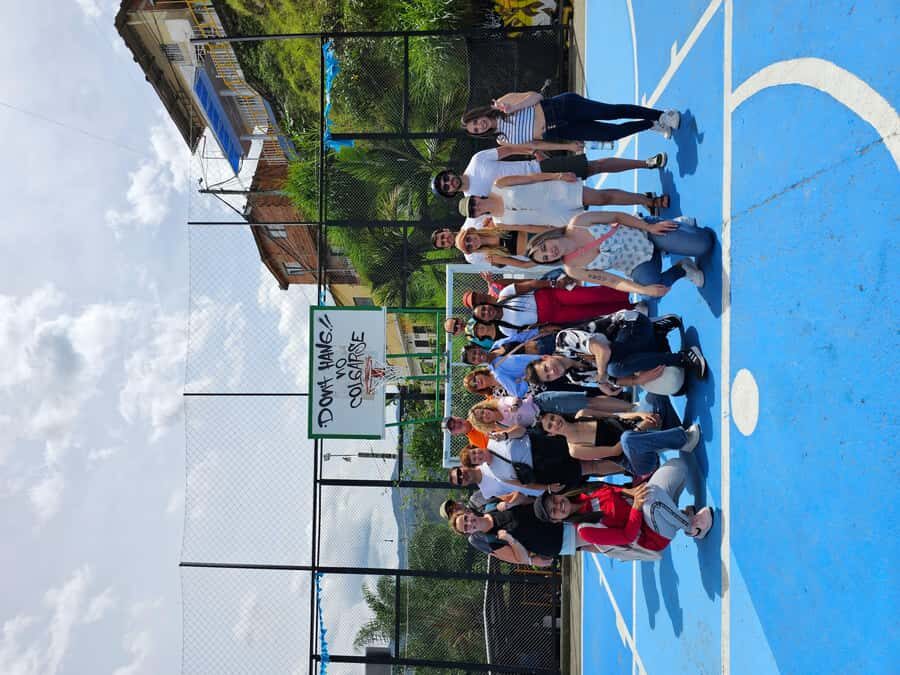
After the soccer pitch, you’ll visit Casa Neon or Casa 3D. This part is playful by design. It gives you a different kind of experience—something visual and fun—without undermining the tour’s deeper themes.
Then comes one of the iconic practical highlights: the escalators. Moving escalators in steep areas change how you think about transportation. Instead of treating the city as something that’s “too hard to reach,” Comuna 13’s infrastructure helps you understand why accessibility and mobility are part of social transformation.
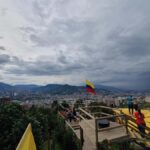
Finally, you’ll reach a top viewpoint area. This is where you take in views of Medellín’s emblematic places. It’s not just pretty. It’s also a mental reset—seeing the city from above after learning how much effort it takes to move through it below.
You’ll also have a short break window—about 15 minutes—which you can use to stand, hydrate, and breathe.
Mass Grave Mountain: The Part You Should Take Slow
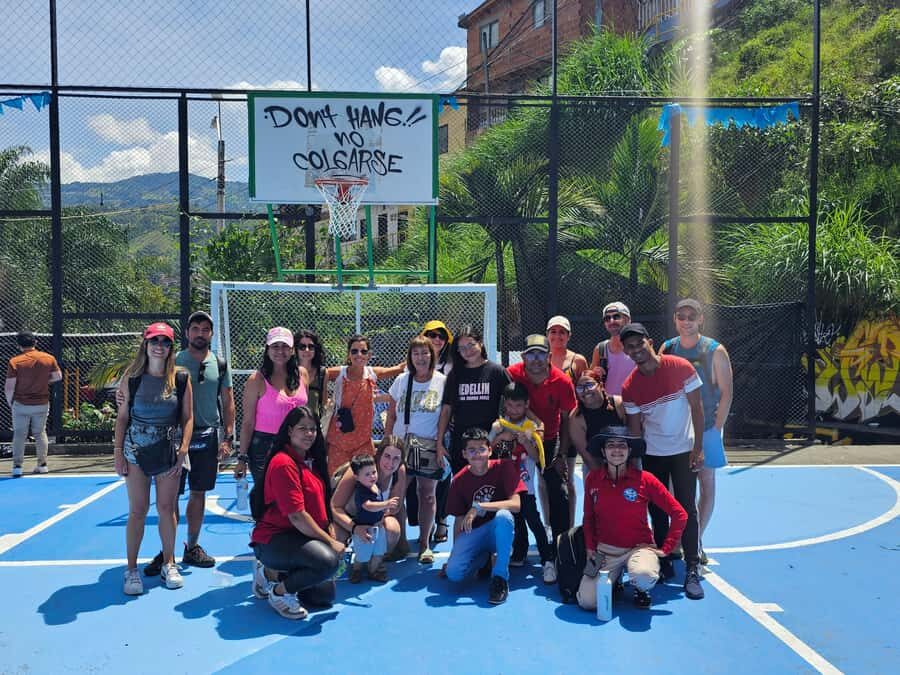
The tour then goes to mass grave mountain, described as one of the biggest in South America. This is the emotional climax of the day.
What I recommend here is simple: don’t treat it like another stop. Let the guide finish the explanation, then take your time looking around without rushing your camera. If you feel uncomfortable, that’s not a failure. It means you’re paying attention.
This is where the earlier conflict context becomes crucial. It helps you understand that the murals and performances aren’t only about style—they’re also about remembrance and recovery. The guide also ends the tour by talking about social transformation in a viewpoint setting, so you get closure instead of just leaving with sadness.
Food and Drinks Included: Quick Stops That Keep the Day Human
This tour includes ice cream and a refreshing drink, plus a short local café stop (about 15 minutes) where you might have options like tea or coffee tasting and a bit of shopping.
In practice, these food moments matter because they prevent the tour from feeling like nonstop walking plus talking. They also give you a taste of everyday life in the area, not just the staged performance part.
Some guides bring the experience to life with local flavors—think cold coffee styles and sweet treats like ice pops mentioned as favorites by past participants. The exact options can vary day to day, but you should count on the stop being there and being part of the included value.
Price and Value: Why $33 Can Feel Like a Bargain
At $33 per person for about 3 hours, the value comes from what’s bundled together. You’re not just paying for a guide. You’re paying for transport (cable car and bus), access to specific local experiences (graffiti route, escalators, art stops like Casa Neon / Casa 3D), plus performances (break dance and rap). You also get food and drinks.
Is it “cheap” compared to a museum ticket? Not really apples-to-apples. But when you compare it to a typical city afternoon where you’d pay separately for transport, guide time, and entry-type experiences, this adds up.
Also, the guide quality is a big part of the value. Many participants highlight how guides like Laura and Samuel bring personal stories and explain things in a warm, engaging way. When that guide is also connected to the community, you get context you’d struggle to find on your own.
The one trade-off is time. You’ll see a lot, which means you won’t linger for hours at one spot. If you like slow travel, plan for brisk pace and focus on what you’re learning rather than trying to “complete” every angle with photos.
Who This Tour Is Best For (and Who Might Prefer Something Else)
This is a strong fit if you want:
- street art with real context, not just pictures
- a short tour that still covers conflict history and current creativity
- live culture stops like rap and break dance
- great city views from cable car and escalators
It might be less ideal if:
- you dislike history or get overwhelmed by heavy topics
- you need a fully relaxed day with minimal walking and stairs
If you’re visiting Medellín for the first time, this tour is also a smart way to understand Comuna 13 as more than a label.
Should You Book the Comuna 13 Graffiti and Cable Car Tour?
Yes—if you’re open to learning and you want a guided route through the art, the music, and the transformation story in Comuna 13. The combination of cable car, graffiti meaning, live performances, and big-city views makes it more than a theme-tour.
My key checklist before you go:
- Wear comfortable shoes for steps
- Bring a camera, but don’t let it control the serious moments
- If you’re sensitive to intense history, mentally prepare yourself
- Look for a guide wearing red near the San Javier metro exit B—show up a few minutes early and start the day calm
If that sounds like your kind of afternoon, you’ll likely feel the tour’s main payoff: you’ll leave understanding why the walls, stages, and views matter.
FAQ
FAQ
How long is the Graffiti Tour Comuna 13 and cable car?
It lasts about 3 hours.
Where do I meet for the tour?
Meet outside Estación metro San Javier, at exit B, near the red public phones. The group is typically identifiable by wearing a red T-shirt or red jacket.
What’s included in the tour price?
In addition to a live tour guide, the tour includes cable car, bus, ice cream, a refreshing drink, dance show, rap show, escalators, graffiti, Casa Neon / Casa 3D, art galleries, and views.
What languages are the tours offered in?
The live guide speaks Spanish and English.
Does the tour run in bad weather?
Yes, the tour takes place rain or shine.
Are there any items you can’t bring?
The tour states no alcohol, no drugs, and no explosive substances.
Is there free cancellation?
Yes. You can cancel up to 24 hours in advance for a full refund.
Can I reserve and pay later?
Yes. The option Reserve now & pay later is available to keep plans flexible.