REVIEW · MEDELLIN
Pablo Escobar Private Tour : Violent Times and The New Medellin
Book on Viator →Operated by Ultra Tours Medellin · Bookable on Viator
Medellín is a city of contradictions, and this tour faces them head-on. You’ll walk key locations tied to Pablo Escobar, then see how the city now frames the pain, the memory, and the change. I like the short, focused stops that fit into a half-day, and I like the memorial-first angle that keeps the focus on victims, not movie myths. One thing to consider: this is heavy material, including Escobar’s burial site and talk of his death, so it’s not the kind of tour you do when you want easy, light entertainment.
What makes it work well is the way the guide ties places together into a timeline you can actually follow. In the glowing feedback, guides such as Luis, Carlos, Andres, Santiago, and Julian are praised for being warm, clear, and helpful—Carlos in particular is noted for sharing great lunch recommendations between stops. Still, because this is centered on violent events, you’ll want a guide who explains with care, and you may need a respectful mindset for parts of the route.
In This Review
- Key Highlights You Should Care About
- A Half-Day in Medellín That Takes Escobar Seriously
- Price and Time: Is It Worth $49.99?
- The Small-Group Advantage: Guides Who Explain, Not Just Drive
- Stop 1: Parque Memorial Inflexion and the Monaco Building Ruins
- Stop 2: Barrio Pablo Escobar, Housing for Families, and the Power of a Mural
- Stop 3: Cementerio Jardines Montesacro and the Family Graves
- Stop 4: Los Olivos, the Last House, and the Roof Story
- Violent Times to The New Medellín: How the Tour Connects the Dots
- What to Bring, What to Expect, and How to Pace Yourself
- Who This Tour Fits Best
- Should You Book This Pablo Escobar Tour?
- FAQ
- How long is the Pablo Escobar Private Tour in Medellín?
- What sites are included on the tour?
- Is admission included for the stops?
- How many people are in the group?
- How much does the tour cost?
- Is the tour near public transportation?
- Can most travelers participate?
- Can I cancel for a full refund?
Key Highlights You Should Care About
- Parque Memorial Inflexion: Ruins tied to Escobar’s era, now used as a memorial space for civil-war victims
- Barrio Pablo Escobar: A neighborhood story that includes housing for homeless families and a mural honor
- Cementerio Jardines Montesacro: A visit to Escobar’s grave and the family members listed there
- Los Olivos house stop: A look at the last home and discussion of the official vs real version of his death
- Small-group format: Maximum of 20 people, with about 4 hours total
- Admission included: Tickets are included at each of the four stops
A Half-Day in Medellín That Takes Escobar Seriously
This is the kind of tour that works because it doesn’t treat Pablo Escobar like a cartoon villain or a celebrity character. The focus is on what Escobar did to Medellín, how those years unfolded in public, and how the city now tries to speak about that past without turning it into a shrine. The route is built around four stops, with about 15–20 minutes at each one, so you’re not stuck in long stretches of “bus window history.”
If you’re the type of traveler who likes street-level context—who wants to know what you’re looking at and why it matters—you’ll probably like the structure. You’ll see memorial space, a neighborhood with a specific social story, a cemetery site, and a final-home viewpoint. It’s a clean arc: the violent years, the human cost, and the Medellín that has been rebuilding and rebranding itself.
The other reason I think it’s a solid value is timing. At about 4 hours, it slots into a day without stealing your whole schedule. At $49.99 per person, it’s not a bargain in the ultra-budget sense, but it’s also not priced like a luxury private driver-and-guide experience. Given that admissions are included at the stops, it can feel fair—especially if you’d otherwise pay entry fees and pay a separate guide.
You can also read our reviews of more private tours in Medellin


Price and Time: Is It Worth $49.99?
Let’s talk value like a planner, not like a brochure.
You’re paying $49.99 per person for a roughly 4-hour small-group tour, and the schedule includes admission tickets at each of the four stops. Those admissions matter because this route is mostly made of places you can’t just “look at from the sidewalk.” The memorial park, the cemetery stop, and the neighborhood-linked sites are part of the experience because they hold meaning inside the boundaries of the locations themselves.
Also, the tour is described as being booked about 5 days in advance on average. That tells me you should reserve early if your dates are fixed. If you arrive with a last-minute plan, you might have fewer options for the time of day.
Finally, think about what you want from your Medellín day. If your goal is a photo-only highlight run, this isn’t that. If your goal is understanding—how violence shaped the city and how the city talks about it now—this price-to-time ratio starts to make sense.
The Small-Group Advantage: Guides Who Explain, Not Just Drive
Even though it’s called a private tour, the experience caps at 20 travelers, which is what I consider a sweet spot for this kind of content. With a group this size, you can usually hear the guide without shouting. You also avoid the feel of a massive tour line where you’re always watching the back of someone else’s head.
The standout theme in the praised feedback is communication. People mention guides like Luis and Andres as being friendly and very informative about Escobar and Medellín. Others highlight Carlos as hospitable and knowledgeable, and again the point isn’t just facts—it’s how the facts connect to daily life in Medellín. There’s even mention of lunch recommendations during the tour window, which is a practical touch: it helps you convert the history you just learned into a good meal plan afterward.
For you, that means this tour should feel like a guided conversation with structure: stop, context, what you’re seeing, then move on.
Stop 1: Parque Memorial Inflexion and the Monaco Building Ruins
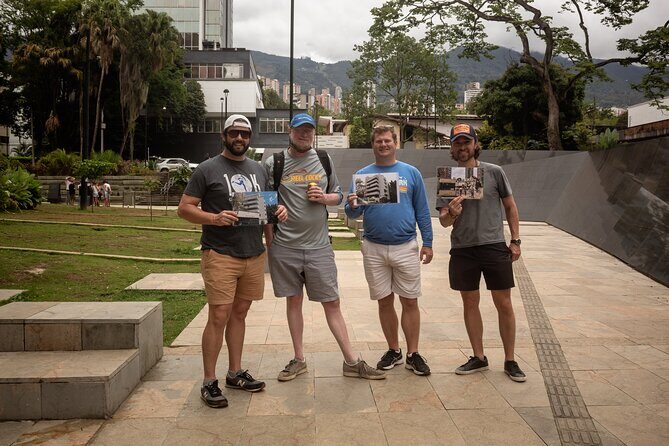
Your first stop is Parque Memorial Inflexion, tied to the ruins of the Monaco Building—the place Escobar lived with his family during the days before it was bombed by his enemies. Today, it operates as a memorial park dedicated to the victims of the civil war, described as honoring the real heroes of those dark times.
This is an important choice for the tour because it sets the emotional tone. Instead of starting at an Escobar-only site, it starts where the city frames the past through loss and remembrance. You get a chance to re-center before the tour shifts into places that can feel more provocative, like the neighborhood sites and the cemetery.
Practical expectation: plan for a short visit—about 15 minutes—so come ready to focus. This isn’t meant to be a museum marathon. It’s a “get your bearings” stop that helps you interpret the next locations.
Possible drawback to consider: if you’re hoping for a purely chronological, neutral history lecture with no heavy emotional framing, the memorial angle may feel intense right away. But if you want context with respect, this opener is one of the strongest parts of the route.
Stop 2: Barrio Pablo Escobar, Housing for Families, and the Power of a Mural
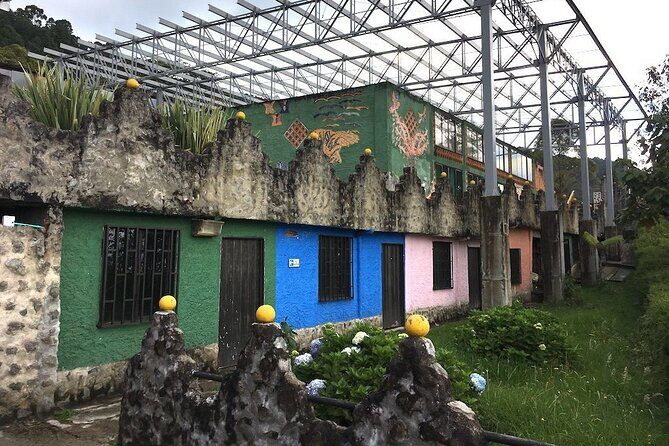
Next you head to Barrio Pablo Escobar, where you’ll learn how the neighborhood was constructed for homeless families in the late 1980s. There’s also mention of a mural made by the community in honor of him.
That detail is key. It forces a complicated question: how do you handle the fact that some actions attributed to powerful figures can include visible help for people, even while the broader story is rooted in violence? The tour’s job here is not to wash anything away. It’s to show you that Medellín’s reality was (and is) tangled.
The stop is short—about 20 minutes—so don’t expect a deep “policy lecture” on urban planning. Instead, expect a guided walk-and-explain moment: you’ll look at the space, hear the story behind it, and notice how public art like a mural can carry community memory.
One practical tip for you: slow down at the mural and let your guide explain what the community chose to paint and why. That can be more meaningful than snapping photos, because it shows how people live with history in public space.





Stop 3: Cementerio Jardines Montesacro and the Family Graves
The tour moves to Cementerio Jardines Montesacro, where you’ll see the grave of Pablo Escobar and learn that he is buried with family members Gustavo Gaviria and Griselda Blanco.
This stop is brief—about 15 minutes—but it’s likely to be one of the most emotionally charged parts of the tour. Cemeteries tend to do that. Even if you know the name, seeing it in a formal burial setting brings the story back to real people, not headlines.
Why this visit matters: it keeps the tour grounded in the consequences of that era. It also helps you understand why people in Medellín can hold complicated feelings about Escobar. You can hold anger at what happened and still recognize how deeply his story shaped the city.
A consideration for you: if you’re sensitive to death sites and tense historical themes, you may want to prepare yourself mentally. This is not a casual stroll. But if you’re committed to understanding the full picture, this stop fits the tour’s mission.
Stop 4: Los Olivos, the Last House, and the Roof Story
The final stop is Los Olivos, focused on the last house he lived in. The tour points out a theme you’ll hear throughout: the official story of his death and the real version of his death, including discussion of the roof where he died.
There’s also a direct warning baked into the description: TV and streaming portrayals do not always tell the truth. I’d take that as encouragement to keep your mind open while you listen. The point isn’t to treat every alternative account as fact; it’s to recognize that popular stories can simplify messy reality.
This stop lasts about 15 minutes, so it’s not a long, dramatic conclusion. It’s more like a final “place-based question” mark. You’ll look at what remains and hear how the guide frames the differences between the commonly repeated version and other claims tied to the site.
If you want the most value from this moment: ask your guide how they explain the gap between story and evidence. Even if you don’t agree with every interpretation, the way a good guide handles uncertainty is usually the difference between a tour that informs and a tour that just repeats sensational claims.
Violent Times to The New Medellín: How the Tour Connects the Dots
The tour is titled Violent Times and The New Medellín, and that’s not just marketing language. You feel the shift as you move across stops. The memorial park anchors the story in loss. The neighborhood stop shows how housing and public messaging can coexist with violence. The cemetery makes the consequences personal. And the last-house stop pushes you to think about how stories get packaged for outsiders.
That’s also where your guide matters. The best feedback highlights not only expertise but also tone. Guides like Santiago are praised for having a wealth of knowledge, and others like Andres are praised for being informative about both Escobar and Medellín history. In practical terms, that should help you connect the “where” to the “why.”
For you, the takeaway is simple: Medellín didn’t just change overnight. The city moved forward while still carrying symbols of the past. This tour is built to show you those symbols in physical form.
What to Bring, What to Expect, and How to Pace Yourself
Since this is about four stops in about four hours, your success here is mostly about pacing and mental readiness.
Bring:
- Comfortable shoes for walking between sites (durations are short, but you still move)
- Water, especially if Medellín weather is warm that day
- A small mindset adjustment: expect serious themes and a memorial-focused tone
During the tour:
- Listen for how your guide links each stop to the larger timeline
- Take notes on the names mentioned in the cemetery stop (Escobar, plus family names Gustavo Gaviria and Griselda Blanco)
- Save your biggest questions for the places where your guide offers contrasts, especially around the final stop discussion of official vs other versions
If you’re also hungry, the guide touch matters. Multiple praised accounts mention lunch recommendations from guides like Carlos between stops. That’s a real-life benefit because it helps you keep the day rolling instead of searching afterward with a limited window.
Who This Tour Fits Best
This is a strong fit for you if:
- You want a historical Medellín tour that includes modern context, not just sightseeing
- You prefer small-group guidance where the guide can explain and answer questions
- You can handle emotionally serious content respectfully
It may not be the best fit if:
- You’re uncomfortable visiting memorials or cemetery sites
- You want a light, entertainment-first activity
- You’re looking for a purely neutral “no opinions” tour experience, because the route is clearly framed through victims and memory
If you’re traveling with family, consider ages carefully. The tour is described as something most travelers can participate in, but “can” doesn’t always mean “should” when the content turns heavy.
Should You Book This Pablo Escobar Tour?
I’d book it if you want the most direct way to understand why Medellín’s story can’t be reduced to a single villain or a single documentary scene. The tour’s value comes from the mix: memorial park, neighborhood context, cemetery, and the last house discussion in one compact route. You’re also paying a reasonable amount for about four hours with admission included across the stops.
I’d skip it if you want a carefree Medellín day, or if you strongly prefer to avoid anything related to death sites. Also, if you’re easily overwhelmed by heavy historical themes, you might feel better choosing a different kind of city tour on the same trip.
If you book, pick a respectful mindset and a curious one. This is not about glamor. It’s about seeing how the city keeps telling the truth, even when the past is violent and the stories are messy.
FAQ
How long is the Pablo Escobar Private Tour in Medellín?
It runs for about 4 hours (approximately).
What sites are included on the tour?
You’ll visit Parque Memorial Inflexion, Barrio Pablo Escobar, Cementerio Jardines Montesacro, and the Los Olivos neighborhood.
Is admission included for the stops?
Yes. Admission tickets are included for each of the four stops.
How many people are in the group?
The tour has a maximum of 20 travelers.
How much does the tour cost?
The price is $49.99 per person.
Is the tour near public transportation?
Yes, it’s described as being near public transportation.
Can most travelers participate?
Most travelers can participate.
Can I cancel for a full refund?
Yes. Free cancellation is available if you cancel at least 24 hours in advance of the experience start time. If you cancel less than 24 hours before, the amount paid is not refunded.