REVIEW · MEDELLIN
Pablo Escobar Tour in Medellin Private
Book on Viator →Operated by Tours en Medellín · Bookable on Viator
Escobar’s legend lives in real streets. This private Medellín tour moves from Parque Memorial Inflexion to the cemetery, then to the barrio, and ends at the roof where he died. I love how it starts with victims of drug trafficking rather than just a crime legend. I also like the air-conditioned private ride and that entry tickets are included for most stops. One drawback: this is heavy subject matter tied to the 80s and 90s, so it’s not for you if you want a light outing.
You’ll travel with a guide in your own group. I’m glad the pace can be slowed down, especially when you have questions, and guides such as Sofia and Julian are known for being patient and personable.
You’ll finish at Los Olivos, with the key visit at the house where Escobar died, and that final stop is free to enter. If you want the bigger Medellín picture, I’d pair this with Comuna 13 so you see both the impact of violence and the way neighborhoods reinvent themselves. Wear decent walking shoes, even though the schedule is short and structured.
In This Review
- Key things I’d clock before you go
- The real reason this tour works: it follows the story, not the hype
- Stop 1: Parque Memorial Inflexion and the victims’ three-part story
- Stop 2: Cementerio Jardines Montesacro and the tomb visit
- Stop 3: Barrio Pablo Escobar—houses, murals, and how memory shows up on walls
- Stop 4: The house where Escobar died in Los Olivos (and why the rooftop matters)
- Price and logistics: what $85 gets you (and what it doesn’t)
- Timing and pace: why a private 3.5 hours feels better than rushing
- What kind of traveler should book this?
- Should you book the Pablo Escobar Tour in Medellín?
- FAQ
- How long is the Pablo Escobar Tour in Medellín (Private)?
- How much does the tour cost?
- What stops are included in the tour?
- Are admission tickets included?
- Is lunch included?
- Can I cancel for a full refund?
Key things I’d clock before you go
- Parque Memorial Inflexion starts with the victims, in a park split into three sections focused on the 80s and 90s drug trafficking.
- Cementerio Jardines Montesacro is focused and direct—you visit Pablo Escobar’s tomb and part of his family.
- Barrio Pablo Escobar connects stories to street life, including what the area looked like when houses were given away and a mural in his honor.
- You end at the death site in Los Olivos at about an hour, with the viewing connected to the roof of the house.
- Tickets are included for stops 1–3, so you’re not doing surprise add-ons.
- It’s private with A/C transport, which makes a big difference in Medellín heat and traffic.
The real reason this tour works: it follows the story, not the hype
This is a guided, stop-by-stop route that’s designed to feel like a narrative. It starts with what the violence did to people. Then it shifts to where Escobar is buried, where his legacy shows up in the neighborhood, and finally to the place tied to his death.
I like that approach because it keeps you from turning your brain off. You’re not just looking at photos and pretending you understand. You’re seeing how the same decades are remembered in very different places: a memorial park, a cemetery, a barrio street wall, and a specific residential rooftop.
Also, the private format helps. You’re not fighting for audio or trying to follow a guide who’s forced to “speed-run” the route. If you want context—why this is placed here, what people are acknowledging, what’s being left out—this setup gives you room to ask.
One practical note: this is priced at $85 per person for about 3 hours 30 minutes. For Medellín, that’s a fair cost when you factor in private transportation and that you get admission included for the first three stops. The main extra cost is basically your own food, since lunch is not included.
You can also read our reviews of more private tours in Medellin
Stop 1: Parque Memorial Inflexion and the victims’ three-part story
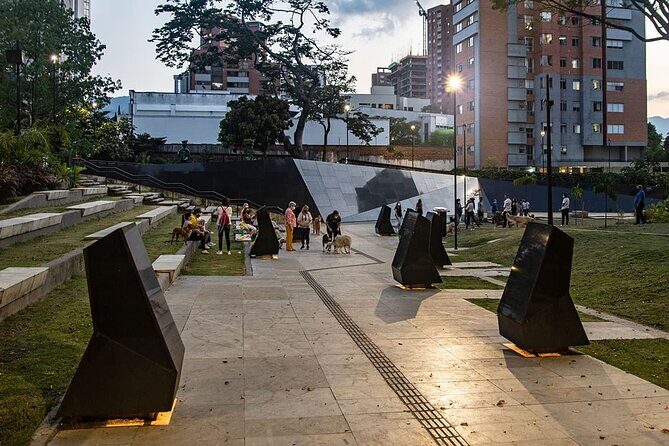
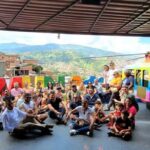
You’ll start at Parque Memorial Inflexion, and you’ll spend about 50 minutes here. This is a memorial park built in memory of the victims of drug trafficking in the 80s and 90s, and it’s divided into three sections.
What I like about leading with this stop is simple: it frames the rest of the day. You’re not starting from the myth of Escobar. You’re starting from the human damage—people who suffered, and how Medellín has tried to remember them.
The three-section layout matters. It gives you a sense that the topic isn’t one single moment in time. It’s a sequence of impact, and it helps you notice how memory gets organized in public spaces. Even if you’re not a museum person, the structure makes it easier to follow what the guide is explaining.
How to get the most out of this stop
- Go in ready to slow down for a memorial setting. Even if you’re curious about Escobar, this is where the tour asks you to think about the victims first.
- Bring a thoughtful mood. This isn’t made for selfies and jokes, even if you’re traveling with friends.
Potential drawback: if you’re sensitive to stories of violence, this first stop may hit hard before the day even “gets to” the more famous locations.
Stop 2: Cementerio Jardines Montesacro and the tomb visit
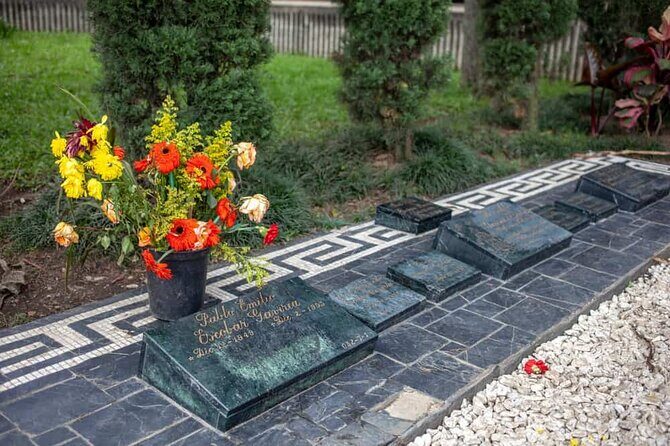
Next is Cementerio Jardines Montesacro for about 40 minutes, with admission included. This is where you visit the tomb of Pablo Escobar and part of his family.
Cemeteries are tricky places to tour. They’re also powerful places to understand how societies handle controversial figures. Here, the location forces you to confront the idea that death doesn’t erase legacy. It also doesn’t erase the harm tied to that legacy.
I appreciate that the tour doesn’t linger in a worship-style mode. Instead, it keeps a factual, place-based focus: you see where he’s buried, and you see that family members are also part of the story, for better or worse.
A respect checklist (that keeps your day smoother)
- Keep your tone low and your movements careful. This kind of site usually has rules you should follow without making a fuss.
- If you have questions, ask them here while the context is still fresh from the memorial park.
Time-wise, 40 minutes gives you enough space to actually look and listen without rushing. That balance is part of why this tour feels controlled rather than chaotic.
Stop 3: Barrio Pablo Escobar—houses, murals, and how memory shows up on walls
Stop 3 is Barrio Pablo Escobar, also about 50 minutes, with admission included. This is where the story moves from formal memorial spaces into everyday street life.
You’ll learn what the neighborhood was like, tied to the fact that Escobar gave away around 250 houses. You’ll also see a mural in honor of him.
This stop can be emotionally complicated, and that’s exactly why it’s valuable. On one level, the houses and the mural are evidence of how a legend gets embedded into a place. On another level, the earlier memorial stop keeps you from forgetting the victims and the violence that shaped the era.
What you’ll likely notice is how memory works in public. Even when something is controversial, the neighborhood may still carry symbols—paint, names, and local references—that don’t disappear just because time passes.
How to interpret what you see
Try to separate two questions:
1) What does the mural or neighborhood label communicate to locals?
2) What does the earlier memorial context suggest about what was paid for, and who suffered?
That mental back-and-forth is where the tour becomes more than sightseeing.
Stop 4: The house where Escobar died in Los Olivos (and why the rooftop matters)
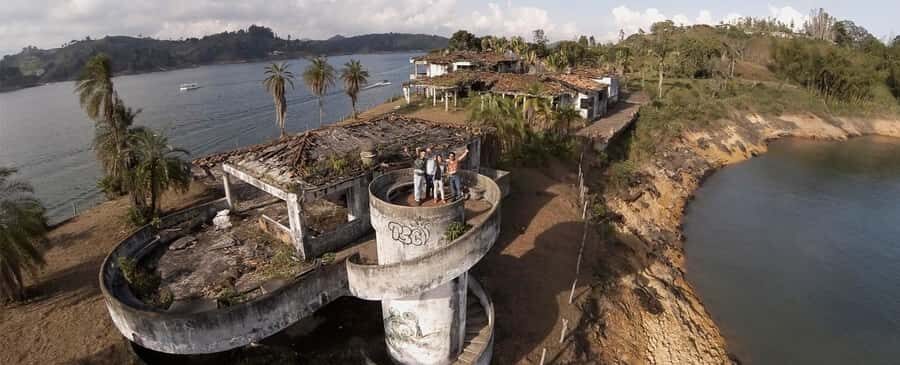
The final stop is Medellín, connected to the house where Pablo Escobar died, in the Los Olivos neighborhood. You’ll spend about 1 hour here, and the admission is free.
This stop is different from the first three because it’s tied to a single dramatic endpoint. It’s also where the tour shifts from memorial and cemetery spaces into a specific location tied to the moment of death.
The schedule notes that the key viewing is on the roof of a house. Even without going into detailed drama, the rooftop angle matters because it connects the story to a physical place where events unfolded, not just to a symbol.
Good questions to ask at the end
This last hour is a chance to bring your questions together:
- How do places like this get remembered over time?
- How do residents separate street life from the violent headlines of past decades?
- What should you take away from the day beyond the plot points?
If your guide has a calm pace—as Sofia and Julian have been described for keeping things patient and understandable—you’ll likely get answers that make the day stick.



Price and logistics: what $85 gets you (and what it doesn’t)
Let’s talk value. At $85 per person, you’re paying for a private 3 hours 30 minutes experience with private transportation in an air-conditioned vehicle.
That matters in Medellín. Heat and traffic can turn a guided half-day into a sore afternoon if you’re not comfortable. Having dedicated transport keeps the tour moving at the planned pace, so you actually see all four stops rather than losing time to logistics.
You also get admission tickets included for the first three stops:
- Parque Memorial Inflexion
- Cementerio Jardines Montesacro
- Barrio Pablo Escobar
Stop 4’s entry is noted as free, so you’re not paying again at the end.
What’s not included is lunch. That’s the one missing piece you’ll want to plan for. If you’re hungry, don’t wait until the end of the tour to decide. I’d grab a snack before you start so you’re not thinking about food during the most serious parts of the day.
Also, this experience is commonly booked about 24 days in advance on average. If your travel dates are fixed, booking ahead is smart to avoid scheduling friction.
Timing and pace: why a private 3.5 hours feels better than rushing
The tour is set up to be doable: 50 minutes, 40 minutes, 50 minutes, then about 1 hour. That’s a total of roughly 3.5 hours, not counting travel time between stops.
That rhythm helps you process. You’re not dropping from one intense topic to another at breakneck speed. You get a clear checkpoint after each stop. Even if you’re not a “take notes” person, that structure makes it easier to remember what you saw.
The private nature also helps you steer the pace. In smaller groups, guides can slow down when questions come up and speed up when you’re ready to move on. I like that you’re not boxed into a one-size-fits-all script.
If you’re the type who likes to ask practical questions like where the story fits into Medellín’s broader life, this is a good format. And if you prefer a calmer day with fewer people, private usually beats a larger group tour.
What kind of traveler should book this?
This is a good fit if you:
- Want a guided, place-based understanding of Escobar’s impact, not just a name-and-dates lesson.
- Are comfortable with heavy themes tied to the 80s and 90s drug trafficking and its victims.
- Like walking through neighborhoods and seeing how history shows up in public spaces like memorial parks, cemeteries, and murals.
- Prefer private transport so the day stays smooth.
It may be less ideal if you:
- Want a light, casual sightseeing afternoon.
- Get overwhelmed easily by discussions centered on violence and victims.
- Are hoping for a debate-heavy tour where you mostly argue opinions. This route is structured, and it keeps a clear sequence.
Should you book the Pablo Escobar Tour in Medellín?
I’d book it if you want the story to make sense in real locations—especially if you appreciate starting with the victims memorial before you visit the tomb, the neighborhood mural, and the rooftop death site.
I’d skip it if you’re looking for entertainment or if you know you’ll struggle with emotional subject matter. And I’d pair it with Comuna 13 if your goal is a fuller Medellín snapshot, where you can connect the past’s violence and trauma to the city’s later reinvention.
If you go, do one thing that makes the tour better: go in ready to listen. This kind of tour lands hardest when you let the places do the talking.
FAQ
How long is the Pablo Escobar Tour in Medellín (Private)?
It runs for about 3 hours 30 minutes.
How much does the tour cost?
The price is $85.00 per person.
What stops are included in the tour?
The route includes Parque Memorial Inflexion, Cementerio Jardines Montesacro, Barrio Pablo Escobar, and a final stop in Medellín connected to the house where Pablo Escobar died in Los Olivos.
Are admission tickets included?
Admission tickets are included for Parque Memorial Inflexion, Cementerio Jardines Montesacro, and Barrio Pablo Escobar. The final stop’s admission is listed as free.
Is lunch included?
No. Lunch is not included.
Can I cancel for a full refund?
Yes. You can cancel for a full refund if you cancel at least 24 hours before the experience’s start time. If you cancel less than 24 hours before, the amount you paid is not refunded.