REVIEW · CARTAGENA
Roman exploration in Cartagena (Spain)
Book on Viator →Operated by Mediterranean Unique Experience · Bookable on Viator
Cartagena has Roman buildings hiding in plain sight. In about 2.5 hours, you’ll walk from the Roman Theatre Museum to the Roman Forum and baths area, with guided context that helps the ruins click into place. I like that the key sites are paired with included time inside the museum spaces, not just photo stops. I also like the practical finish on Calle Mayor: a tapa plus a choice of drink. One thing to consider: English quality and sound can vary by guide and group size, so if you’re sensitive to accents or struggle hearing on tours, plan to stay close to the front.
The route starts and ends at the port area, so it’s a convenient fit for a half-day in Cartagena, including cruise stops. The tour is paced as an easy city walk for most people, but the Roman Theatre is the one place where steps can show up. With a maximum group size stated at 30, you’ll generally move as a unit, but on busier days you may want to manage expectations about crowding and how clearly you can hear.
In This Review
- Key Things I’d Put on Your Radar
- Roman Ruins in a Walkable Pocket (Without Feeling Rushed)
- Price and What You Actually Get for $65.17
- Meeting Point From the Port: Easy On Paper, Watch Your Timing
- Stop 1: Roman Theatre Museum and the Roman Forum District Finds
- Stop 2: Molinete’s Museo Foro Romano—Baths and Forum in the Old Center
- Stop 3: Calle Mayor Tapa and Drink (The Sanity Break You Earn)
- The Guide Factor: Elisa, Bruno, Carmelo, and More
- Pace and Terrain: Mostly Easy, With One Place to Watch
- Where This Tour Fits Best (And Who Might Want Something Else)
- Should You Book This Roman Cartagena Walk?
- FAQ
- How long is the Roman exploration walking tour in Cartagena?
- Where does the tour start, and when does it run?
- Is this tour offered in English?
- Are museum admissions included?
- What food and drink are included?
- Can I cancel and get a refund?
Key Things I’d Put on Your Radar
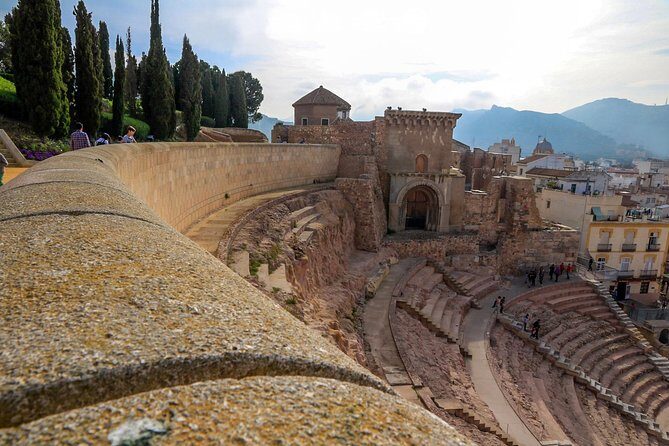
- Roman Theatre + Forum District are both built into the story, not treated as separate random stops
- Museum entry is included, so you spend time inside where the evidence is explained
- Molinete’s baths and forum remains give you a fuller picture beyond the theatre
- Calle Mayor food break includes a tapa plus a choice of wine, beer, or soft drink
- Small-ish group size (up to 30) usually helps with questions and attention
- English-guided format, with some guides especially praised for clear communication
Roman Ruins in a Walkable Pocket (Without Feeling Rushed)
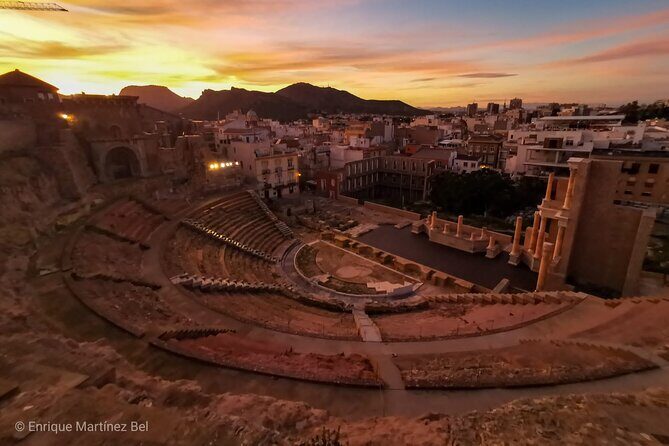
Roman Cartagena is not one big ruin park. It’s broken up across the old city, tucked into streets you’d otherwise just stroll through. That’s why a guided walk matters. With the right explanations, you stop seeing walls and start seeing urban life: performance spaces, civic centers, and bathing areas all tied to how the Romans built their colonies.
This tour is built around the idea of a “connected route.” You don’t only reach the headline site. You also get the nearby forum area and the Molinete complex, which helps you understand what people did day to day.
You can also read our reviews of more tours and experiences in Cartagena.

Price and What You Actually Get for $65.17
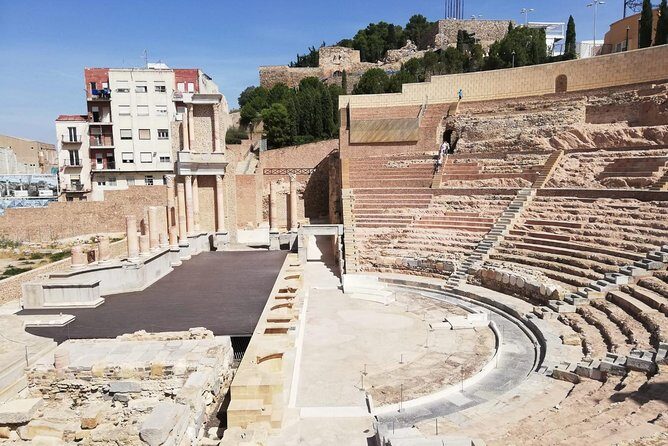
At about $65.17 per person for roughly 2 hours 30 minutes, you’re paying for a package: guided walking plus admissions included at the archaeological museum stops, plus a food-and-drink finish. If you were doing this solo, you’d still pay entry tickets and then figure out how to connect the sites and understand what you’re looking at.
The value angle here is simple:
- You’re not just walking past things—key parts are ticketed.
- You get a built-in refreshment stop instead of hunting for lunch on your own.
- A guide provides the “why,” which is the hard part to recreate from signage alone.
You do want to treat it as a guided walking experience, not a private museum tour. If your expectations are purely about speed or purely about the theatre interior, you might feel slightly steered toward the full Roman city picture rather than one single highlight.
Meeting Point From the Port: Easy On Paper, Watch Your Timing
You start at Mare Nostrum Puerto deportivo de, along P.º Alfonso XII in Cartagena. The tour begins at 10:00 am and returns to the same meeting point.
That’s helpful if you’re on a cruise day because it keeps the movement simple: you’re not changing bases across town. Still, arrive a little early. A few past experiences described check-in as slower or occasionally disorganized. Early arrival gives you a cushion if lines form or if you need to confirm where the group is collecting.
Also note: cruise passengers are expected to share ship and docking/reboarding times when booking. That signals the operator plans around cruise schedules, but your day still depends on your own ability to get there on time.
Stop 1: Roman Theatre Museum and the Roman Forum District Finds
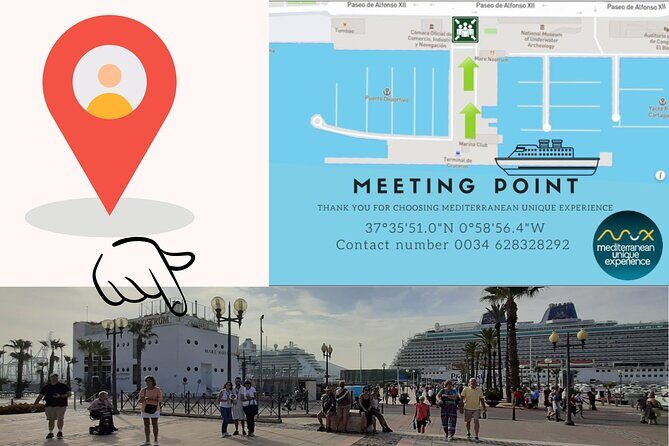
The first stop is the Museum of the Roman Theatre of Cartagena and the Roman Theatre archaeological area. The theatre’s construction is associated with the end of the 1st century, a period when the Roman colony’s city growth was at a high point. That time context matters because the theatre wasn’t a random entertainment idea—it was a statement about civic life.
What you’ll do here:
- Walk through the theatre-related archaeological setting.
- Take in the museum element that helps explain what you’re seeing.
- Hear how the theatre connects to the surrounding civic landscape.
You’ll also visit the Roman Forum District, including what are described as the latest finds nearby. This is a smart pairing. The theatre shows one kind of public space (gathering and performance). The forum shows another (civic movement and public life). Together, they make the city feel like a functioning place, not a collection of stones.
A practical detail: the Roman Theatre area can involve steps, even if the overall walk is manageable. One traveler described it as mostly flat elsewhere, with the theatre being the tricky part. If you have mobility concerns, it’s worth mentally preparing for at least some stair steps at this first big site.
Stop 2: Molinete’s Museo Foro Romano—Baths and Forum in the Old Center
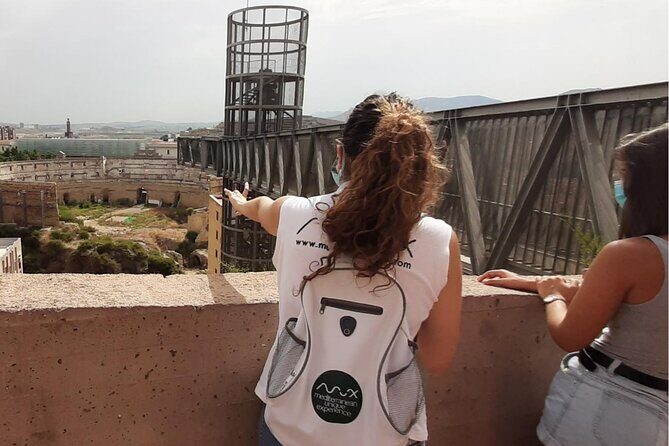
Next comes Museo Foro Romano Molinete, positioned in the historical center. Here, you’re looking at the exterior of the Roman baths and forum remains—an important shift from the theatre stop. You’re changing from a performance complex to the kind of Roman everyday ritual space that was central to social life.
What makes this stop valuable is the perspective:
- The Roman theatre tends to get the spotlight.
- The baths and forum help you understand how people met, talked, exercised, and lived around public institutions.
This is where the tour’s “bundle” approach really pays off. By stopping at Molinete, you avoid the common mistake of seeing only the most famous structure and missing the rest of the urban system.
If you’re hoping for a strictly theatre-focused tour, this is the part that may feel more like supplemental context than a headline moment. But if you want a rounded view of Roman Cartagena, this stop does the job.



Stop 3: Calle Mayor Tapa and Drink (The Sanity Break You Earn)
After walking and museums, you get a break on Calle Mayor with a tapa and a drink. Your drink choice includes wine, beer, or a soft drink.
This is more than a snack stop. It’s a useful reset after concentrated ruins viewing. It also gives you a chance to ask questions while things are relaxed. Food stops tend to be where tours either become rigid or become personal, and the better guides use the moment to point out what to look for next and how the Roman city related to modern Cartagena street life.
Quality-wise, most people describe this as enjoyable and refreshing. A minority of feedback did complain that the tasting was more basic than expected, so if you consider the tapa stop a major part of your holiday plan, keep a light expectation and treat it as part of the overall value, not a gourmet meal.
The Guide Factor: Elisa, Bruno, Carmelo, and More
The tour experience is strongly connected to the guide. In the best moments, the guide is what turns stones into story. Multiple guides have been praised in past groups by name, including Elisa (and also spelling variants like Elissa), Bruno, Carmelo/Camello, Pablo, and Juan.
Here’s what tends to show up when it goes well:
- Clear English (with guides praised for strong communication)
- Relevant history tied to what you’re actually seeing
- A pace that works for a mixed group, including people with slower mobility
But there’s also a caution sign. Some experiences mentioned difficulty understanding accents or hearing the guide when far away or when the group swelled beyond what you’d expect. That doesn’t mean the route is bad. It means you should position yourself well.
If you’re going to the tour, do this:
- Try to stay near the front half of the group.
- If you know you struggle with hearing, consider bringing earbuds/headphones you can use quietly for your own comfort (even though the tour does not explicitly promise headsets).
Pace and Terrain: Mostly Easy, With One Place to Watch
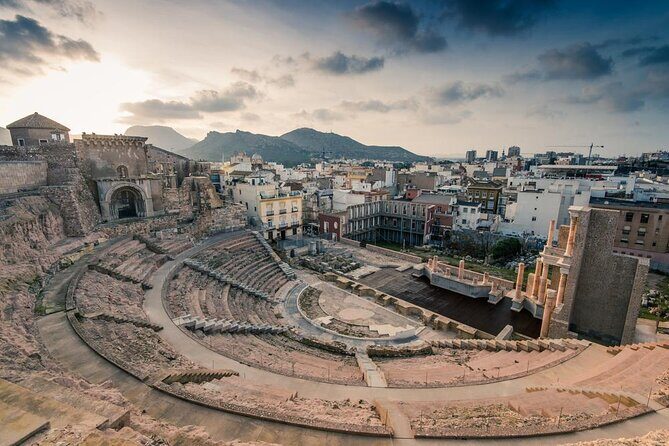
The walk is generally described as manageable for most people. Some feedback highlighted that the pace can be slow and easy on flatter streets, which is great when you want to absorb details. At the same time, the Roman Theatre area can involve steep steps, and that’s the one terrain issue to plan for.
So I’d think of it like this:
- If you’re comfortable with short stairs, you’ll likely be fine.
- If stairs are a problem, you should prepare to take it carefully at the theatre and ask the guide how that portion will be handled for your group.
Also, group size matters. The stated maximum is 30, but at least one experience described a larger group feeling hard to hear. If you prefer quiet, smaller attention, you might want to choose a day/time when Cartagena is less packed.
Where This Tour Fits Best (And Who Might Want Something Else)
This tour is a strong match for you if:
- You like guided city history with practical stops.
- You want both the Roman theatre experience and a second site that explains Roman civic life.
- You’d rather pay for a structured route than piece together museum entry and context on your own.
It may be less ideal if:
- You only care about one monument and want the entire tour to focus on the theatre interior.
- You need flawless English with no accent at all, or you require high-volume audio support.
- You’re very sensitive to tasting stops that are more basic than a full sit-down lunch.
If your goal is to maximize your Cartagena time with Roman Theatre Museum entry + forum/baths context + a tapa break, this is a pretty efficient way to do it.
Should You Book This Roman Cartagena Walk?
I think it’s worth booking if you want a compact Roman overview that actually connects the dots between the theatre, the forum district, and Molinete’s baths-and-forum remains. The ticketed museum pieces and the included tapa/drink make it feel like a real bundle, not just a stroll with explanations.
Just do two quick reality checks:
- If hearing is an issue for you, plan to be closer to the guide and be ready for a tour that’s sometimes spoken over busy streets.
- If you have mobility limits, be mindful that the Roman Theatre portion may involve steps even when the overall walk is described as easy.
If you match those expectations, you’ll leave Cartagena understanding why the Romans built these places where they did—and you’ll spot Roman traces in the streets afterward instead of seeing them as random ruins.
FAQ
How long is the Roman exploration walking tour in Cartagena?
It lasts about 2 hours 30 minutes.
Where does the tour start, and when does it run?
It starts at Mare Nostrum Puerto deportivo de on P.º Alfonso XII in Cartagena at 10:00 am, and it ends back at the meeting point.
Is this tour offered in English?
Yes, the tour is offered in English.
Are museum admissions included?
Yes. Admission tickets are included for the Roman Theatre museum/archaeological site and for the Museo Foro Romano Molinete stop.
What food and drink are included?
You’ll get a tapa and a choice of wine, beer, or soft drink on the Calle Mayor stop.
Can I cancel and get a refund?
Yes. You can cancel for a full refund if you cancel at least 24 hours before the experience’s start time. Free cancellation is offered up to that cutoff.