REVIEW · BOGOTA
Biking in Full Color: Urban Art Bike Tour
Book on GetYourGuide →Operated by Capital Graffiti Tours · Bookable on GetYourGuide
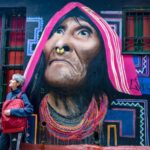
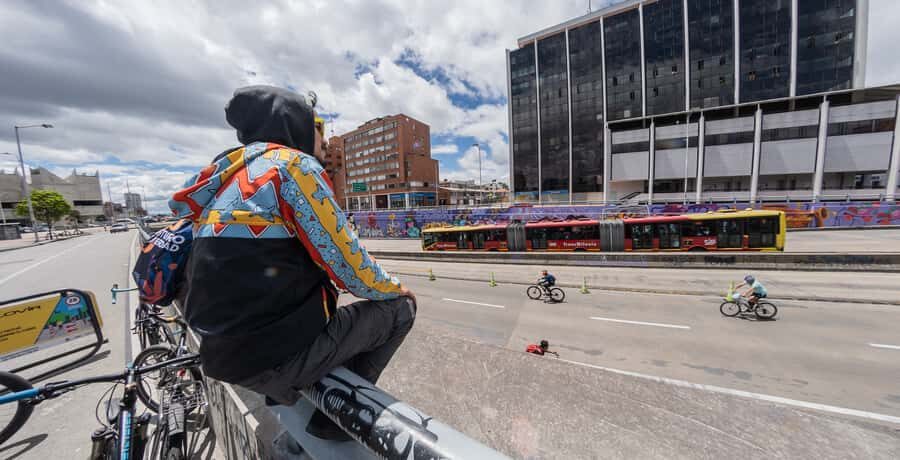
Street art on wheels sounds like a gimmick, but this Bogotá tour uses the city itself like a moving gallery. You ride past walls tied to the street art movement, with a special focus on illustrations by female artists, plus a mural built around peace and post-conflict themes.
What I like most is the way the ride turns into a real story, not just a photo stop, thanks to a guide who brings street art context and meaning. I also like the practical format: 13 km covered with bike lanes, so you see more neighborhoods without wasting half the day in traffic.
One consideration: the experience is weather-dependent in the sense that it runs rain or shine, so you’ll want to dress for movement and come prepared to pedal through the occasional drizzle.
In This Review
- Key things that make this tour worth your time
- How the La Candelaria route actually feels: bike lanes, neighborhoods, and pacing
- Practical note on your ride comfort
- Bogotá’s graffiti movement: what you’ll learn while you ride
- What to pay attention to as you cycle
- The peace and post-conflict mural: art as a social message
- Four neighborhoods in three hours: what changes, and why that’s the point
- Centro
- Teusaquillo
- Santa Fe
- La Macarena
- A gentle reality check about stops
- The coffee factory stop: a smart reset between giant murals
- Price and value: is $62 for 3 hours fair?
- What to bring, what to skip, and how the weather affects your day
- Who this tour fits best (and who should consider another option)
- Should you book this Bogotá street art bike tour?
- FAQ
- Where does the tour start?
- How long is the tour?
- How much distance do you cover?
- Which neighborhoods are included?
- Do you cycle on regular days or only Sundays?
- What’s the main theme of the street art you’ll see?
- What should I bring and what is not allowed?
Key things that make this tour worth your time
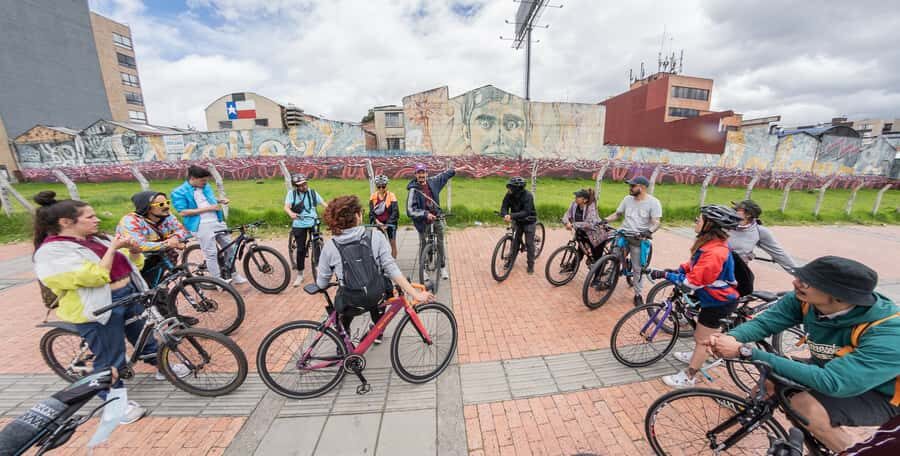
- 13 km by bike across multiple neighborhoods, with stops planned for murals and context
- Female artists’ street art as a thread through the route, not an occasional detail
- A peace and post-conflict mural that frames why art matters here
- Route options that may align with Ciclovía Sundays or regular city bike lanes
- A break built in with a coffee factory stop before you hit the giant murals
How the La Candelaria route actually feels: bike lanes, neighborhoods, and pacing
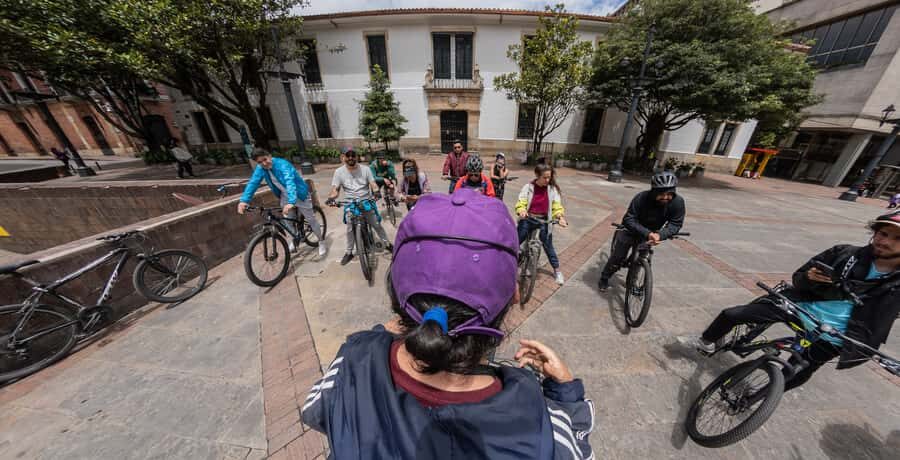
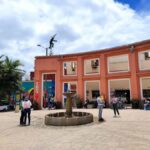
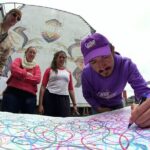
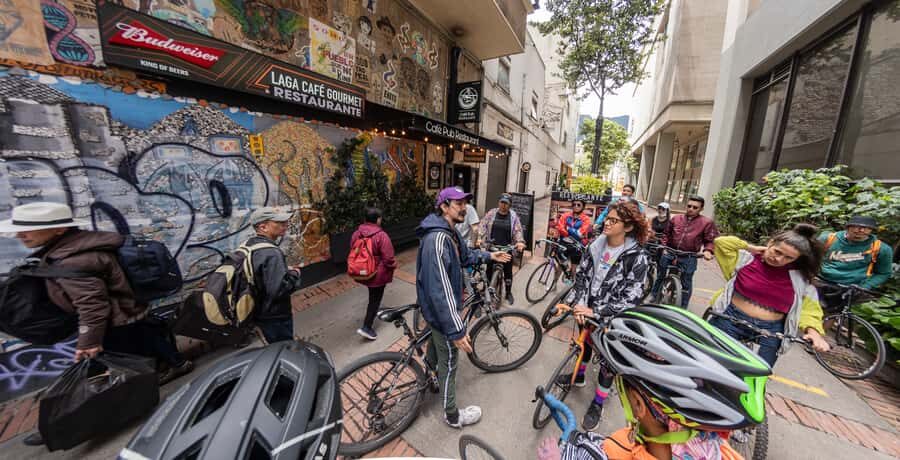
This is a 3-hour guided bike tour that starts in La Candelaria, meeting in front of the big red wall at Carrera 3 #12-52. Look for your guide wearing a purple hoodie, cap, or umbrella. The timing matters because you’re covering 13 km across four neighborhoods without feeling rushed from one end of Bogotá to the other.
The route uses city bike lanes, and on Ciclovía Sundays (Sunday mornings when the city opens up more routes and adds cultural activity), you may get a smoother cycling experience with extra room to move. That’s a real value for you: it turns getting from mural to mural into part of the fun instead of a stressful commute.
The tour is designed around contrasts. As you pedal, you’ll pass through Centro, Teusaquillo, Santa Fe, and La Macarena, and the guide connects what you see on walls to what’s happening in the streets and communities. It’s the kind of pacing that works well if you want art and context in the same outing, not one long stop-and-go history lesson.
You can also read our reviews of more cycling tours in Bogota
Practical note on your ride comfort
You’ll want sports shoes. Bikes are the main mode, and you’ll be stopping and repositioning often as the guide explains artworks. If you don’t like walking for short stretches, you might still be fine, but you should expect some off-and-on movement near murals.
Bogotá’s graffiti movement: what you’ll learn while you ride
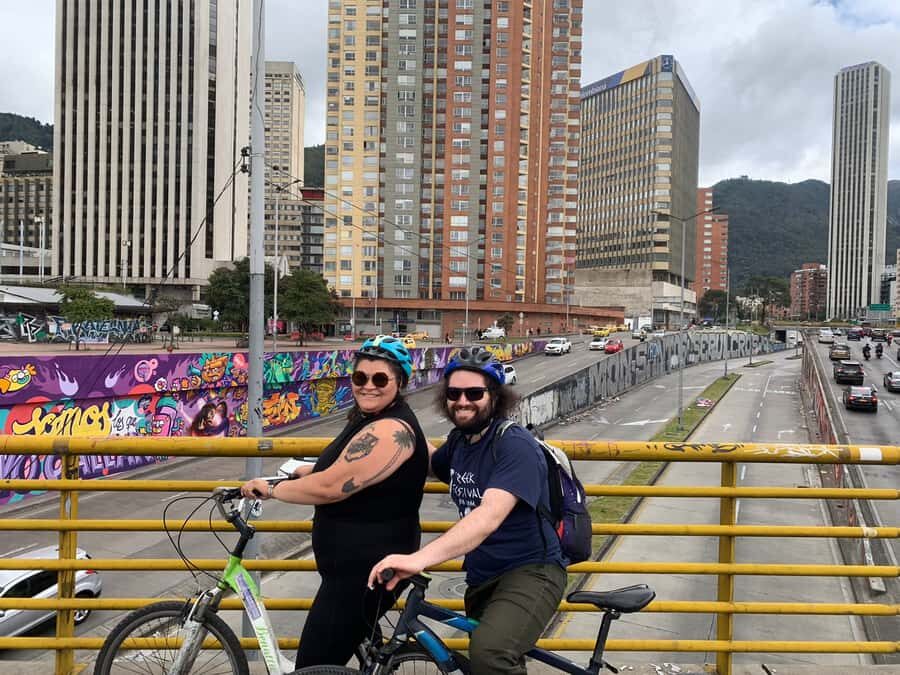
This tour’s focus is street art as communication. You’ll recognize parts of Bogotá’s street art movement by seeing how murals and graffiti function like public storytelling—sometimes political, sometimes personal, often both.
The guide shares background on each artwork’s history, techniques, and meaning, which is the difference between “cool wall art” and “I get why that wall exists.” If you’ve ever wished a mural had subtitles, this is that. The explanations connect the visuals to broader social realities in Colombia, so the images don’t feel random or purely decorative.
A standout theme is the attention to illustrations by female artists. You don’t just get a token mention; it’s part of the tour’s arc. That matters because street art is often discussed as a masculine space. Here, the route makes room for women’s creative voices as central to what you’re seeing.
What to pay attention to as you cycle
If you want the best experience, don’t just scan for the biggest mural. Watch for repeated symbols, lettering styles, and compositional choices that reflect technique. The guide’s context helps you read those details, and you’ll finish the tour with a clearer eye for what separates simple tagging from carefully designed work.
The peace and post-conflict mural: art as a social message
One of the highlights is a mural that symbolizes peace and post-conflict. In a city where street art often reflects power, memory, and change, that theme gives you an anchor point: art here isn’t only about style. It’s about what people want to remember, repair, and move beyond.
For you, this is valuable because it shifts the tour from a tourism activity into a social lens. You’re not being asked to memorize dates. You’re being guided to understand how public art can act like a community bulletin—especially in places shaped by conflict and the long work of rebuilding.
The guide also ties these meanings back to Colombia as a kind of social lab for peace and innovation. Even if you’re new to the topic, the tour keeps it grounded in what’s literally on the walls and how those images speak to the moment.

Four neighborhoods in three hours: what changes, and why that’s the point
The route takes you through Centro, Teusaquillo, Santa Fe, and La Macarena. You’ll feel the shift between neighborhoods, and the guide uses those contrasts to explain why street art looks different from block to block.
Centro
Centro is where you often get the strongest sense of the city’s central energy—movement, older structures, and walls that show layered uses over time. Expect murals and graffiti that connect to the street art movement’s visibility in the heart of the city. This is a good start for your brain: you get oriented fast, then the tour builds from there.
Teusaquillo
Teusaquillo typically feels different in rhythm and street texture, which is exactly why it works on this route. The guide uses the neighborhood change to show how art adapts to the spaces around it, rather than being frozen in one style or one political mood. If you like variety, this segment keeps the experience from turning into the same kind of mural sweep.
Santa Fe
Santa Fe is where the tour’s meaning gets sharper. You’ll see street art that leans into messaging and reflection, not just decoration. It’s a practical reminder that walls can be public platforms for ideas, not just surfaces for color.
La Macarena
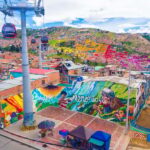
La Macarena is where the tour often makes the “wow” factor more obvious. You’ll be cycling into a part of Bogotá where murals can feel larger than life, and the guide’s storytelling helps you understand what you’re seeing before you even stop. This is also a logical place for the tour to build toward the biggest artistic moments, so you feel progress instead of randomness.
A gentle reality check about stops
You’ll encounter plenty of big images, including giant murals. The flip side is that you’ll have to pause, look, and listen while others watch. If you hate listening during photo time, you might find some explanations take longer than you want. The tradeoff is that you’ll actually understand the murals instead of just collecting images.
The coffee factory stop: a smart reset between giant murals
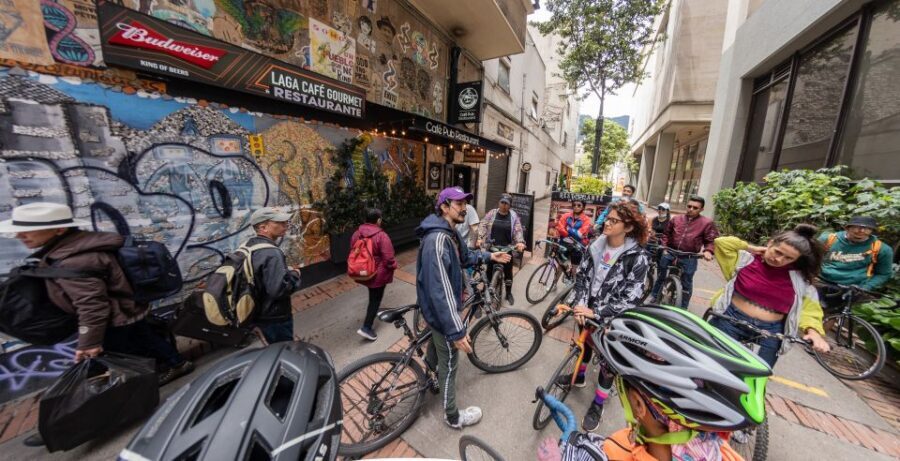
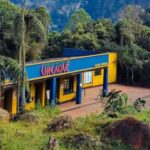
About mid-tour (or during one of the key transitions), you’ll stop at a coffee factory. This isn’t just a break for caffeine. It’s a timing tool: it resets your energy so you can keep paying attention when the murals get bigger and the ideas get heavier.
For you, that matters because cycling plus visual learning can get tiring. A short break helps you refocus on technique, symbolism, and meaning when you’re back on the bike. You’re not stuck doing constant motion for the full 3 hours.
If you want to make the coffee stop work for you, use it to ask your guide quick questions about the route you just covered. The guide is there to connect details, and that conversation can make the next neighborhood segment land even better.
Price and value: is $62 for 3 hours fair?
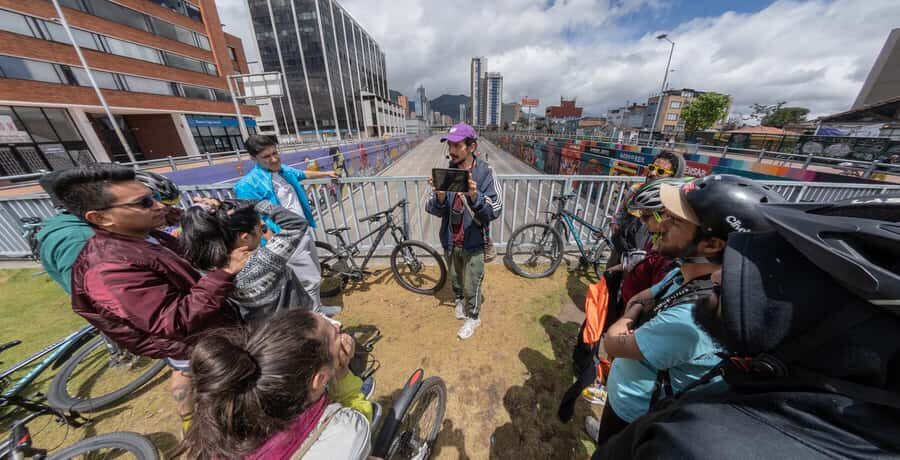
The price is $62 per person for a 3-hour tour covering 13 km and multiple neighborhoods with a guide who provides context, not just directions. I think the value comes from three areas:
- Distance and coverage: you’re not just walking a few streets. The bike format helps you see a broader slice of Bogotá without burning hours on transit.
- Meaning behind the art: the guide explains history, techniques, and meanings for the artworks. That turns color and symbols into understanding.
- Special themes: the focus on female artists and a peace/post-conflict mural adds purpose to the route.
This is also not a cheap “tour of the biggest wall” style experience. It sits in the group-tour category, but with more educational direction. One more thing: the overall rating sits at 3.2 based on 4 reviews, which suggests it’s best for people who want the guide-led art storytelling more than those looking for a relaxed social ride.
What to bring, what to skip, and how the weather affects your day
You’ll get a rain poncho, and the tour runs rain or shine, so don’t treat weather like a reason to stay away. Instead, plan for a day where you might pedal through light rain and still need to keep your feet and phone protected.
Bring:
- Sports shoes
Avoid:
- Backpacks
- Valuables
That matters because you’ll be dealing with stops and bike handling. Keeping your pack minimal also helps you move around quickly at mural locations.
Who this tour fits best (and who should consider another option)
This is a great pick if you want:
- A bike-first way to see street art across neighborhoods
- A guide-led explanation of meaning and technique
- A tour theme that includes female artists and a peace/post-conflict mural
It may be less ideal if:
- You want a completely casual, no-listening ride
- You prefer art that’s mainly aesthetic with little context
- You’re uncomfortable cycling for short periods between stops
Language coverage is broad: the live guide works in English, Spanish, French, German, and Italian, and there are options for private or small groups.
Should you book this Bogotá street art bike tour?
I’d book it if you’re the type of traveler who enjoys looking longer when the guide slows down your pace. The route makes sense: La Candelaria, then out through Centro, Teusaquillo, Santa Fe, and La Macarena, with giant murals, a coffee factory stop, and a clear thematic thread around women’s art and peace-related storytelling.
Skip it only if your goal is mostly to collect photos fast with minimal guidance. This tour’s value comes from learning what you’re seeing, and the bike format is there to support that.
If you’re ready to see Bogotá as both a city of street art and bicycle culture, this is a strong use of a Sunday morning or any 3-hour window you have.
FAQ
Where does the tour start?
You’ll meet in front of the big red wall at Carrera 3 #12-52 in La Candelaria. The guide will be wearing a purple hoodie, cap, or umbrella.
How long is the tour?
The tour lasts about 3 hours.
How much distance do you cover?
The guided ride covers 13 km of bike trails.
Which neighborhoods are included?
The route passes through Centro, Teusaquillo, Santa Fe, and La Macarena.
Do you cycle on regular days or only Sundays?
The tour uses city bike lanes, and on Ciclovía Sundays it can align with that event, when more routes and cultural activities are available for cyclists.
What’s the main theme of the street art you’ll see?
You’ll explore Bogotá’s street art movement, with a focus on walls featuring illustrations by female artists, including a mural symbolizing peace and post-conflict.
What should I bring and what is not allowed?
Bring sports shoes. Backpacks and valuables are not allowed. The tour runs rain or shine, and a rain poncho is provided.