REVIEW · CALI
Cali: Two hours walking Cali City discovery tour
Book on GetYourGuide →Operated by Be Pacific Tours · Bookable on GetYourGuide
Cali tells its story best on foot. This 2-hour discovery walk is a smart mix of salsa culture and downtown architecture, tied together by your local guide. I especially liked learning how names like Jairo Varela and Grupo Niche connect to what you see in the city, and how quickly you get oriented in the historic center. One catch: it’s still a real walking tour (about 2–3 miles) and it runs rain or shine.
With a live English/Spanish guide from Be Pacific Tours, you move from landmark to landmark without feeling rushed. You’ll start at Iglesia La Merced and finish near La Calle de la Escopeta, passing big sights like the Teatro Municipal Enrique Buenaventura and the Museo del Oro (Banco de la República). The route is great for a first taste of Cali, but it’s not ideal if you need step-free access or you’re traveling with limited mobility (it also isn’t suitable for people over 95).
In This Review
- Key highlights you’ll feel right away
- Why a 2-hour walking tour makes sense for Cali’s center
- From Iglesia La Merced to Centro Cultural de Cali: your orientation phase
- Practical tip
- Teatro Municipal Enrique Buenaventura: when the city shows its civic pride
- Calima Gold Museum (Banco de la República): a compact history lesson
- Plaza de Caicedo: photo stop, but it matters
- What to watch for
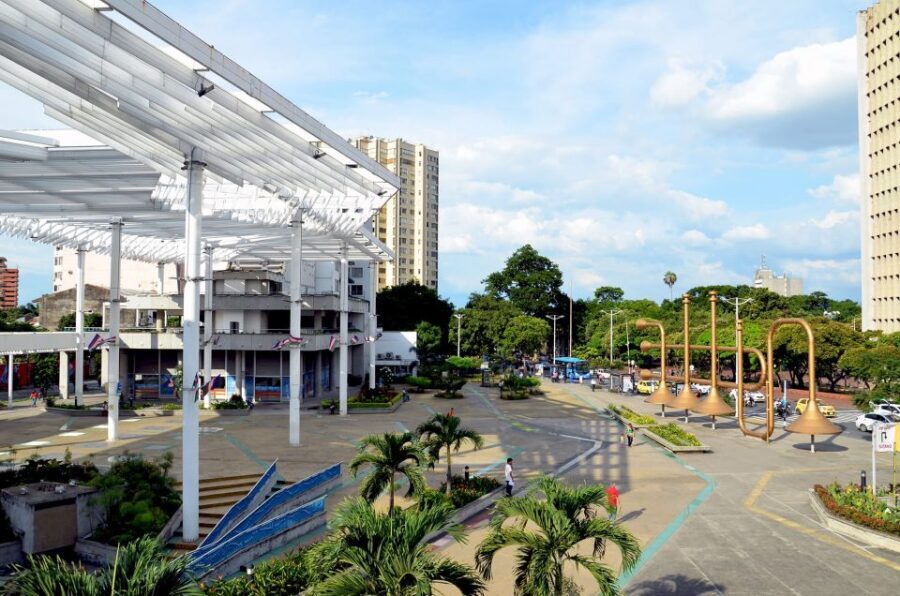
- Bulevar del Río: the viewpoint moment for photos and “Cali feeling”
- Iglesia La Ermita: the calm, guided stop you’ll remember
- Plazoleta Jairo Varela: where salsa names become real places
- Finishing at La Calle de la Escopeta: you get a useful exit point
- What $40 buys you (and whether it’s a fair value)
- How to be comfortable on a rain-or-shine walk
- Who this tour suits best (and who might skip it)
- Should you book this Cali city discovery tour?
- FAQ
- Where does the tour start?
- What are the main walking distances and time commitment?
- What stops are included on the route?
- Is the guide available in English or Spanish?
- What does the tour include besides the guide?
- Is the tour outdoors? What if it rains?
- Who is this tour not suitable for?
Key highlights you’ll feel right away
- Meet at Iglesia La Merced and get instant downtown bearings before you even start walking
- Salsa learning with real place names, including Jairo Varela Square and the culture around it
- Photo-stop viewpoints along Bulevar del Río for quick, satisfying city photos
- Art and performance stops at the Centro Cultural de Cali and Teatro Municipal Enrique Buenaventura
- Calima Gold Museum sightseeing adds a distinct, local-history layer without making the tour heavy
- A traditional drink included, so you’re not just walking—you’re tasting Cali too
Why a 2-hour walking tour makes sense for Cali’s center
Cali is one of those cities where the “center” matters. The street grid, the plazas, and the landmarks don’t just look pretty—they explain how the city organized itself, celebrated music, and handled colonial-to-independence change. This tour is built for exactly that: you get a guided route that compresses a lot of meaning into a short time.
At 2 hours and about 2–3 miles of walking, the pace is brisk but doable if you wear comfortable shoes. You’re not stuck in a museum the whole time, but you do get a proper cultural hit with stops like the Calima Gold Museum and guided glimpses of major civic buildings. And because it’s a live guide in English or Spanish, you’re not left translating everything on your own.
Value-wise, I like that the price includes a traditional drink. In many “city orientation” tours, you’re paying for the walking and sightseeing only. Here, you also get a small taste of Cali’s drink culture as part of the experience.
You can also read our reviews of more walking tours in Cali

From Iglesia La Merced to Centro Cultural de Cali: your orientation phase
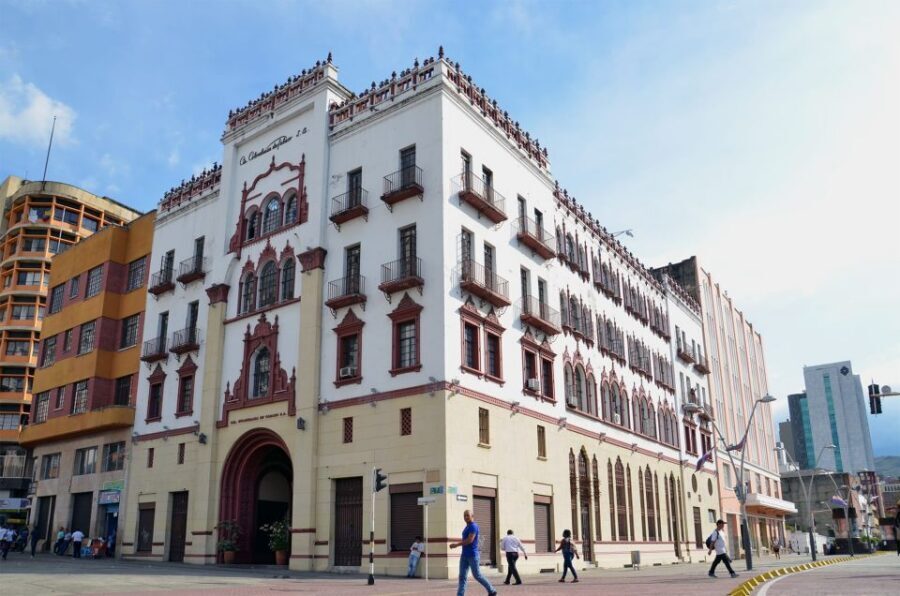
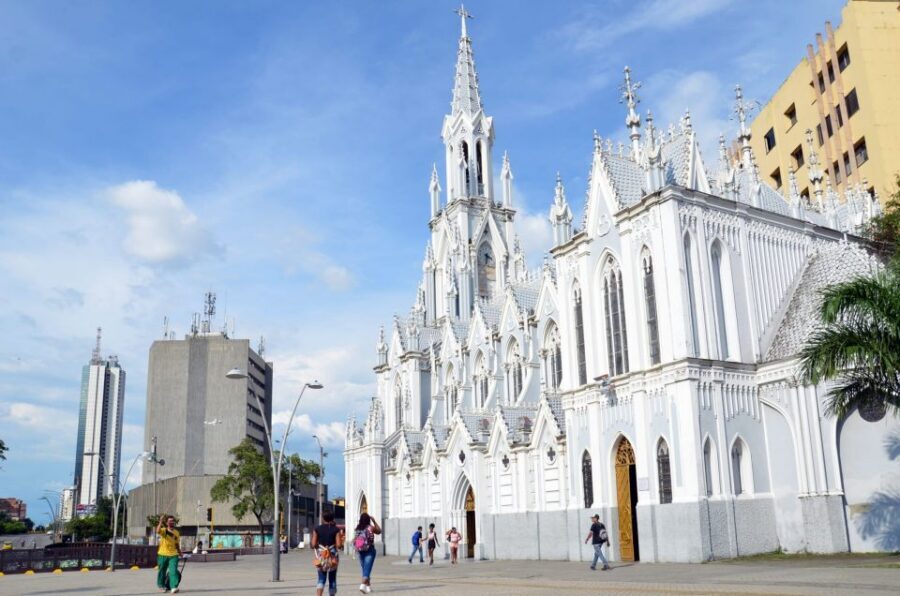
The tour begins at Iglesia La Merced, which is a smart meeting point because it’s recognizable and central enough that you can anchor your first mental map of Cali. From there, the guide leads you into the historic rhythm of downtown—where the architecture helps you understand the story.
At La Merced Church, you get guided context on the building and its place in the area. Even if you’re not a hardcore church-architecture person, these stops matter because they give you a framework: what was important, where people gathered, and how the city’s “center” formed over time.
Next is Centro Cultural de Cali. This is the kind of stop that feels like a pause in the route—time to look around and notice how cultural spaces sit within everyday streets. You get guided sightseeing and a walk through the area, and it helps you connect the city’s modern cultural identity back to the older bones of downtown.
Practical tip
Bring sunglasses and a sun hat even in shorter tours. Cali’s daylight can be bright, and you’ll be outside most of the time.
Teatro Municipal Enrique Buenaventura: when the city shows its civic pride
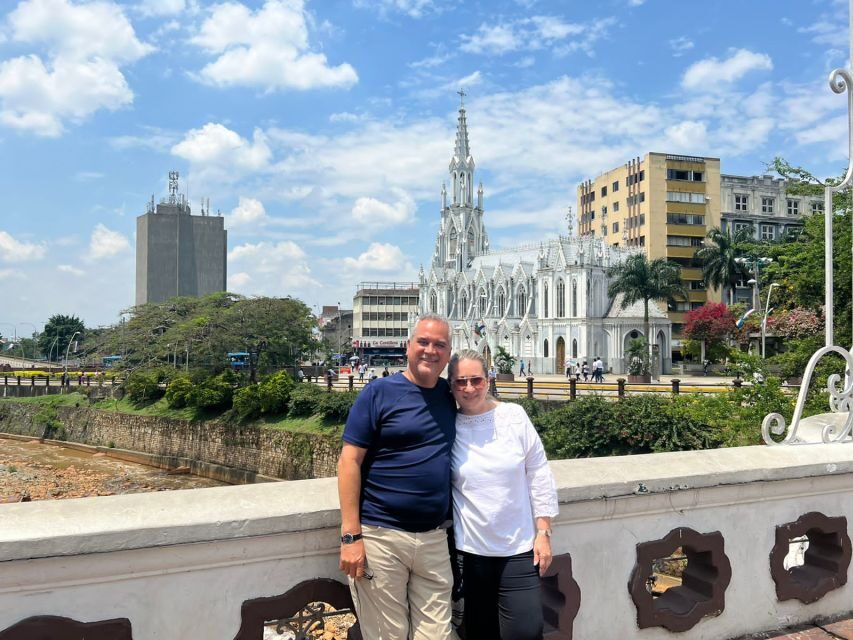
One of the stand-out moments is the visit near the Municipal Theatre Enrique Buenaventura. The theatre stop isn’t just a photo moment; it’s a chance to understand how Cali expresses itself. In many Latin American cities, major theatres signal civic ambition and public gathering. Here, the guide helps you read that symbolism as you’re standing in the right place.
You’ll get guided tour time and then walk through the surrounding area with the group. That combination is what makes a short walking tour work: you spend just enough time at key points to get meaning, not just visuals. Even if you only catch a quick look, you’ll leave with a clearer sense of why the area feels so “official” and important.
If you enjoy performance arts, this stop will likely be your “ah, that’s why this city has a music reputation” moment—even before salsa comes into the conversation.
Calima Gold Museum (Banco de la República): a compact history lesson
Midway through, you’ll have sightseeing at the Calima Gold Museum of the Bank of the Republic. This is a smart inclusion for a 2-hour tour because it adds something different from churches and plazas. Instead of staying only in the colonial-independence thread, you get a more local historical layer through the Calima region’s gold tradition.
The museum portion here is described as sightseeing, meaning it’s not designed to become a long, deep museum session. That works well on a short tour: you can appreciate the significance and then keep moving, rather than using up all your time behind glass.
If you like learning through objects rather than lectures, you’ll probably enjoy this stop. If you’re not a museum person, don’t worry—you’re not stuck. You’ll still get plenty of outdoor and street-facing sights across the rest of the route.
You can also read our reviews of more city tours in Cali

Plaza de Caicedo: photo stop, but it matters
Next up is Plaza de Caicedo, a key downtown square where you’ll have a photo stop and guided explanation. Plazas are often where cities show their identity—where politics, religion, and everyday life overlap. This one is tied to Cali’s story of independence and colonial history, which gives the square purpose beyond the obvious “nice place to take a picture.”
The guide’s commentary is what makes the square more than scenery. You’ll learn what it represents and why people connect events and identity to places like this.
What to watch for
Squares can get sun-heavy. Take your photos quickly, hydrate, and then move on while the tour stays smooth.
Bulevar del Río: the viewpoint moment for photos and “Cali feeling”
Then comes Bulevar del Río. You’ll have a photo stop plus sightseeing, and this is one of the moments where the tour’s “panoramic view” idea comes alive. Even without turning it into a viewpoint marathon, the guide uses the area to show how downtown opens up visually.
This section is also a nice contrast to earlier stops. If the church and cultural buildings make the tour feel formal, the boulevard makes it feel more like a real city space—something you’d wander through on your own.
Think of it as your reset. You get the walking rhythm back, your camera has a clear target, and your brain has a chance to connect the city’s shapes and streets together.
Iglesia La Ermita: the calm, guided stop you’ll remember
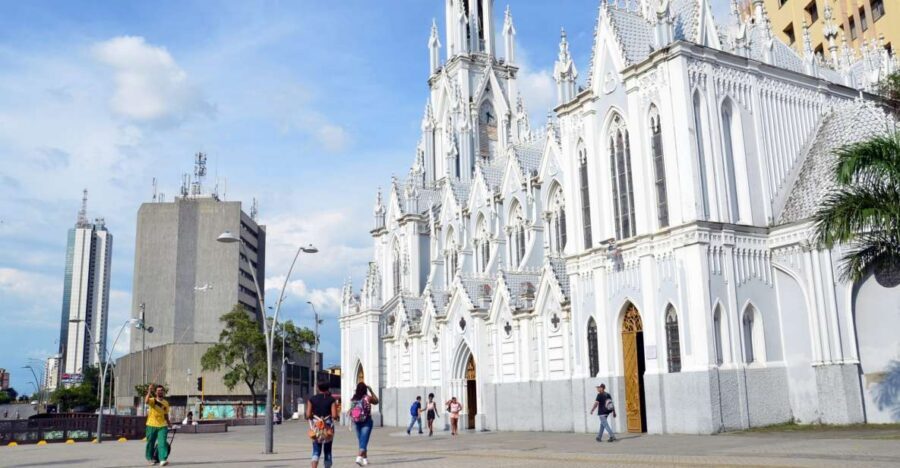
At Iglesia La Ermita, you’ll get guided sightseeing. Church stops can blend together on some tours, but this one works because the guide frames it within the larger route—so each sacred building feels like another page in the same story, not repeated sightseeing.
What I like about including another church at this point is pacing. You’ve already covered major civic and cultural stops. A guided religious landmark gives a moment of stillness, and it helps the tour feel like more than just snapshots.
If you’re sensitive to walking pace, this is also a good moment to slow down naturally without breaking the group rhythm.
Plazoleta Jairo Varela: where salsa names become real places
Now you hit the part you’ll likely remember the most: Jairo Varela Square (Plazoleta Jairo Varela). Here, the guide ties Cali’s salsa beat to place. Instead of learning about salsa legends as abstract biographies, you stand in a public space that honors that legacy.
The tour highlights the connection to Jairo Varela and the Grupo Niche story—so you’re not just hearing that Cali is a salsa capital; you’re learning why those names are part of the city’s identity. This is where the tour shifts from “sightseeing” to “cultural context.”
If you enjoy music history (or you just want to understand why Cali lives and breathes salsa), this stop is worth showing up for. It’s also a good moment to ask your guide how salsa culture shows up today in everyday routines—because a local guide can often point out small, practical details you won’t find in a guidebook.
Finishing at La Calle de la Escopeta: you get a useful exit point
The tour ends near Cra. 3 #601, San Pedro, Cali, and it’s also described as finishing in La Calle de la Escopeta. That matters because a tour that ends in the middle of nowhere forces you to scramble for your next move. Here, you finish in an area where you can keep exploring on your own.
San Pedro is a handy neighborhood anchor, especially if you want to grab a meal or keep walking into the parts of downtown that feel most interesting to you after the tour.
What $40 buys you (and whether it’s a fair value)
At $40 per person for a 2-hour guided walk, the value comes from three things.
First, you’re paying for a live guide who can connect the sights to cultural meaning—churches, theatres, museums, and plazas all tied together with salsa context. Second, the route is structured so you cover a lot without spending half the day commuting. Third, you get 1 traditional drink included, which offsets a slice of the usual “buy something after the tour” cost.
Could you do parts of this on your own? Sure. You could walk the center and take photos. But the difference here is the guided stitching: you learn how Cali’s landmarks relate to independence history and salsa legends, and you get that explanation in the exact place you’re standing.
So if you want orientation plus context in a short time, this price is reasonable.
How to be comfortable on a rain-or-shine walk
This tour runs rain or shine, and that’s not a small detail. You’re walking 2–3 miles, you’ll be outside through most of it, and the schedule expects you to keep moving.
I’d plan like this:
- Wear comfortable shoes you trust for sidewalks and uneven patches.
- Bring rain gear if showers are possible.
- Have sunglasses and a hat ready for bright breaks.
- Keep your camera accessible, because there are multiple photo stops.
Also note the rule: alcohol and drugs aren’t allowed. That keeps things respectful and makes the tour feel more like a guided cultural walk than a party outing.
Who this tour suits best (and who might skip it)
This works best if:
- You’re in Cali for a short stay and want a fast, guided introduction.
- You care about how culture shows up in public spaces, especially through salsa references like Jairo Varela.
- You like mixing streets, plazas, and a small museum component in a single outing.
You might want to reconsider if:
- You have trouble with walking 2–3 miles.
- You’re very heat-sensitive (even short tours can be sun-heavy).
- You’re outside the recommended age range; it’s not suitable for people over 95.
Should you book this Cali city discovery tour?
I’d book it if your goal is a guided first look at Cali’s downtown—music culture included—not just a list of monuments. It’s also a good value because the price includes a traditional drink, and the pacing is built for a 2-hour window.
If you’re the type who learns best by walking from place to place and hearing local context in real time, this tour fits you. If you’d rather wander independently without a schedule, you could recreate some of the route on your own—but you’d miss the salsa-and-landmarks storytelling that makes this one feel different.
FAQ
Where does the tour start?
The tour starts at Iglesia La Merced in Cali.
What are the main walking distances and time commitment?
It’s a 2-hour walking tour with about 2–3 miles of walking.
What stops are included on the route?
Key stops include Centro Cultural de Cali, Teatro Municipal Enrique Buenaventura, the Calima Gold Museum (Banco de la República), Plaza de Caicedo, Bulevar del Río, Iglesia La Ermita, and Jairo Varela Square, with the tour finishing near La Calle de la Escopeta.
Is the guide available in English or Spanish?
Yes. The live guide offers English and Spanish.
What does the tour include besides the guide?
The tour includes the walking tour of Cali’s historical center and 1 traditional drink.
Is the tour outdoors? What if it rains?
Yes, it takes place rain or shine, so bring rain gear if needed.
Who is this tour not suitable for?
It is not suitable for people over 95 years.