REVIEW · CALI
Historical Shared Tour Salsa, Graffiti & Resistance in Cali
Book on Viator →Operated by Beyond Colombia Free, Group & Private Tours · Bookable on Viator
Cali teaches salsa through walls. This Salsa, Graffiti & Resistance in Cali walk turns street art into a living playlist, linking the music you hear with the people who shaped it. I love how the tour connects Caleña salsa history to public murals instead of treating it like a museum topic. I also like the human energy of the guides, who often bring it down to practical stuff like a crash course in salsa history and even some dance steps. One thing to consider: the tour is guided in Spanish, and you’ll be walking most of the time, so it helps to be comfortable moving through the city.
At $14 for about 3 hours, this is strong value for a guided route that hits major salsa-linked corners of Cali. The group stays small (up to 30 people), and most stop entries are free, so your money goes to the experience, not admissions. Each stop is short—roughly 18 minutes—so you get variety without feeling stuck in one place too long.
The main “watch-outs” are simple: plan around good weather (it requires it), and skip expecting drinks or meals to be included. If you want to eat, you’ll need to buy your own along the way based on the guide’s recommendations.
In This Review
- Key points you should know before you go
- A 3-Hour Walk Where Cali’s Salsa Meets Graffiti
- Plazoleta Jairo Varela: Starting With Cali’s Salsa Composer
- Parque de las Piedras and the Departmental Institute of Fine Arts
- La Curva del Boulevard and Calle del Sabor: Where Salsa Culture Gets Practical
- Edificio Boulevard del Río Emcali: Panoramic Cali Views
- La Calle de la Escopeta: Street Art as Public Storytelling
- Beneficiencia del Valle del Cauca and Tunnel Mundialista: The Resistance Thread
- Cimarrón Salsa Bar Finish: Live Music and Dancing Until Dawn
- Price and Value for $14, with a Guide Who Actually Teaches
- How to Plan Your Afternoon (Without Making It Complicated)
- Should You Book This Salsa, Graffiti & Resistance Tour?
- FAQ
- How much does the Salsa, Graffiti & Resistance in Cali tour cost?
- How long is the tour?
- Is this tour guided in Spanish?
- Are there admission tickets needed for the stops?
- Does the price include food or drinks?
- Where do I start and where does the tour end?
- How large is the group?
- What happens if the weather is poor?
- Is there free cancellation?
Key points you should know before you go
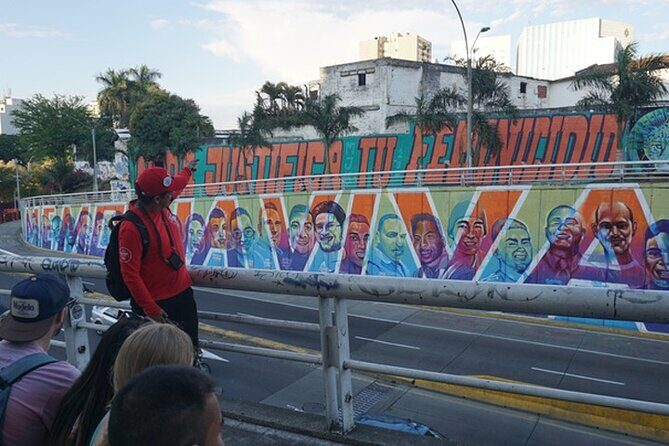
- Murals with a message: you’ll see street art tied to salsa culture and community spirit
- A true walking route: short stops keep the pace lively for about 3 hours
- Spanish-guided learning: you’ll get the story and context in Spanish (dance steps may happen too)
- Free stop access: each featured stop notes free admission tickets
- Finish at a dance bar: the tour ends with live music and dancing at Cimarrón Salsa Bar
- Small group size: a maximum of 30 keeps it interactive
A 3-Hour Walk Where Cali’s Salsa Meets Graffiti
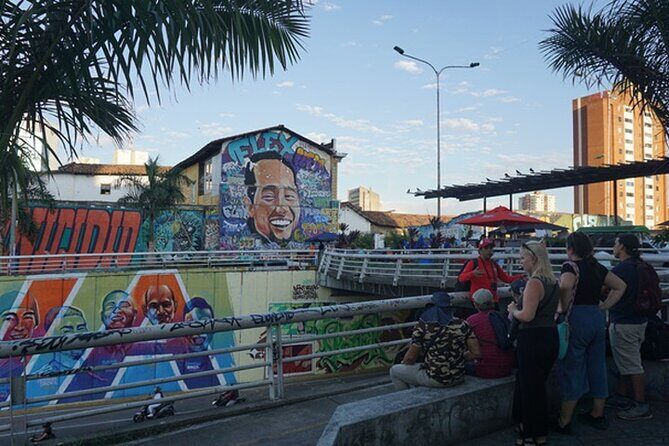
This isn’t a “stand here and listen” tour. You’re moving through Cali on foot, using murals and landmarks as signposts for how salsa grew—musically, socially, and politically. The tour focuses on representative salsa movements of Cali and specifically how popular culture and the arts played a role in the popular cultural revolution.
What makes it feel worth the time is the mix: music history, urban design, and street art all show up in the same route. Each stop is brief, so you stay alert and keep momentum. And at the end, you don’t just leave—if you still have energy, the experience lands at a real salsa bar where the vibe is built for dancing.
You can also read our reviews of more historical tours in Cali
Plazoleta Jairo Varela: Starting With Cali’s Salsa Composer
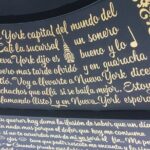
You begin at Plazoleta Jairo Varela, a tribute to one of the great salsa composers. It’s the kind of start that helps you get oriented fast: you’re surrounded by murals about his life and work, and the whole area sets the theme from minute one. If salsa history feels like names and dates to you, this first stop helps turn it into something visual.
This is also where the tour’s tone clicks. The guide frames the meaning of Caleña sauce—how it’s tied to identity and everyday life—so when you walk to the next murals and streets, you’re not just sightseeing. You’re reading the city.
Practical note: it’s a meeting start point in Granada, so it’s a good place to arrive early, check the meeting spot, and settle in before the group heads out.
Parque de las Piedras and the Departmental Institute of Fine Arts
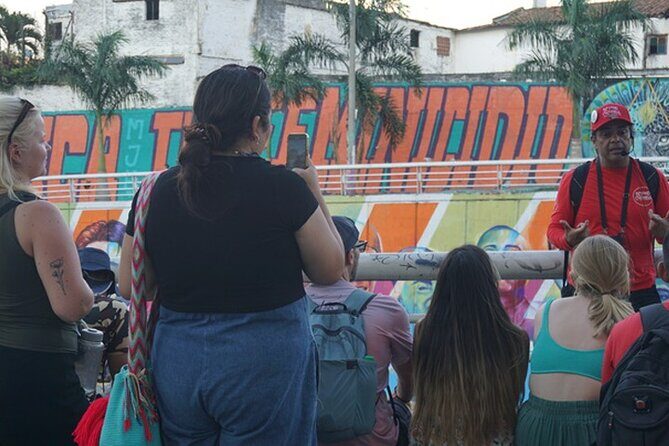
Next up is Parque de las Piedras. Think of this as a pause in the route—a place built for gathering. There are fountains, sculptures, and open space, plus murals that reflect cultural diversity in Cali. For me, this is a helpful stop because it gives your eyes a break from dense street art and lets you reset before the tour pushes into nightlife areas.
Then you head to the Departmental Institute of Fine Arts, an iconic cultural building where you can see art exhibitions like painting, sculpture, and photography. The point here is connection: you’re learning how local art fits with music and how the creative scene isn’t separate from salsa culture—it feeds it.
If you like when a guide explains the “why,” this is a good moment to lean in. The guide’s Spanish narration is the main value at these stops, since the entry is noted as free and the “learning” happens through interpretation.
La Curva del Boulevard and Calle del Sabor: Where Salsa Culture Gets Practical
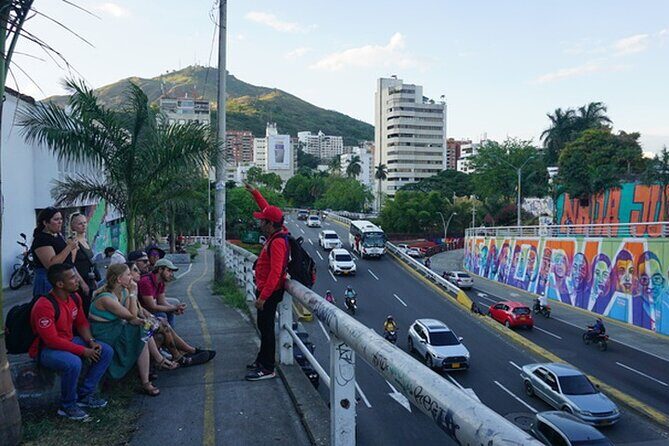
La Curva del Boulevard is a Cali nightlife landmark, and the tour uses it for a reason. You’re surrounded by options for food and the facades bring murals into the picture. You’ll also have a chance to enjoy a typical dish—just remember food isn’t included, so you’re budgeting for your own meal or snack.
Then the route moves to La Calle del Sabor, which is basically the heart of Caleña sauce. This is where you feel the theme go from story to lifestyle: bars, restaurants, and theme shops, with murals that tell stories of musicians, dancers, and popular culture. The guide also shares recommendations for salsa bars, which is useful because Cali has a lot of places to choose from, and you don’t want to waste your evening guessing.
This stop is a highlight if you like real-world culture—places where salsa isn’t just performed, it’s part of how people spend time. If you’re the kind of traveler who wants at least one evening anchor in a city, this gives you that.
Edificio Boulevard del Río Emcali: Panoramic Cali Views
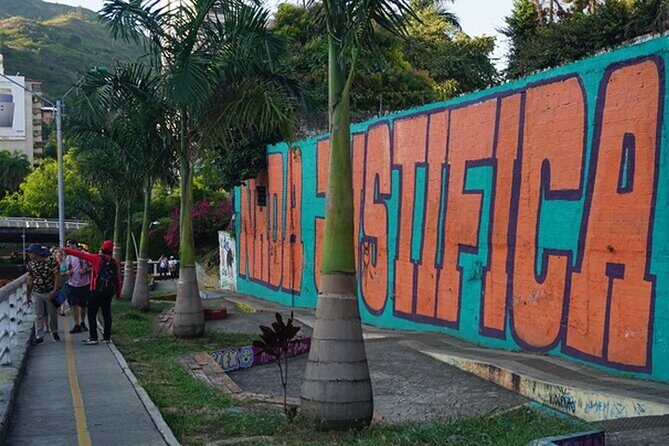
At Edificio Boulevard del Río Emcali, the tour adds a physical sense of place. The building’s modern architecture marks urban development, and from the viewpoint you can appreciate a panoramic view of Cali and the Cali River.
I like this stop because it balances the route. You’ve been reading murals and street energy; now you get a wider frame. When you understand how a city stretches, you remember it later. It also helps you place the neighborhoods you just walked through.
Keep it simple here: look, take in the layout, and then let it set the context for what you see next.


La Calle de la Escopeta: Street Art as Public Storytelling
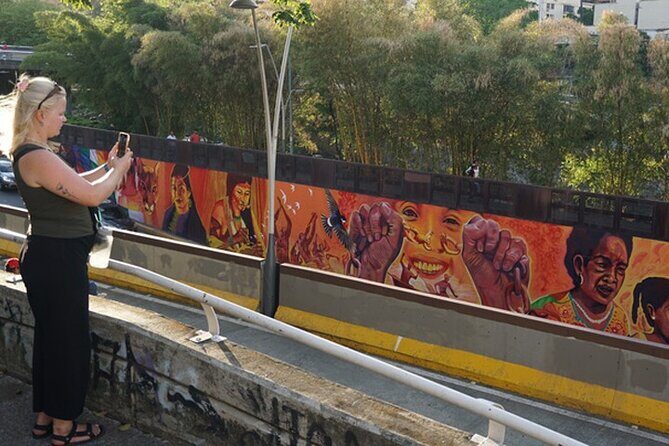
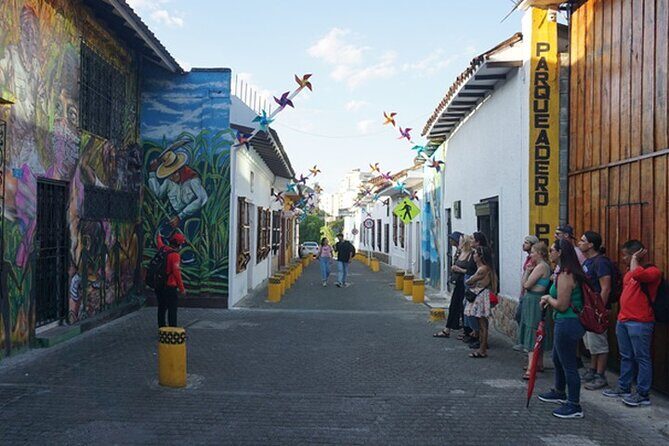
Then comes La Calle del Sabor’s contrast with Calle de la Escopeta, a reference point for urban art in Cali. The street is known for colorful facades covered in murals, and the tour treats it like a living canvas rather than background scenery.
This is a strong “photo stop,” but it’s also a story stop. The guide’s role matters because they connect the art to creativity and community expression. From what you’ll hear on the walk, street art shows up as a way of communicating identity—sometimes with humor, sometimes with resistance.
If you’re traveling with someone who thinks murals are only for decoration, this stop often flips the script.
Beneficiencia del Valle del Cauca and Tunnel Mundialista: The Resistance Thread
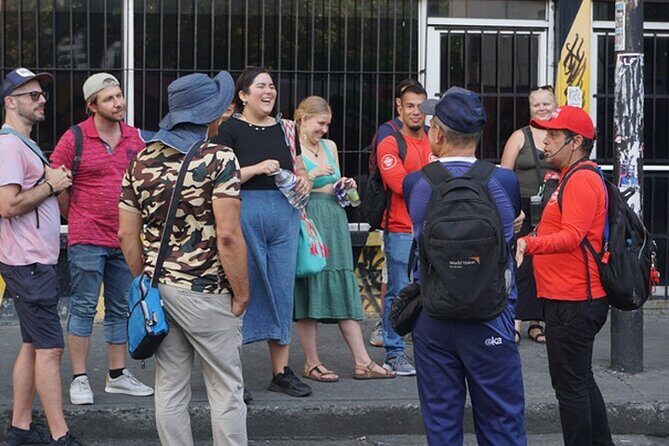
At Beneficiencia del Valle del Cauca, you step into a historic building with colonial architecture that today houses cultural spaces. This stop keeps the theme grounded: art and music aren’t separate from local heritage, and they’re used to promote culture through exhibitions and presentations.
Then you reach Túnel Mundialista, a tunnel decorated with murals celebrating football and local culture. It works as a palate cleanser because the visuals are more energetic, but it still connects to the same theme: how community passions get painted into public space.
What I appreciate about this middle-late stretch is the consistency. You keep seeing the tour’s main idea: salsa, dance, and art aren’t just entertainment. They’re also forms of unarmed expression and empowerment in the community.
Cimarrón Salsa Bar Finish: Live Music and Dancing Until Dawn
The tour ends at Cimarrón Salsa Bar, an emblematic place to dance salsa until dawn. This is where you cash in what you’ve learned. Instead of ending on an empty street, you finish at a venue built for the culture you’ve been studying.
Expect live music and dance shows, and you’ll likely feel how the city turns history into movement. If you get any dance steps taught during the walk, this is where you can try them in a real atmosphere—without it turning into a classroom.
This is the ideal ending if you want your trip to feel like it has a finish line, not just a “then you go home” moment.
Price and Value for $14, with a Guide Who Actually Teaches
Let’s talk money. At $14, you’re paying for a certified Spanish guide plus guided storytelling of Cali salsa history and the popular cultural revolution. You also get a route through representative salsa movements and murals, plus recommendations for salsa bars and potential discounts with recommended allies.
Is it free money? No. But it’s a smart bargain if you value interpretation. The tour isn’t just passing monuments. The guide’s knowledge is the product, and the route is the delivery.
Also, booking tends to happen ahead of time—on average, it’s booked 15 days in advance. That’s a sign this tour has steady demand, so if your dates are fixed, reserve sooner rather than later.
One practical caution: since drinks and food aren’t included, don’t plan your budget around the tour covering your meal. The one mention of a typical dish is more about giving you the chance, not a prepaid lunch.
How to Plan Your Afternoon (Without Making It Complicated)
This is a walking tour, so plan for comfort. Wear shoes you can stand and walk in for several blocks, and bring a light layer—Cali’s weather can change your comfort level even within a short window. Bring water if you tend to get thirsty fast, since drinks aren’t listed as included.
For language: the guide is certified in Spanish. If your Spanish is basic, you’ll still get value from the visuals and the rhythm of the explanation. If you want the most out of the “resistance through music and art” theme, this is one of those cases where even limited Spanish helps a lot.
Timing-wise, think of this as a perfect start or setup for the night. You learn, you walk, and you end at a club. If you book a late dinner after, you’ll likely still be in the salsa mood.
Should You Book This Salsa, Graffiti & Resistance Tour?
Book it if you want Cali that’s more than a pretty postcard. You’ll get a guided route that links salsa history to murals, urban landmarks, and cultural meaning. The tour’s best strength is the interpretation—learning how music and dance relate to public art and community identity, then ending in a real dance space.
Skip it only if you strongly prefer fully self-guided sightseeing, or if you need the tour content to be in English. Also, if you hate walking city streets for a few hours, know that the whole structure is built around short stop-and-go segments.
If you want one solid, culture-heavy activity that pairs education with a fun nightlife finish, this is an easy yes. Bring curiosity, a little patience for Spanish narration, and your best dancing intentions for Cimarrón.
FAQ
How much does the Salsa, Graffiti & Resistance in Cali tour cost?
It costs $14.00 per person.
How long is the tour?
The duration is about 3 hours.
Is this tour guided in Spanish?
Yes. The tour includes a certified guide in Spanish.
Are there admission tickets needed for the stops?
Admission is listed as free for the stops included on the route.
Does the price include food or drinks?
No. Drinks, food, and souvenirs are not included.
Where do I start and where does the tour end?
It starts at Plazoleta Jairo Varela (or La Caleñidad) in Granada, Cali, and ends at Cimarrón Salsa Bar on Cl. 4 #1-113 in Normandia Sebastian de Belalcazar, Cali.
How large is the group?
The tour has a maximum of 30 travelers.
What happens if the weather is poor?
This experience requires good weather. If it’s canceled due to poor weather, you’ll be offered a different date or a full refund.
Is there free cancellation?
Yes. You can cancel for a full refund up to 24 hours in advance, and cancellation is free.