REVIEW · CALI
Cali: Walking tour of the historic center
Book on Viator →Operated by Valley Adventours · Bookable on Viator
Cali gets a lot of attention for salsa nights, but the real story starts in daylight. This walking route threads together churches, plazas, river views, and salsa landmarks in Cali’s historic center, with small-group pacing that helps you notice the details. I love the way the stops are spaced so you can actually talk and ask questions; I also like that the tour throws in real local flavor with a typical drink. One thing to consider: it’s a lot of walking over uneven sidewalks, so comfortable shoes really matter.
You’ll also get a handy mix of architecture and culture: colonial churches and cathedrals, a gold collection focused on indigenous craft, and viewpoints that make the city feel bigger than you expect. I like that many major entrances are marked free, which helps this feel like good value for the time. Bring sunscreen and a water bottle, and if rain shows up, plan to use your umbrella so the walk keeps going.
In This Review
- Key Highlights You’ll Actually Feel
- Why Cali’s Historic Center Works Best on Foot
- Starting at Iglesia La Merced: Cali’s Origin Story in Colonial Stone
- Gold, Indigenous Craft, and the Real Story Behind El Dorado
- Neo-Classic Theater Time: Enrique Buenaventura in the Middle of the City
- Plaza de la Gobernación and San Francisco Church: When Power Meets Faith
- San Pedro Apostol Cathedral: The Central Church and Its Political Role
- Plaza de Caicedo: Palm Trees, National Palace Framing, and Street Energy
- La Calle del Sabor: Salsa Heritage on an Actual Street
- Puente Ortiz: River Views, Torre de Cali, and Three Crosses Hill Photos
- Parque Paseo Bolívar: Independence History Under Ceiba Trees, Plus a Typical Drink
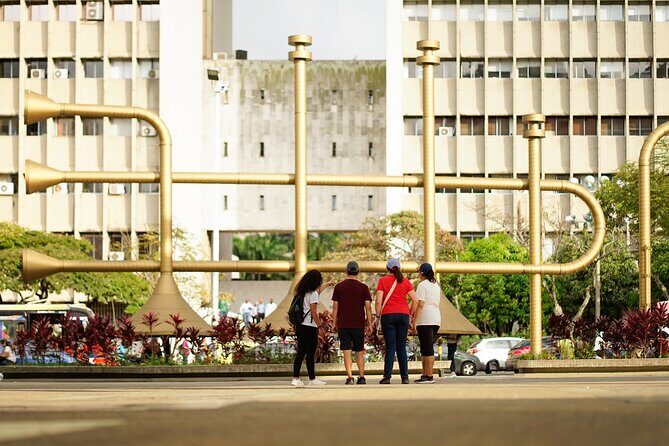
- Jairo Varela Square and the Trumpet Monument: Salsa Legacy in Public Space
- Parque Simón Bolívar: Birds, Palms, and Fruit Trees as a Break from Concrete
- Bulevar del Río Cali: A Scenic Walk Past Churches, Historic Buildings, and a Theater
- Calle de la Escopeta: Street Art, Woven Roof Texture, and Local Flavor
- Price and Value: Why $41 Makes Sense for This Route
- The Guide Factor: English That Works and Stories You Can Follow
- What You Should Bring (So You Enjoy the Walk)
- Who This Tour Is Best For
- Should You Book This Cali Walking Tour?
- FAQ
- How long is the walking tour?
- How much does the Cali historic center walking tour cost?
- Is the group small?
- What’s included in the price?
- Are entrance tickets required?
- What should I bring?
- What happens if it rains?
Key Highlights You’ll Actually Feel
- Small-group pace (up to 7 listed) for real questions and smoother photos
- Free entry stops across the main historic sights
- Salsa in the street, with La Calle del Sabor and Jairo Varela Square
- Indigenous gold at the Museo del Oro Calima, with clear context behind El Dorado
- River-and-city views from Puente Ortiz, with the Torre de Cali in frame
- A typical Cali drink included, including la Lulada caleña on the route
Why Cali’s Historic Center Works Best on Foot
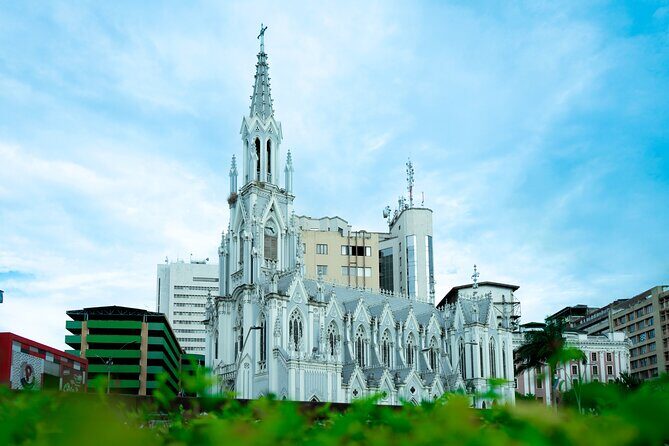
Cali’s center is the kind of place where the fun is in the small stuff: doorway carvings, the way a plaza frames the skyline, the view lines across a bridge. On foot, those details don’t get lost to traffic noise or bus windows. You also move at a human pace, so you can slow down when something catches your eye.
This tour is built around a compact loop, which matters because you spend time experiencing rather than transferring. You’ll hit major landmarks—churches, museums, theaters, and squares—without needing to piece together your own route.
And yes, the salsa theme shows up in daylight too. You’re not just passing by places; you’re learning what connects music, neighborhoods, and local identity.
You can also read our reviews of more walking tours in Cali

Starting at Iglesia La Merced: Cali’s Origin Story in Colonial Stone

The tour kicks off at Iglesia La Merced, tied to the birthplace narrative of Cali. The church itself is the first lesson: colonial architecture that feels old in the best way—solid, simple, and designed for people to gather and look up.
Inside, the focus shifts to Cristo Rey, which gives you a clear visual link between the city center and the surrounding hills. Even if churches aren’t your main interest, this stop helps set the tone: Cali here is a city shaped by faith, community, and long timelines.
Practical note: this is an indoor stop, but not a long one—about 15 minutes—so you won’t feel rushed.
Gold, Indigenous Craft, and the Real Story Behind El Dorado
Next comes the Museo del Oro Calima, a stop that’s short on time but big on meaning. You’re looking at artifacts with more than 4,000 years of existence and learning how indigenous communities worked with gold in ways that were practical, symbolic, and deeply skilled.
What I like most is that El Dorado gets treated as a legend built on craft—not just a mystery. That framing changes the museum from a collection of shiny objects into a story about knowledge, metallurgy, and cultural message.
This stop is about 25 minutes, which is just enough to get oriented without turning it into a long museum marathon.
Neo-Classic Theater Time: Enrique Buenaventura in the Middle of the City
Then you step into Teatro Municipal Enrique Buenaventura. The quick 5-minute stop keeps it light, but it’s still a smart change of rhythm. You go from sacred architecture and a museum to a public cultural space, which helps you understand how Cali’s civic life has its own personality.
Even if you never attend a show, it’s useful to see where performance culture lives in the historic center. You’ll get a sense of how the city uses architecture to signal public pride.
Plaza de la Gobernación and San Francisco Church: When Power Meets Faith
At Plaza de la Gobernación, you walk through city-center streets until you reach San Francisco Church. This stop is about more than photographing a façade. It’s positioned to explain the relationship between church and state, which is a key idea for understanding why so many plazas and institutions are clustered the way they are.
At about 10 minutes, you won’t go deep into a lecture, but you’ll leave with a clearer mental map of how the center worked historically.
You can also read our reviews of more historical tours in Cali

San Pedro Apostol Cathedral: The Central Church and Its Political Role
The next major church stop is St. Peter the Apostle Cathedral, also called San Pedro Apostol Cathedral. You’ll go inside and focus on another big theme: the relationship between Church and State again, now tied to Cali’s main religious center.
This is one of those places where even a quick visit pays off. You can tell the building was meant for authority and ceremony, not just worship. If you like understanding the “why” behind historic structures, this fits.
It’s scheduled for about 15 minutes, which balances interior time with continued walking.
Plaza de Caicedo: Palm Trees, National Palace Framing, and Street Energy
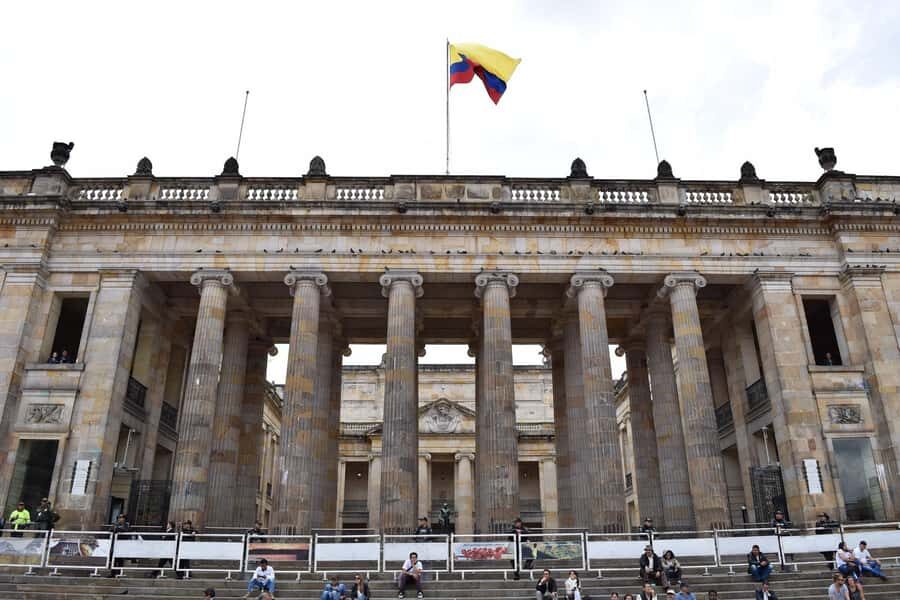
Plaza de Caicedo is next, and it’s one of the most useful stops for getting your bearings. You’ll be surrounded by palm trees and the square sits with the National Palace framing the scene. This is the kind of plaza that helps you understand how Cali’s city center operates as a social stage.
At around 15 minutes, it’s long enough to pause, watch the surroundings, and reset before the more musical parts of the route.
La Calle del Sabor: Salsa Heritage on an Actual Street
Now you shift from plazas to sound. La Calle del Sabor is an iconic street tied to salsa music in Cali, and the point here is the atmosphere. You’ll learn why this flavor-focused street makes people feel the pulse of la clave, trumpets, and the bell—music as identity, not just entertainment.
This stop is only about 10 minutes, but it’s timed well. You’re already warmed up on historic sites, so the switch to music and street culture feels natural instead of random.
Puente Ortiz: River Views, Torre de Cali, and Three Crosses Hill Photos
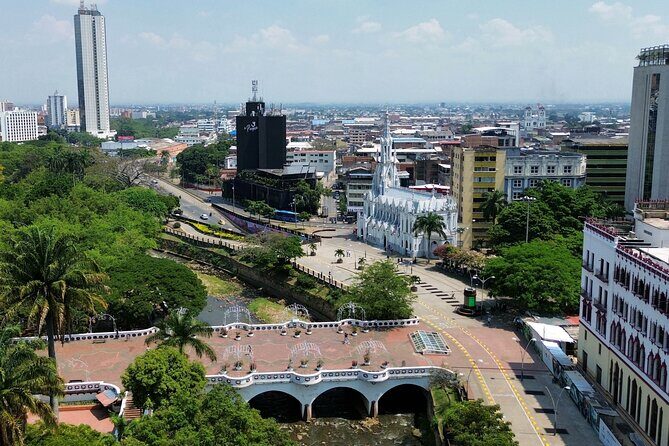
Puente Ortiz brings you to the first bridge crossing above the Cali river, with a built-in viewpoint payoff. You’ll enjoy views that line up the river, Torre de Cali (the tallest building in the city), and Three Crosses Hill.
The best part is that the bridge itself gives you photo angles through its arches. You’re not just looking from one spot—you’re walking through a perspective that changes as you move.
This is around 10 minutes, but it’s one of those stops where people linger with their phones, partly because the scenery does the work.
Parque Paseo Bolívar: Independence History Under Ceiba Trees, Plus a Typical Drink
Parque Paseo Bolívar is a calmer moment, timed for about 20 minutes. You’ll see the statue of Simón Bolívar and walk around while learning about Colombian independence history.
Then the practical magic: shade from ceiba trees and a delicious typical Cali drink, la Lulada caleña. This is where the tour earns its keep as a food-and-drink experience, not just a sightseeing loop.
If you’re heat-sensitive, this pause matters. It’s also a good time to refill water before continuing.
Jairo Varela Square and the Trumpet Monument: Salsa Legacy in Public Space
Next is Plazoleta Jairo Varela, around 20 minutes. This stop connects Cali’s salsa culture to a real figure—Jairo Varela and Grupo Niche—showing how influence spreads from local music into the wider world.
You’ll also get inside the musical magic of the Trumpet Monument. Even if you don’t know the details yet, the symbolism helps: this isn’t hidden heritage. It’s in public art.
It’s a great stop if you want your “salsa tour” to be more than just background music.
Parque Simón Bolívar: Birds, Palms, and Fruit Trees as a Break from Concrete
Parque Simón Bolívar brings back nature for about 10 minutes. You’ll hear birds, see palms, and get a tribute to the rivers of Cali. There are also fruit trees that provide shade, which is more than pleasant—it changes how the city feels after a long run of buildings and stone.
This part is short, but it prevents the walk from turning into a nonstop checklist.
Bulevar del Río Cali: A Scenic Walk Past Churches, Historic Buildings, and a Theater
Bulevar del Río Cali gives you a more linear sightseeing stretch for about 10 minutes. You’ll walk along and notice several landmarks: La Ermita Church, Coltabaco building, and Jorge Isaacs Theater.
This segment helps bridge the city’s “historic center” identity with a river-connected Cali. It also gives you a visual rest—more open space, more sightlines, and fewer tight turns than the church-and-plaza cluster.
Calle de la Escopeta: Street Art, Woven Roof Texture, and Local Flavor
Calle de la Escopeta is the final cultural punch, about 10 minutes. It’s described as one of the most colorful streets in Cali, with street art and a woven roof that adds texture and character.
This stop ties back to the tour’s theme: history isn’t locked inside museums. It shows up in neighborhood craft, street design, and how daily life moves through older districts.
It’s a good ending because it feels like a place you’d want to return to on your own, even if you only have a quick afternoon.
Price and Value: Why $41 Makes Sense for This Route
At $41 per person, the real question is what you’re getting beyond “a walk with a guide.” Here, the value comes from three things.
First, the tour covers a serious chunk of central sights in roughly 2 to 3 hours. That saves time and helps you avoid the guesswork of stitching together churches, museums, and squares.
Second, many admissions are listed as free for the stops on the route. That’s a big deal for cost control and it makes the itinerary feel complete.
Third, you get more than one cultural element. You’re not only learning about architecture and indigenous craft; you’re also sampling typical drinks, including la Lulada caleña, plus a soda/pop typical drink included on the tour plan.
Add in the small-group format (capped at up to 7), and this feels like a “proper guided experience,” not a crowded group shuffle.
The Guide Factor: English That Works and Stories You Can Follow
What consistently matters on a walking tour is whether the guide can connect the dots. This one is built for that. The stops are short, so the narration has to be clear and focused, and the overall feedback around English quality has been strong.
The guide names Julio and Marcela have shown up in past feedback, and the tone was the same: engaging explanation and solid historical knowledge without turning the day into a classroom.
If you like tours where you can ask questions while walking between landmarks, the small-group size helps a lot.
What You Should Bring (So You Enjoy the Walk)
This is a walking tour in the center, so pack like you mean it. Wear comfortable walking shoes. Bring sunscreen, a hat, and a water bottle. If rain is in the forecast, plan for it since the tour advises bringing an umbrella and proper rain clothing.
A simple checklist:
- Comfortable shoes (no fresh blister plans)
- Water bottle
- Sunscreen and hat
- Umbrella or rain layer
Who This Tour Is Best For
This tour is a great match if you want a first look at Cali that covers more than nightlife photos. It fits history and culture fans, salsa lovers who want context, and anyone who prefers walking routes with clear pacing.
If you’re short on time but want variety—churches, museum artifacts, plazas, river views, and music-linked landmarks—this does the job without dragging.
On the other hand, if you hate walking or need mobility accommodations beyond what uneven sidewalks allow, you might feel the route is too much. In that case, consider a more transport-based plan.
Should You Book This Cali Walking Tour?
Yes, if you want a guided loop that mixes Cali’s historic center with salsa culture and includes a typical drink. The strong value comes from the combination of free entry stops, a tight 2–3 hour route, and the small-group size that keeps it personal.
Book it especially if it’s your first time in Cali and you want to understand how the city’s identity connects: church authority in the plazas, indigenous craft in the museum, and salsa legacy in public squares.
Skip it only if you’re not into walking through dense central streets or you’re expecting one long museum-style experience. This is a curated walk—fast enough to stay fun, detailed enough to be worth it.
FAQ
How long is the walking tour?
It runs about 2 to 3 hours.
How much does the Cali historic center walking tour cost?
The price is $41.00 per person.
Is the group small?
Yes. The tour lists a small-group maximum, with a cap shown as 7 travelers.
What’s included in the price?
You get a local guide, the walking tour of the historic center, and a typical soda/pop drink.
Are entrance tickets required?
The itinerary indicates admission tickets for the listed stops are free.
What should I bring?
Wear comfortable walking shoes and bring sunscreen, a water bottle, a hat, and an umbrella. Bring rain clothing if rain is possible.
What happens if it rains?
The tour won’t be canceled due to rain. The guidance is to bring an umbrella or proper rain clothing so you can keep going.