REVIEW · CALI COLOMBIA
Shared Tour Cali’s Salsa, Graffiti & Resistance Experience
Book on GetYourGuide →Operated by Beyond Colombia · Bookable on GetYourGuide
This street walk connects salsa to social struggle, not just dance steps, and it uses murals to explain why. I love how it ties the beat to Cali’s idea of cultura popular—joy, romance, and protest all in the same soundtrack. Another strong point is the guide energy: many sessions are led by animated storytellers like Christian/Cristian/Chris, who make the history feel like something happening right now. One consideration: it’s a long, mostly on-foot route—about 8 km—so comfy shoes matter.
At a price of $13, you’re not just paying for sightseeing. You’re paying for interpretation: why salsa developed through African emancipation and how that legacy became a social movement. You’ll also get targeted stops that mix “street of flavor” energy with activist artwork. The only real drawback I’d flag is that it’s a shared tour with a lot of walking, and it isn’t suitable for wheelchair users.
In This Review
- Key things that make this tour worth your time
- Salsa, Graffiti & Resistance in Cali: What you’re actually learning
- Meet at Plazoleta Jairo Varela (and start in the right mood)
- Plazoleta de la Caleñidad: The city’s identity in public space
- Calle del Pecado (Street of Flavor): Party culture with political roots
- The River Boulevard curve: how music changes the feel of a city walk
- World Cup Tunnel and 5th Avenue: where famous places meet street messaging
- Graffiti monument to victims N21: when street art becomes memory
- Cult salsa bars: leaving with a plan, not just pictures
- Walk time, distance, and what to bring for a smooth 150 minutes
- Price and value: $13 that buys context, not just walking
- Language and group vibe: Spanish/English and an interactive feel
- Who should book this Cali salsa tour (and who should pass)
- Should you book Cali’s Salsa, Graffiti & Resistance tour?
- FAQ
- Where is the meeting point?
- How long is the tour?
- How much walking is involved?
- How much does it cost?
- What languages are available?
- Is food or drinks included?
- What should I bring?
- Is the tour wheelchair accessible?
- Can I cancel or reserve without paying now?
Key things that make this tour worth your time
- Salsa with a purpose: you’ll connect the music to social movements and popular culture, not just choreography.
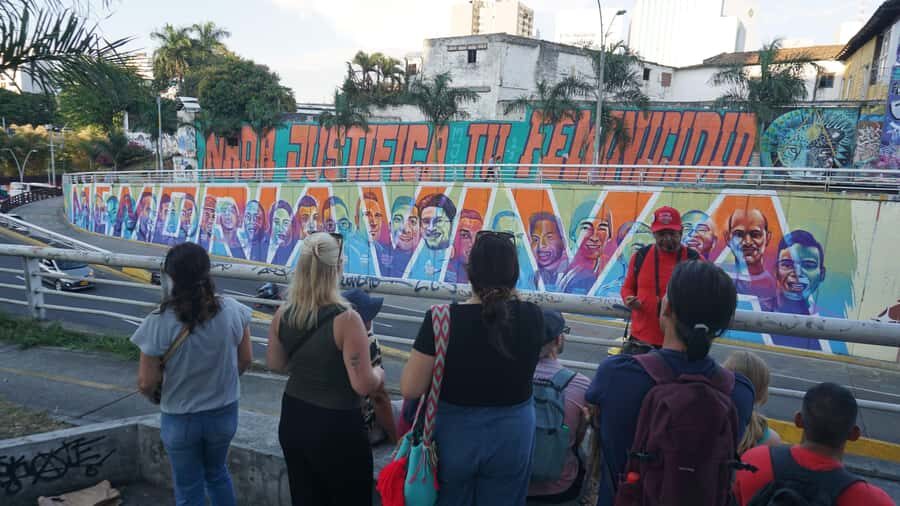
- Murals as lessons: salsa characters and nearby activist messages help you read the city like a living poster.
- A route built around meaning: Plazoleta de la Caleñidad, Calle del Pecado, the River Boulevard curve, and more are chosen for what they represent.
- Interactive, energetic guiding: guides like Christian/Cristian/Chris often keep the group engaged while telling the stories.
- Next-night planning: you’ll leave with recommendations for salsa cult bars to continue the vibe after the walk.
- Good value at $13: no surprise ticket fees, and you even get partner discounts if you show the map.
Salsa, Graffiti & Resistance in Cali: What you’re actually learning
Cali is famous for salsa technique and nightlife, and this tour starts right there. But it doesn’t stop at the party. Instead, it treats salsa like a popular lifestyle—one that grew out of history, community, and resistance.
You’ll hear how salsa connects back to African emancipation and how that cultural legacy shaped what people sing, dance, and stand for. Then the focus shifts to Cali: how the city’s salsa culture grew through a musical mix, strong local identity, and decades (especially the 60s to 80s) of cultural development. The punchline is simple: salsa lyrics and rhythms can carry revolution, heartbreak, historic moments, and social manifestos.
And the urban art is the translator. Murals in Cali can show salsa legends and characters, then—close by—activist messages for other popular struggles. That contrast is the point. You learn to see the walls as part of the same conversation as the music.
You can also read our reviews of more tours and experiences in Cali Colombia.


Meet at Plazoleta Jairo Varela (and start in the right mood)
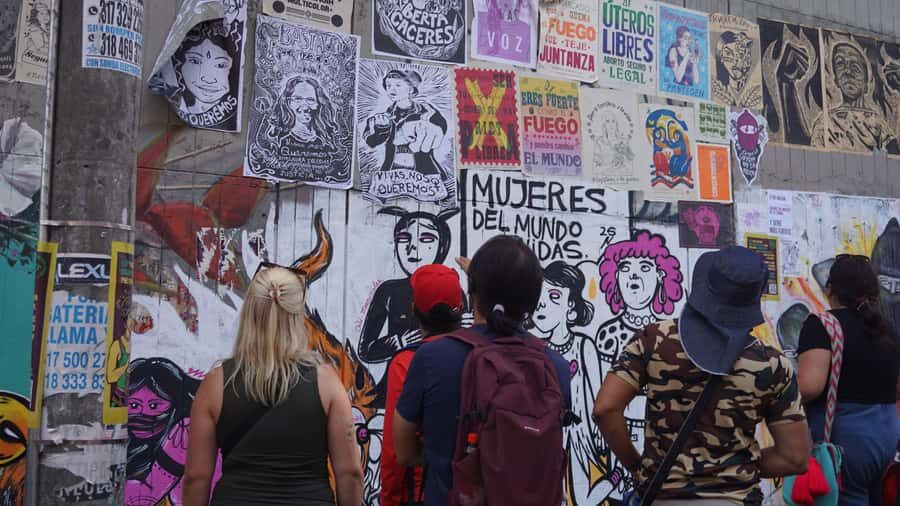
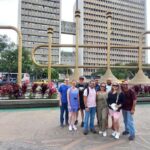
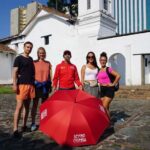
Your meeting point is Plazoleta Jairo Varela, where the guide holds red umbrellas. This matters because it sets the tone quickly: you’re already in an area tied to Cali identity and public life, so the first moments don’t feel like a random walk start.
From there, you’ll get the framework for the route: you’re not just walking street to street—you’re walking theme to theme. The group is shared, so you’ll likely meet fellow visitors, but the guide keeps it moving so the stories don’t get lost.
Plazoleta de la Caleñidad: The city’s identity in public space
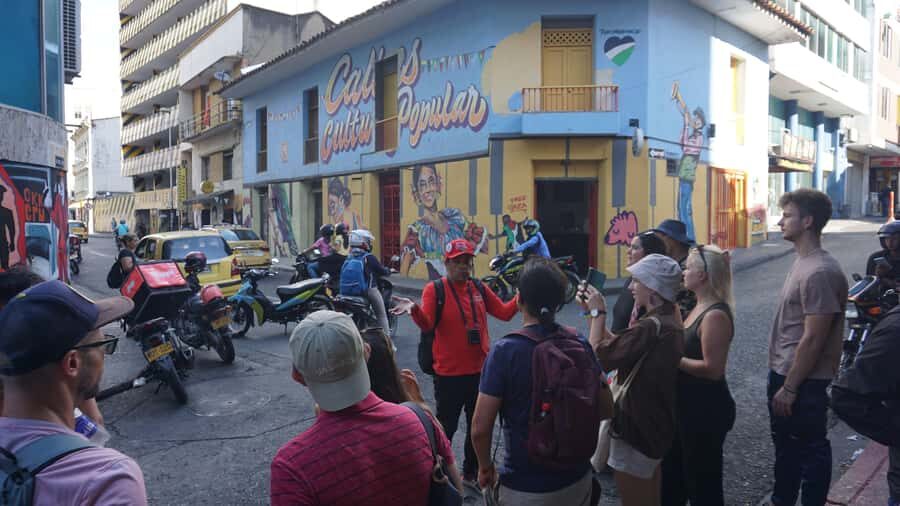
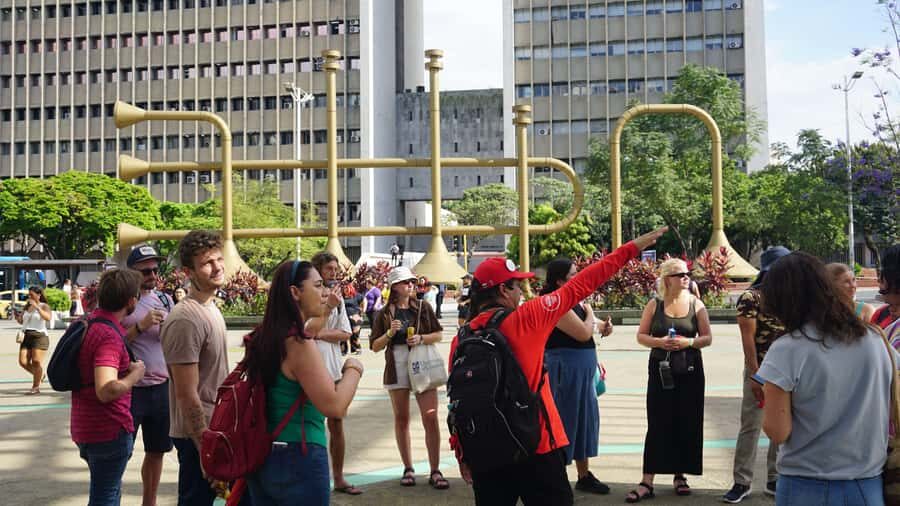
One of the first big stops is Plazoleta de la Caleñidad. Think of it as a place where Cali says who it is. The name matters: caleñidad is Cali-ness—local identity made visible.
Here’s what I like about this type of stop on a history-plus-music tour: it gives you a mental anchor. Before you get distracted by murals and side streets, you learn what Cali people mean when they talk about culture as something lived, not something you just watch.
A possible downside? If you’re expecting a quiet museum-style experience, this is more street-facing and social. It’s about energy and context more than indoor exhibits.
Calle del Pecado (Street of Flavor): Party culture with political roots
Next you’ll head toward Calle del Pecado, also known as the street of flavor. The vibe here is the kind of place you can feel even before the guide explains it—salsa nightlife energy, people out, music in the air.
But the tour’s angle is what makes this stop interesting. You’ll connect nightlife and dancing to the deeper reason salsa became a strong marker of local identity: it’s social, expressive, and it reflects real struggles in the lyrics and rhythm.
For you, this means you get permission to enjoy the scene and understand it. You don’t have to choose between “fun” and “meaning.” The guide’s job is to show how the fun can carry history without becoming heavy-handed.
Practical note: this is the kind of area that can get busy. Keep an eye on your belongings—crowds are part of the experience, not an exception.
The River Boulevard curve: how music changes the feel of a city walk
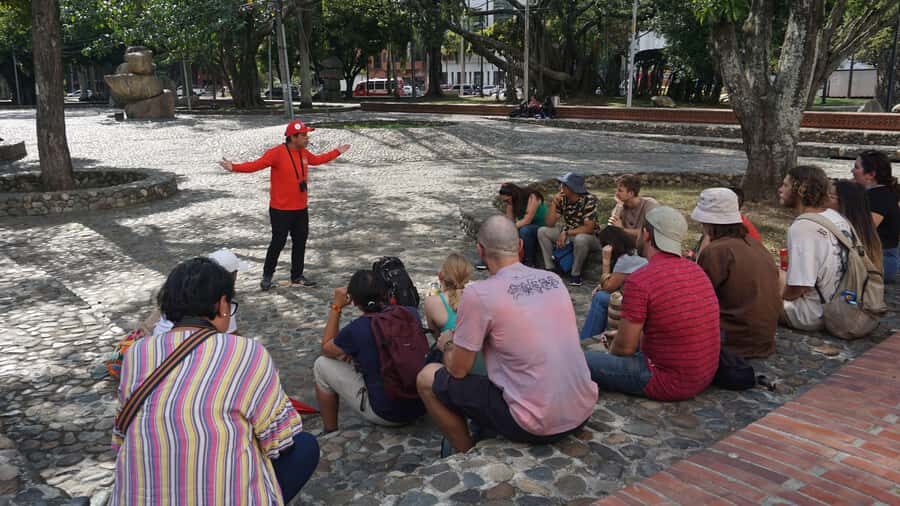
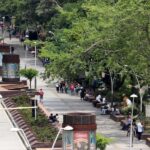
You’ll also see the curve of the River Boulevard, which helps break up the route. This isn’t just scenery. A curve and open promenade give you room to listen, look, and reset your brain between more intense street-art stops.
Why this matters: after a night-life themed street and a history-heavy explanation, you’ll want a moment where the guide can let the story breathe. The River Boulevard portion helps you shift from “what happened in salsa history?” to “how does Cali live it in public now?”
If you get camera-happy (very reasonable), this is one of the spots where photos are easier without constantly ducking around foot traffic.
World Cup Tunnel and 5th Avenue: where famous places meet street messaging
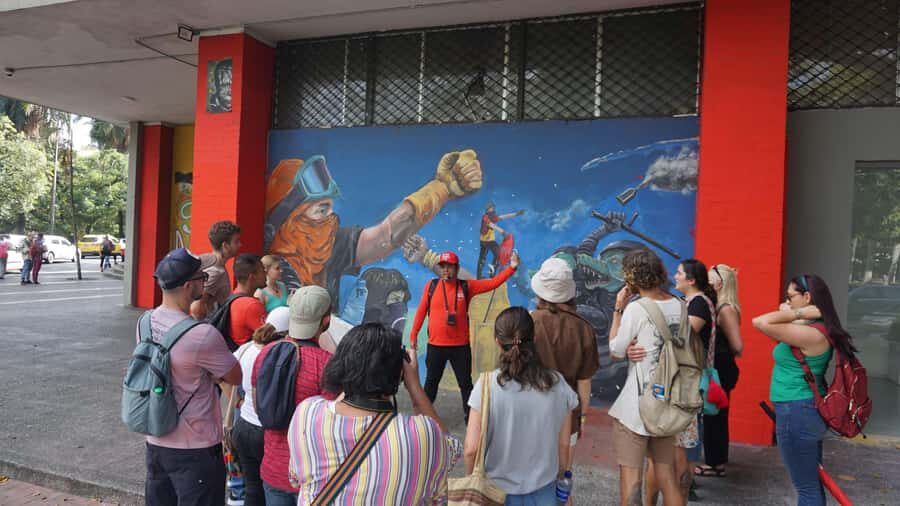
Another stop is the World Cup Tunnel and 5th Avenue. Even if you don’t know Cali’s local layout cold, these are the kind of landmarks that make a city feel like a map with stories—not just random blocks.
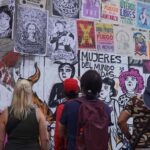
This part works because tunnels and high-visibility avenues naturally concentrate attention. That means your eye catches more: surfaces, tags, mural fragments, and how people use walls and corners as their voice.
The tour’s theme stays consistent: you’ll see how salsa characters and social messages can sit near each other. In other words, the city’s art isn’t only decoration—it’s commentary. And sometimes the commentary is pretty direct about popular struggle.
Graffiti monument to victims N21: when street art becomes memory
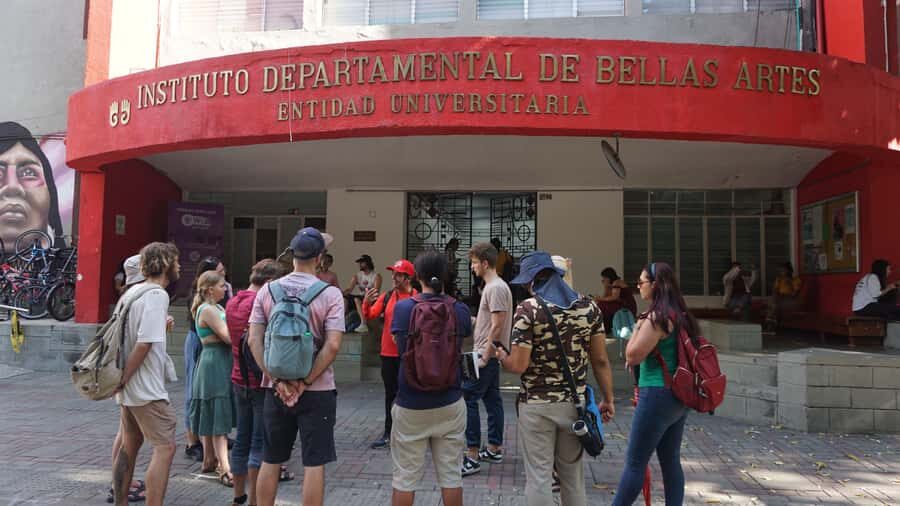
The graffiti monument to victims N21 is one of the stops that gives the whole tour weight. This is where “resistance” stops being a word on a brochure and becomes a visible act of remembrance.
What I think works here is the pairing: you’ve already learned salsa as social movement, so now you can recognize what a mural can do when it’s tied to human stories. The guide helps you see the difference between art that’s just style and art that’s a response—something made to keep attention on victims and the consequences of conflict.
A consideration: if you’re sensitive to human-rights themes, this segment may feel more intense than the nightlife streets. It’s still presented in a way that matches the tour’s overall purpose, but it won’t be a light moment.
Cult salsa bars: leaving with a plan, not just pictures
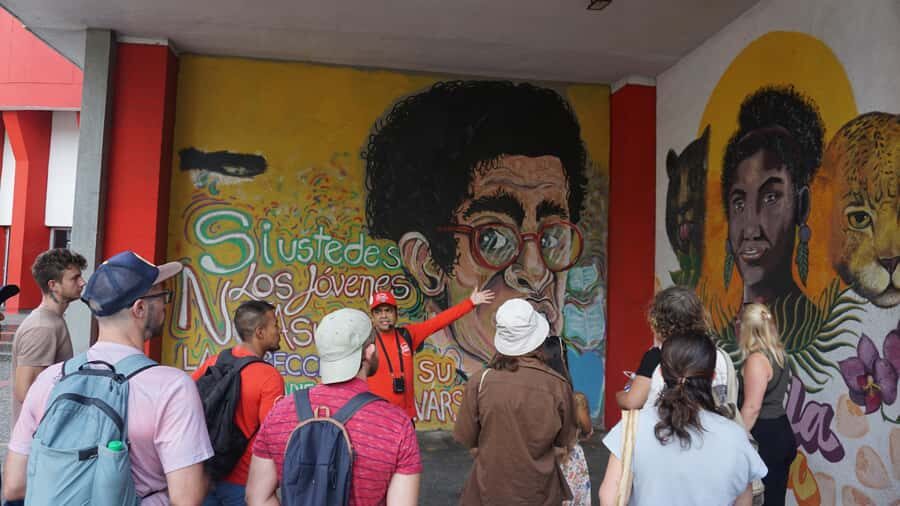
You’ll finish with cult salsa bars recommendations. This part is pure practical value. After 150 minutes of theory + street walking, it’s nice to have an obvious next step that still matches the tour’s mood.
Because the tour focuses on salsa as everyday culture, your bar suggestions aren’t random. They’re pointed toward places that keep salsa alive as a scene, not a tourist performance. And if you want to keep the learning going, going out that same night is a smart move: you’ll hear more in the music once you’ve connected it to the city’s social life.
You won’t be taking drinks or food as part of the tour itself (those aren’t included), but having bar direction is still a big help when you’re tired and want a decision you don’t have to research from scratch.
Walk time, distance, and what to bring for a smooth 150 minutes
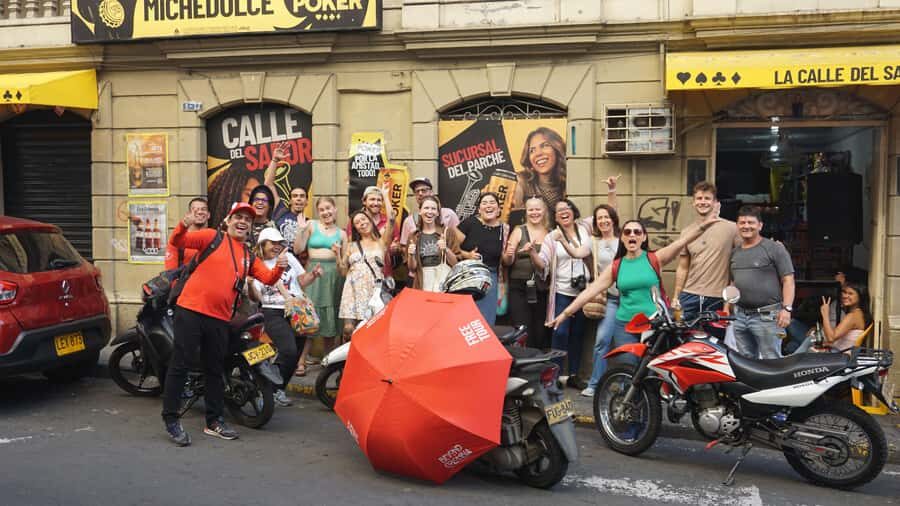
The tour lasts about 150 minutes, roughly 2 hours, but you should think of it as an active walk. You’ll cover about 8 km with rest stops, and you’ll likely be on your feet enough that sore feet are possible if you arrive in worn-out sneakers.
Bring:
- Comfortable shoes
- Water (don’t skip this)
- Your camera (you’ll want it for the murals and street scenes)
Also, keep in mind it’s not suitable for wheelchair users. And smoking isn’t allowed.
One more practical tip: some sections may be crowded. Keep your belongings close and don’t make it easy for pickpockets. Yes, it’s a cliché. No, it’s not optional.
Price and value: $13 that buys context, not just walking
At $13 per person, this is priced like a budget-friendly street experience, but the value comes from what’s added.
You get:
- a professional Beyond Colombia guide
- targeted sightseeing tied to salsa movements and popular culture
- street art mural focus
- recommendations for salsa cult bars
- partner discounts if you show the Free Walking Tour Map from linktr.ee/bccali
What you don’t get is equally important. Drinks, food, souvenirs, and transportation to and from your hotel are not included. There are also no ticket entrances included, which means you won’t be hit with surprise fees to “unlock” basic stops.
The best part: you pay for interpretation. The guide’s job is to connect African emancipation history, Caribbean Antilles beginnings, New York salsa development, and Cali’s cultural boom years to what you can literally see on the streets today. That’s the difference between a photo-walk and a story-walk.
Language and group vibe: Spanish/English and an interactive feel
The tour runs with a live guide in Spanish and English. There’s also an optional audio guide in Spanish.
Based on the pattern of guide performance, the experience tends to be interactive. Guides like Christian/Cristian/Chris have a reputation for enthusiasm and good storytelling, which matters on a long walk. If a tour is history-heavy and the guide is flat, your attention falls apart. When the guide is animated, the walk stays enjoyable even when the content gets serious.
Shared tour also means you’ll be moving at a social pace: new faces, shared stops, group questions. If you like chatting with other people while you learn, this fits.
Who should book this Cali salsa tour (and who should pass)
This tour is a strong match if you:
- like understanding why a place has its reputation
- want salsa culture explained through social movement and art
- enjoy street art and public spaces as “text”
- plan to go out dancing or at least want better direction afterward
You might want to skip it if you:
- can’t handle about 8 km walking
- need fully accessible routes (it’s not suitable for wheelchair users)
- prefer quiet, low-stimulation sightseeing over active, crowded urban areas
Should you book Cali’s Salsa, Graffiti & Resistance tour?
If you’re coming to Cali for salsa and you only want the dance side, you could do that another way. But if you want the bigger picture—why salsa is a social voice in Cali, how murals carry memory and resistance, and how everyday nightlife links back to history—this is a smart use of your time.
At $13, it’s also a low-risk way to get context fast. Bring water, wear good shoes, and go in with an open mind. You’ll likely leave seeing Cali’s streets with a sharper eye for meaning, not just color.
FAQ
Where is the meeting point?
Meet right at Plazoleta Jairo Varela with the guide holding red umbrellas.
How long is the tour?
The tour lasts about 150 minutes (around 2 hours).
How much walking is involved?
You’ll walk approximately 8 km total, with rest stops.
How much does it cost?
The price is $13 per person.
What languages are available?
The live tour guide is available in Spanish and English. An optional audio guide is available in Spanish.
Is food or drinks included?
No. Drinks and food are not included, and there are no restaurant visits as part of the included package.
What should I bring?
Bring comfortable shoes, a camera, and water (for hydration during the walk).
Is the tour wheelchair accessible?
No. It is not suitable for wheelchair users.
Can I cancel or reserve without paying now?
The tour offers free cancellation up to 24 hours in advance for a full refund, and you can reserve now & pay later.