REVIEW · BOGOTA
Street Food Tour in Bogotá with Tastings
Book on Viator →Operated by NEXPERIENCE · Bookable on Viator
First afternoon in Bogotá sorted. This street food tour strings together real local snacks with stops near major landmarks, so you eat and learn at the same time. I like that the food is fully included and there’s a clear run of tastes that feels like lunch plus dessert, not a few small bites. I also like the guide-driven context, linking what you’re eating to the city’s streets and buildings as you go. One thing to consider: you’ll walk a fair bit over about 2.5 hours, and you’ll likely end up very full—so don’t show up starving and overcrowded from a big breakfast.
The route keeps moving, with tastings at classic spots like Carrera 7 and the Torres del Parque area, then a coffee pause and a fruit market stop before finishing with oblea. The tour runs in a small group (max 10), which helps the guide keep things organized and allows for more back-and-forth. If you’re the type who prefers slow meals and lots of sitting, the fast tasting format might feel a little “go, go, go.”
In This Review
- Key highlights you’ll care about
- Why this Bogotá street-food route is a smart first afternoon
- Price and what $20 buys you in the real world
- Museo Nacional start: a city-walk with a built-in orientation
- Carrera 7 tastings: pandebono and buñuelo in classic form
- Plaza de Toros Santamaria and Torres del Parque: where history meets lunch bites
- La Luvina / Matorral bookstore stop: cold coffee with orange
- La Macarena and roscón resobado: the sweet street snack moment
- Plaza de Mercado La Perseverancia: tropical fruit tastes in a market setting
- Calle Bonita and oblea: the dessert finish that actually makes sense
- What to bring and how to eat smart on a tasting tour
- Who should book this Bogotá street food tour
- Should you book it? My take on the call
- FAQ
- FAQ
- How long is the street food tour in Bogotá?
- Where does the tour start?
- What’s included in the price?
- Is pickup or drop-off included?
- How many people are on the tour?
- Do I need to buy museum tickets during the tour?
- What kind of walking should I expect?
- What happens if the weather is poor?
- Is the tour suitable for most travelers?
Key highlights you’ll care about

- Small group setup (up to 10 travelers) for a more personal pace
- All snacks included, plus coffee and/or tea
- Tastings built around Bogotá staples like pandebono, buñuelo, empanadas, and oblea
- Stops tied to landmarks near Museo Nacional, Plaza de Toros Santamaria, and Torres del Parque
- A cold coffee moment with orange and a bookstore setting for a good reset
- Sweet and savory balance, so you’re not stuck eating only one type of food
Why this Bogotá street-food route is a smart first afternoon
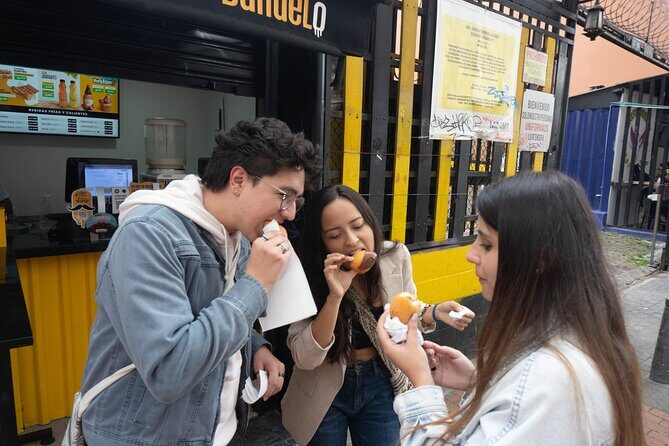
If you want a fast, high-reward way to understand Bogotá’s food culture, this tour makes a lot of sense. Instead of hopping between random restaurants, you follow a planned route that groups classic foods and the places they come from. You’ll also get the “why” behind the snacks—how they became common, and why they fit the neighborhoods you’re walking through.
I like the structure because it keeps your brain from drifting. Each stop nudges you to taste something specific, then you move on before you get bored. And because everything is included, you don’t spend your time doing mental math or hunting menus.
The vibe is also practical. You’re out in the city, walking between stops, tasting in short bursts, and getting enough variety to build your own short list of what to seek later.
You can also read our reviews of more food & drink experiences in Bogota


Price and what $20 buys you in the real world
At about $20 for roughly 2 hours 30 minutes, the value is mainly in two places: food volume and guided context. This isn’t a “two bites and a photo” kind of tour. You get a sequence of tastings that adds up to something close to lunch, plus a proper dessert finish.
You also get coffee and/or tea as part of the included snacks. That matters because coffee in Colombia is often part of the experience, not just a side drink. Here, the coffee stop is built into the route so you take a breather before the last stretch.
You should still plan smartly. If you eat a huge meal before the tour, you’ll miss the point—your stomach will lose the battle. Go in ready to graze, not to compete.
Museo Nacional start: a city-walk with a built-in orientation
The meeting point is Museo Nacional de Colombia (Ak 7 #N. 28-66), and the tour begins with a quick introduction. Starting at a landmark like this does two things well: it gives you an easy reference point for the day, and it helps you understand what you’ll be seeing before you’re already halfway across town.
If it’s your first time in Bogotá, this helps you get your bearings fast. You’re not just chasing food—you’re walking with an explanation of how the city’s space and food culture connect.
The early stop is also a nice way to ease into the pace. It’s not immediately “food, food, food” the moment you arrive; you settle in, then the tastings start rolling.
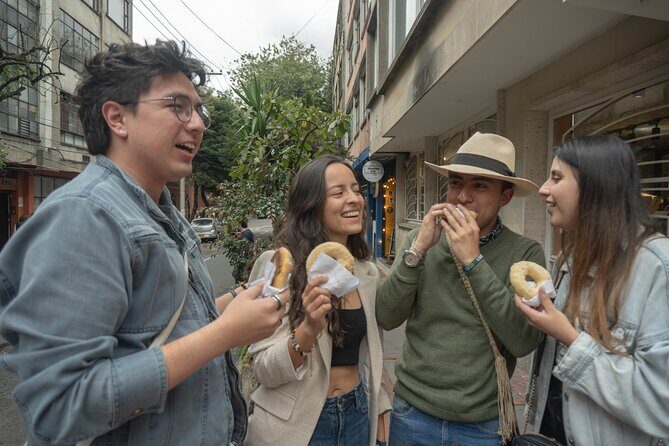
Carrera 7 tastings: pandebono and buñuelo in classic form
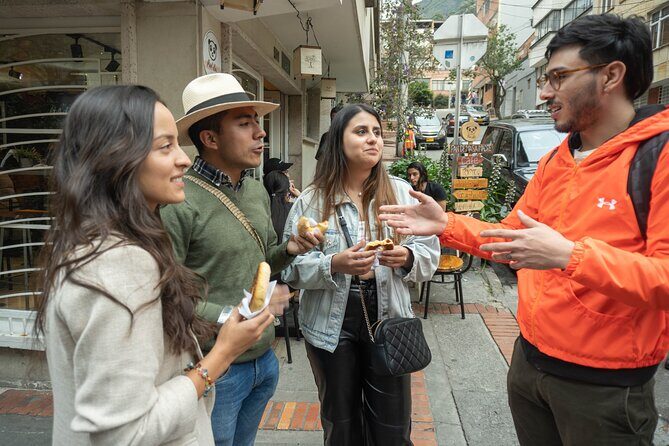
One of the first big food moments comes on Carrera 7, where you try two Bogotá favorites: pandebono and buñuelo. These are the kind of snacks you’ll see again and again across Colombia, but tasting them as a guided set helps you notice differences in texture and flavor.
This stop is a strong move because it’s both local and street-friendly. You’re not dealing with formal plating or complicated ordering. You’re tasting foods that are made to be grabbed, shared, and eaten as you walk through everyday city life.
If you’re wondering what to prioritize on a first Bogotá day, these are excellent anchor tastes. They’re approachable, widely loved, and good “baseline” snacks for the rest of the tour.
Plaza de Toros Santamaria and Torres del Parque: where history meets lunch bites
As you move along, the tour passes by major historic sights like Plaza de Toros Santamaria, the planetarium, and the famous Torres del Parque. You’re not just looking at buildings—you’re hearing how that history links back to the food culture around you.
Then you get to the next tasting zone around Torres del Parque, where the focus shifts to empanadas. Here’s the key detail: these empanadas are fried and corn-based, and they’re presented as a distinctly Colombian take. If you’ve had Argentine empanadas before, this is the moment to notice what changes—corn base and the fried street style bring their own character.
This stop is also where the tour’s “learning through eating” style clicks. The guide gives you context while you taste, so you’re building memory hooks, not just collecting flavors.
A few more Bogota tours and experiences worth a look


La Luvina / Matorral bookstore stop: cold coffee with orange
Next comes a calmer, cultural break at an old bookstore now called Matorral (formerly La Luvina). The food here is simple but smart: coffee with orange, served cold.
This is more than just a drink stop. It’s a palate reset between savory tastings and the next waves of snack and dessert. The orange pairing is a great contrast because it adds brightness and cuts through heavier fried items. It also feels very Bogotá—coffee as a daily ritual, but handled in a local, slightly playful way.
If you usually find coffee too heavy on a hot walk, this cold version is the kind of detail that makes a tour feel well planned.
La Macarena and roscón resobado: the sweet street snack moment
In La Macarena, the tour shifts to a Spanish-influenced sweet: roscón, given a Bogotá twist called roscón resobado. The standout detail is that it’s toasted. That little change can completely alter the bite—more warmth, more toasty aroma, and a different texture than a plain roscón.
This is also one of those stops where the location supports the flavor. La Macarena is known for its street atmosphere and restaurant density, so the snack feels like part of the neighborhood rhythm, not a random “we stopped here” moment.
If you’re a sweet tooth, this stop will likely be one of your favorites. If you’re not, it still works because it’s not an overloaded dessert—more like a structured, satisfying transition.
Plaza de Mercado La Perseverancia: tropical fruit tastes in a market setting
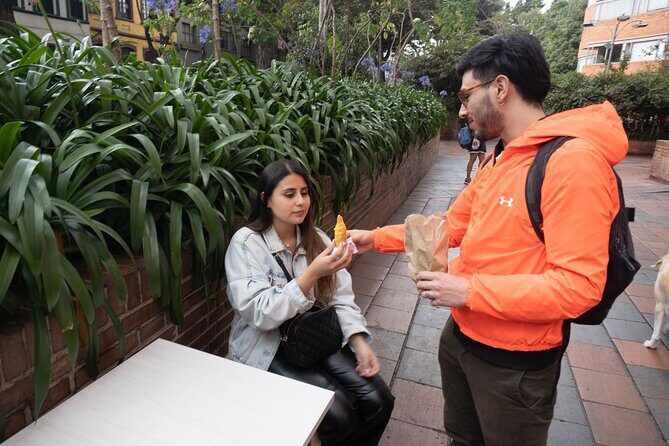
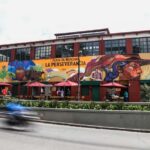
Then you hit Plaza de Mercado La Perseverancia, where the tour leans into Colombia’s fruit identity. Expect exotic tropical fruit tastings that make the whole tour feel more complete.
A fruit market stop can be skipped on less thoughtful tours, but here it’s valuable. It adds freshness and natural sweetness right in the middle of the route, which helps your body keep up with the eating.
Also, markets are where food culture is most visible: you see how people shop, which fruits are common, and how everyday routines revolve around seasonal products. Even if you don’t go deep into market details, you’ll come away with a clearer sense of what “local ingredients” really means.
Calle Bonita and oblea: the dessert finish that actually makes sense
The tour ends on Calle Bonita, finishing with oblea, a classic dessert you’ll find around Bogotá. The tour keeps the sweet ending simple and direct, which is exactly what you want after savory tastes and fruit.
Oblea is a good “finale” because it’s dessert that feels street-appropriate. It’s not a heavy cake situation that would overwhelm you at the end. It’s built to be eaten while you’re still out in the neighborhood—an easy last note that leaves you wanting to come back and try more.
What to bring and how to eat smart on a tasting tour
This is one of those tours where your choices before you leave really matter. Based on the tour’s design and the amount of food included, I’d treat it like a full meal plan.
A few practical tips:
- Don’t eat loads beforehand. Go in ready to graze.
- Wear comfortable shoes. You’re moving between central areas and walking segments between stops.
- Bring a light layer. Bogotá’s weather can shift, and you’ll be outdoors for the full stretch.
- Hydrate. Even if you’re drinking coffee, water still helps you enjoy the flavors instead of just surviving them.
Also, because the guide keeps things organized, you don’t need to constantly think about what comes next. That’s part of the value: you can focus on tasting and learning.
Who should book this Bogotá street food tour
This is a great fit if you:
- Want a first-day or first-afternoon activity that helps you understand the city fast
- Like your food tours guided and structured, not random wandering
- Want a mix of savory, sweet, and drinks without extra spending
- Prefer a small group rather than a large crowd
It’s less ideal if you dislike walking, prefer long sit-down meals, or you’re only interested in one specific food (like coffee or empanadas). The tour gives you variety by design.
Should you book it? My take on the call
If you like eating your way through a city and you want context along with the tastings, I think this tour is an easy yes. The combo of included snacks, a dessert finish, and a route that links food to recognizable Bogotá landmarks makes the time feel well spent.
Book it especially if you’re trying to hit several iconic foods in one outing—pandebono, buñuelo, corn-based empanadas, a cold coffee with orange, roscón resobado, tropical fruit, and oblea all in one run. You’ll leave full, informed, and with a clearer sense of what you want to hunt down again on your own.
FAQ
FAQ
How long is the street food tour in Bogotá?
It runs for about 2 hours 30 minutes.
Where does the tour start?
The meeting point is Museo Nacional de Colombia (Ak 7 #N. 28-66, Bogotá, Colombia).
What’s included in the price?
All food/snacks are included, plus coffee and/or tea.
Is pickup or drop-off included?
No, pick-up and drop-off are not included.
How many people are on the tour?
The group size is capped at maximum 10 travelers.
Do I need to buy museum tickets during the tour?
The tour includes an early stop at National Museum of Colombia, and admission is listed as free there.
What kind of walking should I expect?
You’ll be walking between several stops across central Bogotá. The tour is designed as a street-food route, not a mostly seated experience.
What happens if the weather is poor?
The experience requires good weather. If it’s canceled due to poor weather, you’ll be offered a different date or a full refund.
Is the tour suitable for most travelers?
The tour notes that most travelers can participate.