REVIEW · BOGOTA
Zipaquirá Salt Cathedral Private Tour + Walking Tour
Book on Viator →Operated by GoBogotá · Bookable on Viator
Salt feels like the strangest sacred space.
This private day trip mixes the jaw-dropping Catedral de Sal with quick hits in Zipaquirá’s historic squares, then layers in culture at places tied to Gabriel García Márquez and Colombia’s early 20th-century rail era. I especially like that the salt-sculpted visit is timed well (about 2 hours underground) and that you get built-in interpretation through audioguides plus a local bilingual guide if you choose. One thing to consider: language and guide style can change how much you absorb, and a couple of details that are listed as included have not always shown up for every guest.
If you want a half-day that feels both spiritual and historic (without feeling like a classroom), this fits.
The day also has enough breathing room to stretch your legs in town before lunch, which helps when you’re doing a longer drive out of Bogotá.
In This Review
- Key highlights to look for
- Why the Salt Cathedral is worth your time
- The schedule: 6 to 7 hours that moves with intent
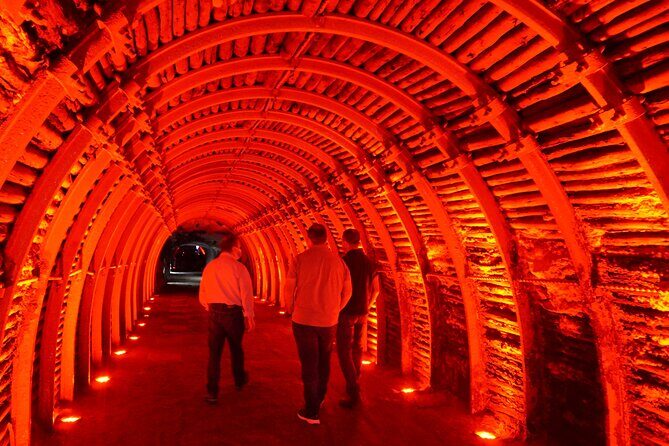
- Stop 1: Viacrucis corridor and the 14 salt stations
- Stop 1 (continued): the Dome and the giant salt cross
- Stop 2: Plaza de la Independencia and the symbolism of Nariño
- Stop 3: Plaza de los Comuneros—colonial buildings and cobblestones
- The culture stops that turn the day into more than one attraction
- García Márquez’s school and Casa del Nobel Cultural Center
- Tres Esquinas station: 1926 rail history in French neoclassical style
- Price and value: why $185 can make sense
- Guides, audio, and language: how to get the most
- Lunch timing and your best move in town
- Practical tips for a smoother day
- Should you book this Zipaquirá Salt Cathedral Private Tour?
- FAQ
- How long is the Zipaquirá Salt Cathedral Private Tour + Walking Tour?
- Is the Salt Cathedral admission included?
- What’s included besides the Salt Cathedral?
- Is lunch included in the price?
- Is this tour private?
- Do you provide audioguides?
- Is the guide bilingual?
- How much walking is inside the cathedral?
- Are service animals allowed?
Key highlights to look for
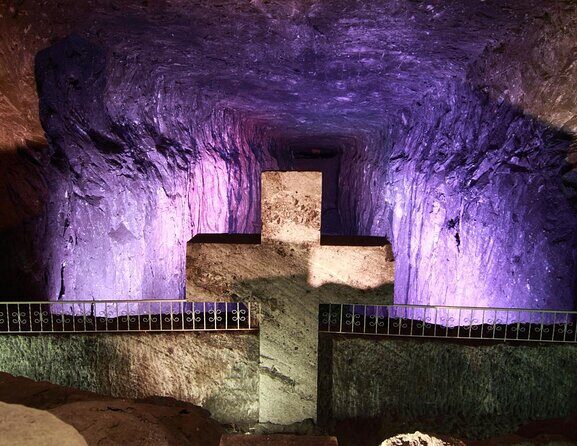
Salt Cathedral underground route: start at the Viacrucis corridor with 14 salt stations, then head to the Dome.
Largest salt-cut cross: you get the main icon view in the big interior.
Two quick history plazas: Independence Square and Plaza de los Comuneros, both mostly free to enjoy.
Literature stop: the school where Gabriel García Márquez studied as a boarder until 1946 (now the Casa del Nobel Cultural Center).
Historic rail architecture: Tres Esquinas station from 1926, built during Pedro Nel Ospina’s presidency.
Private comfort from Bogotá: transport is handled end-to-end, so you’re not wrestling buses and schedules.
Why the Salt Cathedral is worth your time
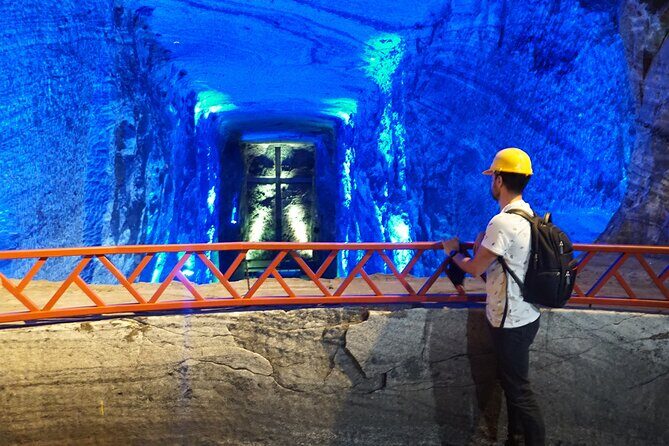
Zipaquirá is only a short drive from Bogotá, but it feels like you’ve crossed into a different kind of world. The Salt Cathedral is an architectural remix of religion, labor, and landscape—except here the “landscape” is carved underground salt rooms where the environment is part of the story.
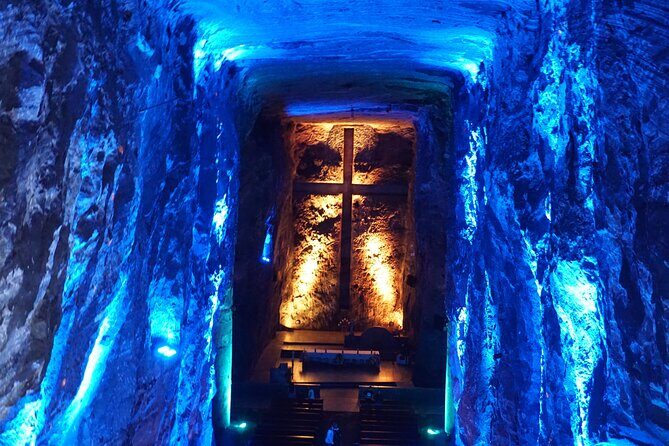
What makes this visit special is the way the cathedral turns a mining site into a narrative space. You’re not just looking at art; you’re walking a designed route that mirrors Jesus’ path to crucifixion through the Viacrucis stations. Then the experience opens up in the Dome, where the scale hits you fast: it’s known for featuring the largest salt-cut cross in the world.
If you care about craftsmanship, the salt architecture can feel almost surreal. If you care about faith, the symbolism is the point. Either way, it’s one of those stops that gives you photos that look more dramatic than you expect in real life—mostly because the scale is real.
You can also read our reviews of more walking tours in Bogota

The schedule: 6 to 7 hours that moves with intent
Plan on a 6 to 7 hour day trip. The drive from Bogotá is commonly around 45 minutes, but traffic can stretch it, so I’d treat that time as flexible.
Inside the Salt Cathedral, you’re spending about 2 hours there, which is the right amount of time. Long enough to follow the route and take in the key interior moments. Not so long that you feel crushed by underground walking.
Outside, the day stays light on “go-go-go.” You’ll get short time blocks in the town squares, plus extra cultural stops. That pacing is a big deal because Zipaquirá isn’t huge, but it’s easy to waste time if you arrive with a plan that’s too tight.
Stop 1: Viacrucis corridor and the 14 salt stations
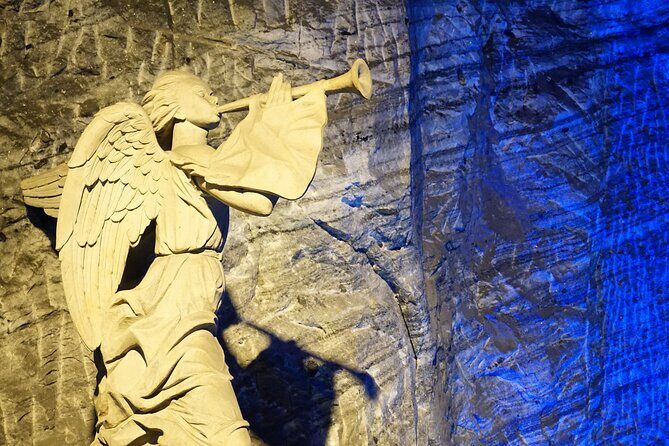
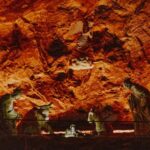
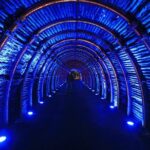
You enter the experience through the Viacrucis underground corridor. This is where the tour starts to feel more story-driven than sightseeing. The corridor contains 14 stations sculpted from salt rock by miners, designed around Jesus’ path to crucifixion.
This section works best if you let it slow you down for a few minutes at each stop. The salt texture, the tight space, and the sculpted details make the stations feel personal rather than abstract. Even if you don’t read Spanish, the tour includes audioguides in different languages, so you can match what you see with what it’s meant to communicate.
One practical note: if you’re doing this as a Christian-focused visit, this first segment is the emotional engine of the tour. It’s also where an animated guide can help a lot. Some guides—like Ludwyn in one group I’m drawing from—were praised for giving thorough context, so your interpretation may start strong if your guide is talkative and fluent in your language.
Stop 1 (continued): the Dome and the giant salt cross
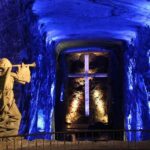
After the corridor route, you reach the Dome. This is the big interior moment: a large salt-carved cross that’s used as an icon and photo target, plus broader cathedral-scale views.
What I like about this part is that it gives you a “reset.” You move from the narrow station-by-station narrative into a wider space where you can understand scale and composition. If you’ve only seen photos, the real Dome is often more surprising because you can feel the “carved cathedral” aspect: this isn’t a set built for tourists after the fact. It’s a transformation of a mined underground space that goes back to pre-Columbian salt exploitation.
If you want extra freedom, some guests noted they appreciated being able to explore the cave on their own schedule after the guided piece. So if you’re the type who wants to linger for different angles, this tour can still give you that.
Stop 2: Plaza de la Independencia and the symbolism of Nariño
Once you come back up, the tour shifts from sacred underground to national storytelling in the open air. At Plaza de la Independencia, you’re stepping into a space that used to be the old market square. It was inaugurated in 2010 as a tribute to Colombian independence and the legacy of Antonio Nariño.
Nariño’s statue stands in the center holding a book tied to the human rights of the people. Around the square, you’ll notice flags marking countries that achieved freedom under the leadership of Simón Bolívar.
This stop is short—about 10 minutes—but it’s a useful palate cleanser after the deep cave atmosphere. You also get a chance to connect the Salt Cathedral’s symbolic language with real-world Colombian identity and independence themes.
You can also read our reviews of more private tours in Bogota


Stop 3: Plaza de los Comuneros—colonial buildings and cobblestones
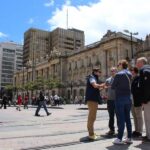
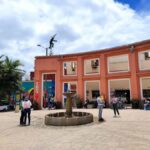
Next comes Plaza de los Comuneros, the historic heart of Zipaquirá. This is a place with a revolutionary storyline: it’s tied to the first revolution of America, which helped shape the city’s name.
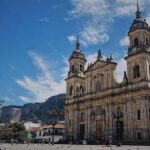
The square’s surroundings matter. You’ll see imposing colonial buildings such as the Diocesan Cathedral, the Government House, and the Municipal Palace. Then there are the cobblestone streets and the well-preserved architecture that make it feel like a living old town, not just a backdrop.
This stop is also around 10 minutes, so I treat it as a “look, orient, snap a few photos, then breathe.” If your schedule feels tight, don’t worry—your time here is designed to be efficient.
The culture stops that turn the day into more than one attraction
The tour adds two extra visits that help Zipaquirá feel like a real town, not just a cathedral stop.
García Márquez’s school and Casa del Nobel Cultural Center
You’ll pass by the school where Gabriel García Márquez studied as a boarder until his graduation in 1946. Today, this site operates as the Casa del Nobel Cultural Center, focused on art and memory connected to the writer.
This is the kind of stop that doesn’t take over the day, but it changes how you think about Colombia. It gives you a literary “why it matters” moment right in the town’s own fabric. If you’re a fan of One Hundred Years of Solitude or just curious about where great stories come from, it’s a smart add-on.
Tres Esquinas station: 1926 rail history in French neoclassical style
Another pass-through stop is Tres Esquinas, a station built in 1926 during the presidency of General Pedro Nel Ospina. It was an important part of the Savannah Railway, boosting commerce and industry in the region.
The architecture is described as elegant neoclassical French. It’s recognized as national architectural heritage and still reads like a witness to Zipaquirá’s development between the 1920s and 1970s.
I like this stop because it’s a break from the common “cathedral + plaza” pattern. It reminds you that the region’s identity wasn’t only shaped by independence-era politics, but also by transport, industry, and design.
Price and value: why $185 can make sense
At $185 per person, this isn’t a bargain-basement outing. The good news is that your money goes toward the parts that usually cost time and stress on your own.
Here’s what’s doing the heavy lifting for value:
- Salt Cathedral ticket is paid for by the provider (a major cost driver for this attraction).
- Audioguides in different languages are included.
- You get private transportation from Bogotá and back, which saves you from scheduling headaches.
- There’s medical insurance included, plus water provided from their own supply.
- You get a typical Colombian snack, a small souvenir, and a guided cultural route with professional local support (if you choose that option).
Lunch is not included, but you do get free time for lunch at a recommended restaurant. That means you’re not forced into a rushed meal on the go—you can pick something that fits your tastes and hunger level.
Where the price can feel less satisfying is if the experience becomes mostly “drop-off and go.” One low-score experience described it that way, where the guide-style component was lighter than expected. The flip side: many guests highlighted guides by name—like Katy with an excellent Salt Cathedral explanation, or Jose and Leonardo praised for making the day smoother and more meaningful.
Guides, audio, and language: how to get the most
This tour comes with built-in support, and that’s key. You’ll have audioguides inside the Salt Cathedral in multiple languages. So even if you end up with a guide who speaks mostly Spanish, you can still follow what you’re seeing.
Still, guide personality matters. Different groups name different guides—like Ludwyn, Katy, Angel, Pierre, Jorge, Don Jorge, Jose, and Leonardo—and the common theme in the best experiences is a guide who adds context, not just directions.
If you’re worried about language barriers, here’s the practical approach:
- Use the audioguide for the narration-heavy portions (Viacrucis and Dome).
- Ask your guide 1–2 targeted questions early so you know how much they can explain in your language.
- If you’re hoping for a very chatty, deeply interpreted experience, note that some groups have reported a more straightforward delivery on certain days.
Lunch timing and your best move in town
Lunch is on you, but the tour includes free time to eat at a recommended restaurant. Since the overall day is around half a day, I’d keep your expectations realistic: you’ll have time to sit down and eat, not an all-afternoon restaurant crawl.
If you like to plan ahead, pick your lunch style quickly once you arrive in town. The tour’s structure doesn’t leave you tons of slack, so you’ll enjoy it more if you choose a simple goal: good local food, relaxed sitting, then back to the next planned stop.
Also, one guest mentioned extra cost at lunch and another mentioned possible bathroom friction at the end of the cathedral walk. So I’d suggest using bathroom time when you can, and don’t plan on squeezing an extra long break if the site is running its usual flow.
Practical tips for a smoother day
A few small things make a noticeable difference on this kind of trip:
- Bring a light layer. Underground spaces can feel cooler than you expect.
- Wear shoes with grip. Cobblestones in town plus uneven cathedral walkways are not the time for slick soles.
- Plan to disconnect from your usual routine. This is a structured experience with set stops, so you’ll get more out of it if you let the day lead.
- If you care about included perks like water or onboard wifi, it’s smart to confirm early with your driver or staff. One negative experience said water and wifi didn’t arrive as listed, which is the kind of thing you’d want resolved quickly.
The best version of this day is when the guide gives you context and the audioguide supports your language comfort. Then you walk through the Salt Cathedral feeling like you understand what you’re seeing.
Should you book this Zipaquirá Salt Cathedral Private Tour?
I’d book if you want:
- One guided day that covers the main Salt Cathedral moments plus real town stops
- Private transport so you don’t fight Bogotá logistics
- The combo of audioguides and optional bilingual guiding
- A day that blends faith/architecture with Colombian culture and history
I might skip (or at least adjust expectations) if:
- You’re only interested in a quick “photo run” inside the cathedral
- You need a very specific language level from the guide, since guide delivery can vary
- You’re very sensitive to included amenities always being delivered exactly as listed (rare issues have been reported)
If you choose it, you’ll likely leave with the feeling that you didn’t just visit one famous place—you understood why that place matters to Colombia, and you saw the city around it long enough to remember it as more than a day-trip stop.
FAQ
How long is the Zipaquirá Salt Cathedral Private Tour + Walking Tour?
It runs about 6 to 7 hours.
Is the Salt Cathedral admission included?
Yes. The ticket to the Salt Mine / Salt Cathedral is paid for by the tour provider.
What’s included besides the Salt Cathedral?
Included items are a typical Colombian snack, water, medical insurance, audioguides in different languages, a souvenir, and free time for lunch at a recommended restaurant.
Is lunch included in the price?
No. Lunch is not included, even though you’ll have time set aside to eat at a recommended place.
Is this tour private?
Yes. It’s a private tour/activity, meaning only your group participates.
Do you provide audioguides?
Yes. Audioguides are provided in different languages for the Salt Cathedral.
Is the guide bilingual?
A professional local and bilingual guide is included if you choose that option.
How much walking is inside the cathedral?
You spend about 2 hours inside the Salt Cathedral, and the route includes the Viacrucis corridor with stations and time in the Dome.
Are service animals allowed?
Yes. Service animals are allowed.