REVIEW · BOGOTA
Anti-tour Bogotá
Book on GetYourGuide →Operated by Tripcol · Bookable on GetYourGuide
Bogotá refuses to be a postcard. This Anti-tour blends street-side history with hands-on food and drink, plus a visit to Manu Chao’s Bogotá in La Candelaria. I especially liked the way it turns big ideas about resistance into real, walkable moments you can actually see.
I also liked the stop at La Trocha, Casa de la Paz, where you taste viche and hear personal stories from people working for peace now. The tone stays human, not preachy, and the conversation quality makes the tastings feel like part of the lesson, not a side quest.
One thing to consider: this tour is more political and narrative-driven than “photo-op Bogotá,” so it’s not ideal if you want classic viewpoints and museum labels only. Also, the pace includes public transport moments, so wear shoes you can handle for a full afternoon.
In This Review
- Key highlights you’ll feel right away
- Why This Anti-Tour Shows Bogotá’s Real Pulse
- Starting Point Near Parque de los Periodistas: Get Oriented Fast
- La Pola Monument and Policarpa Salavarrieta: Independence With Teeth
- Chorro de Quevedo Plaza: Street Stories and the Chicha Workshop
- La Candelaria and Manu Chao’s Former Home: Music, City, and Meaning
- TransMilenio and the TransMilenio Gold Museum Stop
- La Trocha Casa de la Paz: Viche, Arts, and Ex-FARC Peace Work
- Getting the Most From the Small Group Experience (10 Max)
- Price and Value: Why $42 for 4 Hours Isn’t Just Cheap or Expensive
- Practical Tips So You Don’t Fuss While You Learn
- Who Should Book Anti-Tour Bogotá
- Should You Book This 4-Hour Anti-Tour?
- FAQ
- How long is the Anti-tour Bogotá?
- What language is the tour guide?
- Is it a small group tour?
- What experiences are included in the price?
- What should I bring?
- Can I cancel for free?
- What’s the total price?
Key highlights you’ll feel right away
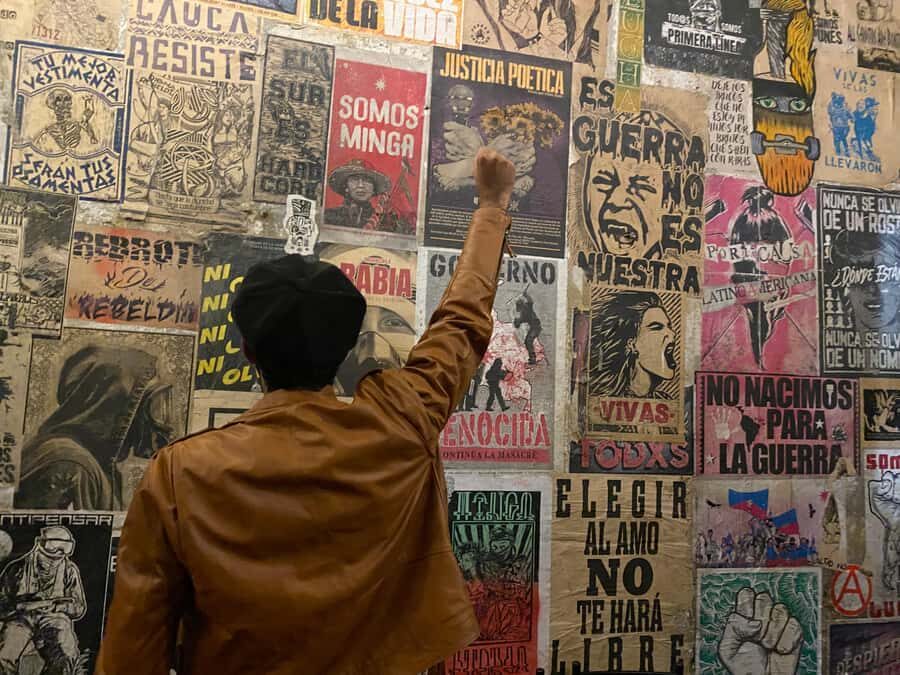
- Chicha workshop: learn to make Bogotá’s traditional corn brew and taste it
- Manu Chao House entrance: a music-linked stop in La Candelaria
- La Trocha, Casa de la Paz: meet ex-combatants building peace through arts and crafts
- Viche tasting: try an ancestral sugarcane spirit in context
- TransMilenio ride: see the city’s rhythm using the system locals actually use
- Small group (10 max): more time to talk, not just follow
Why This Anti-Tour Shows Bogotá’s Real Pulse
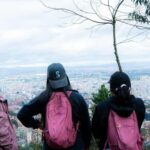
This tour is built around one idea: Bogotá’s meaning lives in the streets, not just in landmarks. You’ll start near the historical center and move through a mix of plazas, markets, and local spaces where people keep telling their own version of the city.
I like that it doesn’t treat culture as a display case. Instead, you get stories tied to independence (hello La Pola / Policarpa Salavarrieta), indigenous tradition (corn-based chicha), and today’s peace-building work (ex-combatants at La Trocha). It’s a fast way to understand why Bogotá can feel chaotic and stubborn at the same time.
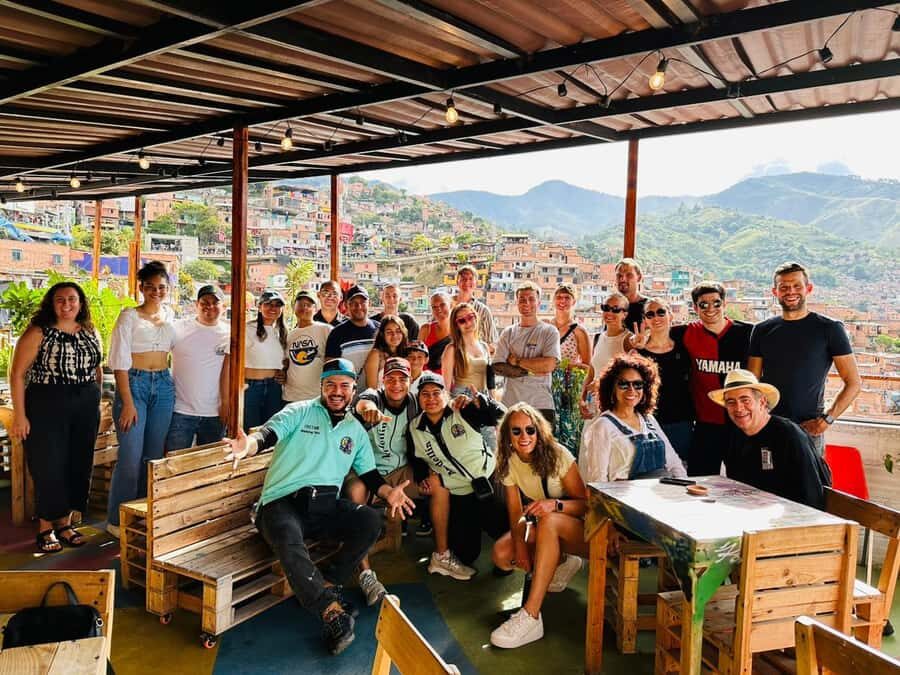
The group stays small—limited to 10 people—so questions aren’t a hassle. You’ll hear English-language guidance from a live tour guide, and you’ll have room to ask what something means, not just where it is.
You can also read our reviews of more tours and experiences in Bogota.
Starting Point Near Parque de los Periodistas: Get Oriented Fast
You’ll meet at Parque de los Periodistas Gabriel García Márquez. That’s a smart start: it helps you get bearings in central Bogotá before the route starts threading through smaller streets and changing neighborhoods.
From there, the tour quickly sets up its theme. First you’re pointed toward independence-era figures, then you move into places tied to local gathering and everyday life. It’s a practical way to build context so the rest of the stops land better.
Bring water and comfortable shoes. This is the kind of 4-hour tour where stopping for photos is fine, but you’ll still be walking, and the sun in Bogotá can feel more intense than you expect.
La Pola Monument and Policarpa Salavarrieta: Independence With Teeth
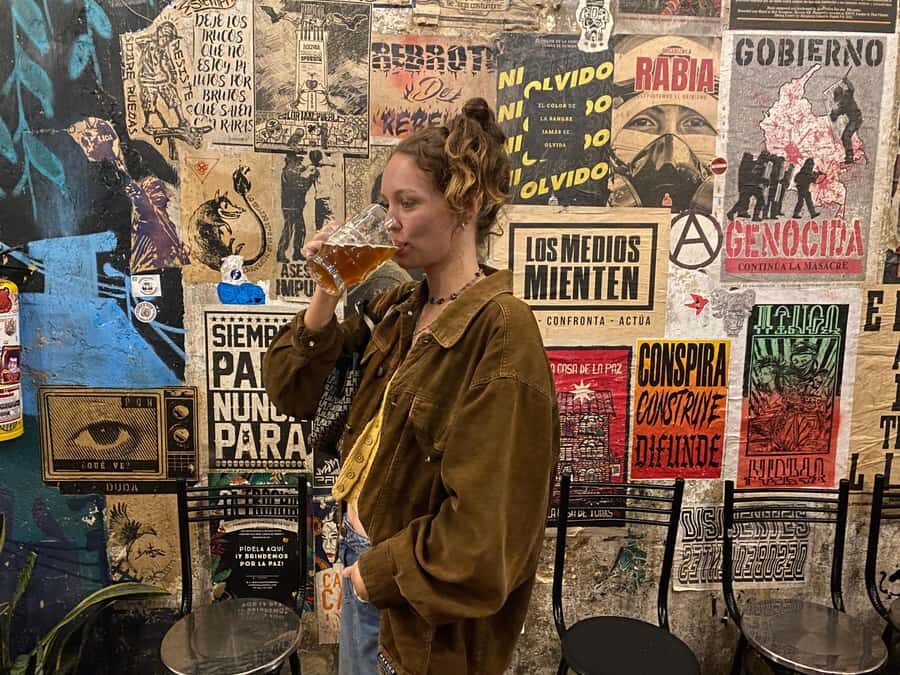
The first guided stop is at the La Pola (Policarpa Salavarrieta) Monument, with about 15 minutes there. This isn’t just a name check. The point is to link Bogotá to Colombia’s independence story through a figure whose courage mattered enough to become symbolic.
Why this matters for you: it gives you a political backbone early. Later, when the route turns toward resistance and peace, you’ll understand that the tour isn’t randomly jumping between topics. It’s showing how “who gets remembered” shapes how people see power.
A short stop like this also keeps your energy up. You’re not stuck for ages at one spot before the tour turns more hands-on.
Chorro de Quevedo Plaza: Street Stories and the Chicha Workshop
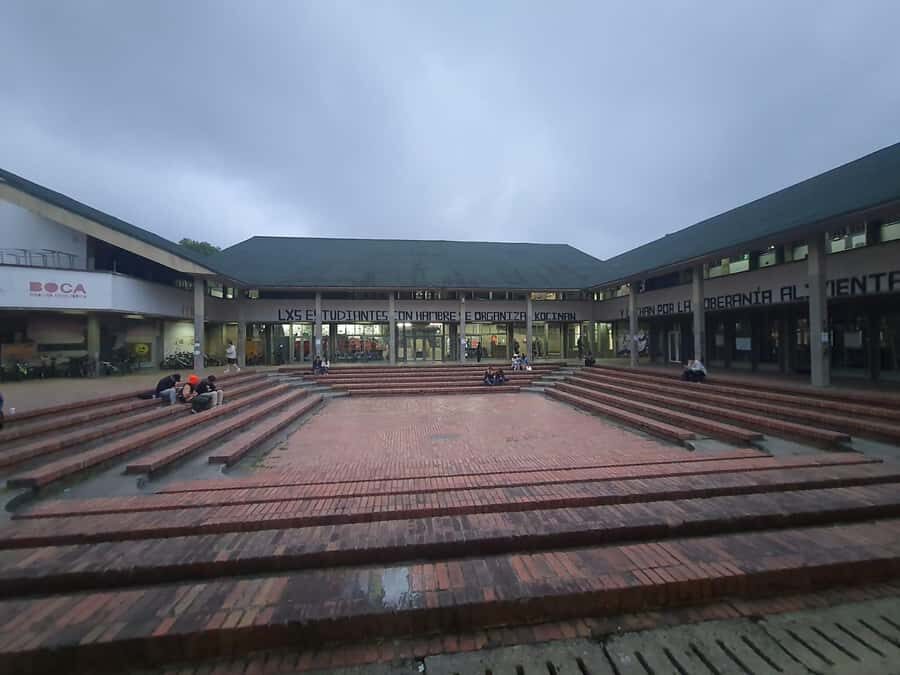
Next is Chorro de Quevedo Plaza, where you’ll spend about 1.5 hours for guided time plus a workshop. This is one of the most hands-on parts of the whole tour, and it’s where you learn by doing.
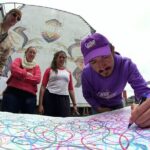
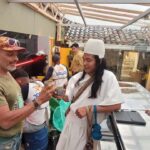
The highlight is the chicha workshop. You’ll learn to make Bogotá’s traditional indigenous corn brew and then taste it. Even if you’ve never had chicha before, the workshop format makes it easier to understand the drink beyond the flavor. You’re learning the tradition behind it: how an old practice survives, changes, and still shows up in daily culture.
Chicha is also a great “conversation starter” tasting. Once you’ve made it, you’ll hear the stories with a different level of attention. It’s not just sip-and-go. It’s more like tasting with context.
Note the tasting portion can be the kind of experience that makes you slow down. If you’re the type who hates lingering, plan to be patient for a bit. This part is the payoff for why the tour isn’t a typical checklist.
La Candelaria and Manu Chao’s Former Home: Music, City, and Meaning
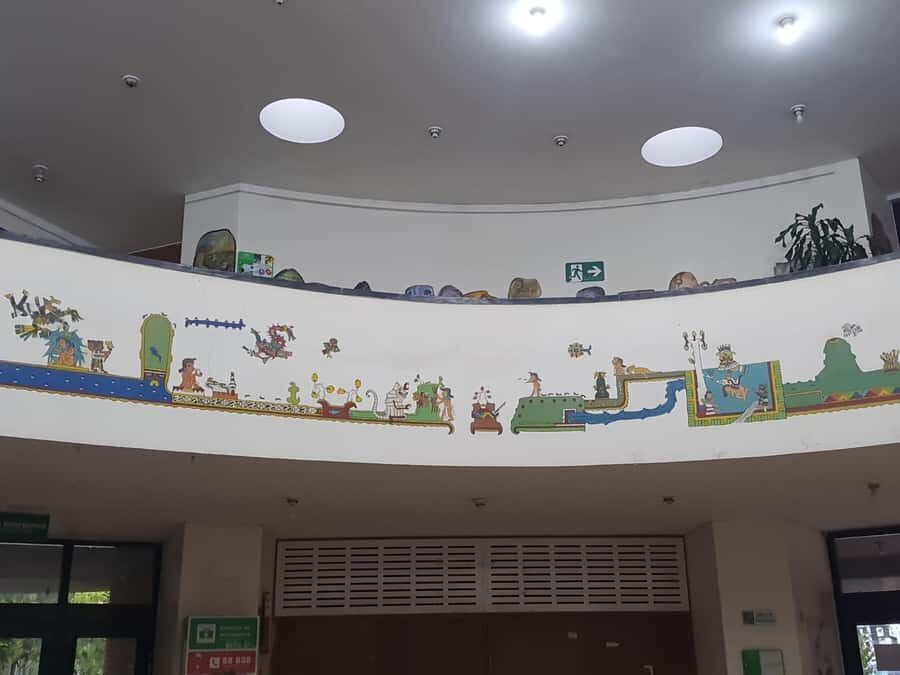
After the chicha workshop, the route shifts toward La Candelaria for an entrance to Manu Chao’s house—the former home of the legendary musician. You’ll get guided explanation about how Bogotá’s streets influenced his work and how his time there left a mark on the city’s cultural scene.
I like this stop because it gives a different angle on resistance. It’s not only politics in the formal sense. It’s also culture pushing back—song, movement, and street energy creating identity.
This is also a useful break from pure history. You’re still learning, but through a human-sized story tied to art. If you’re a music person (or just curious about how artists find inspiration), this part is likely to click fast.
Tip: have your camera ready, but keep it respectful. You’re walking through real spaces connected to real people.

TransMilenio and the TransMilenio Gold Museum Stop
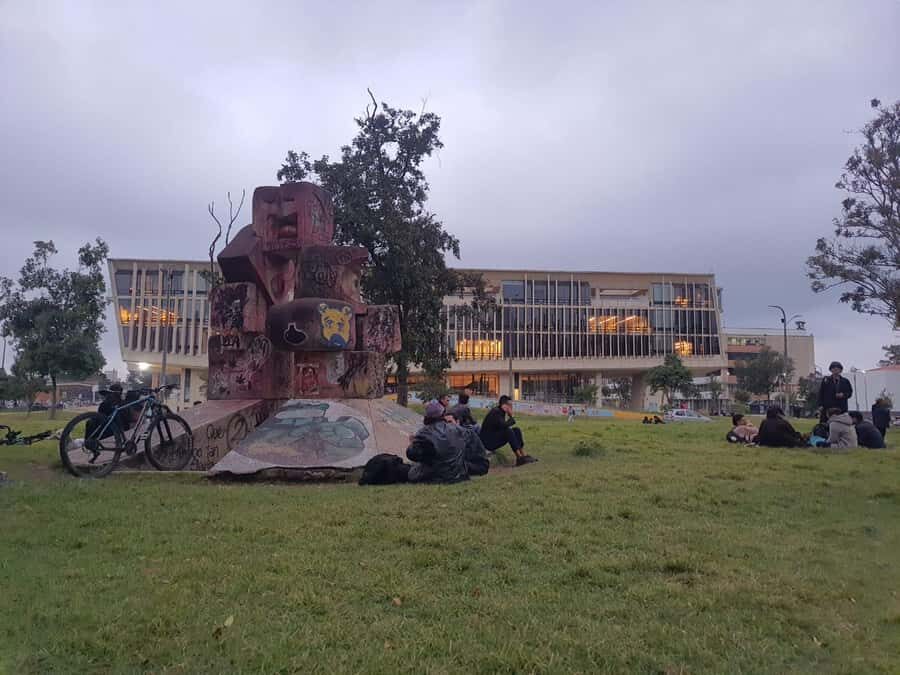
The tour then moves across the city using the TransMilenio, Bogotá’s iconic bus rapid transit system. You’ll spend around 30 minutes at the TransMilenio Gold Museum, then about 12 minutes on public transport as you connect to the next neighborhood.
For you, this is a big value moment. Transportation isn’t just logistics here—it’s part of seeing how Bogotá functions day to day. Taking TransMilenio with the guide means you’re not guessing routes while also trying to interpret the city.
The TransMilenio Gold Museum stop is short and guided. It’s a change of pace from street history and tastes, so it acts like a reset button in the middle of the tour.
What to watch: this section can feel more structured and time-boxed than the plazas. If you’re hoping for extra wandering time, this won’t be the place. The tour keeps moving so you can reach La Trocha while the afternoon still works.
La Trocha Casa de la Paz: Viche, Arts, and Ex-FARC Peace Work
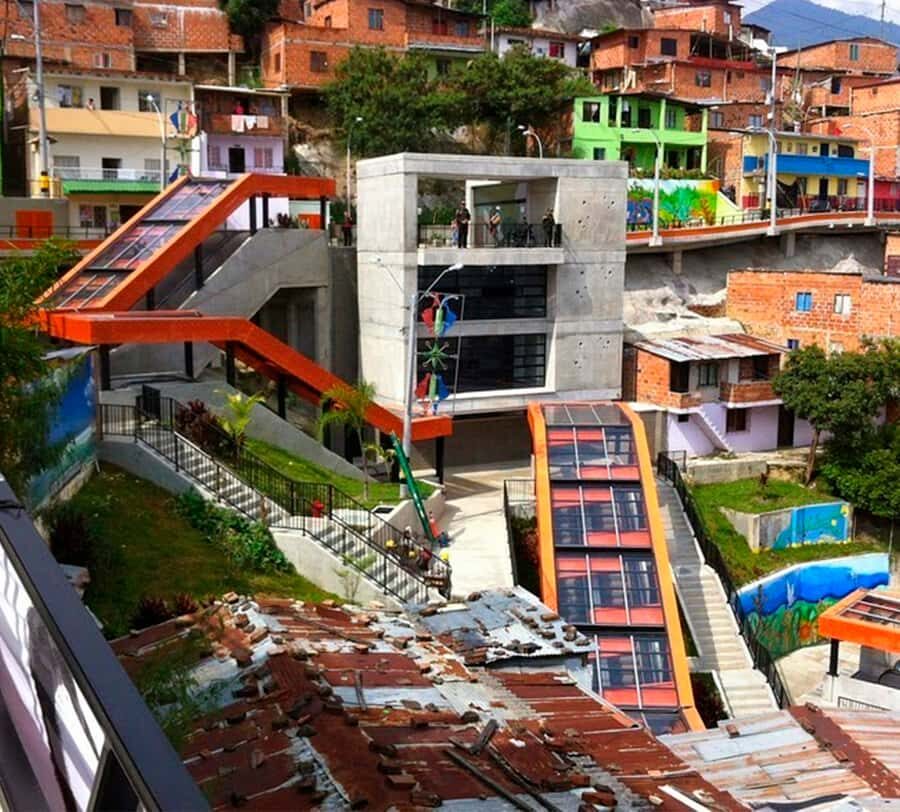
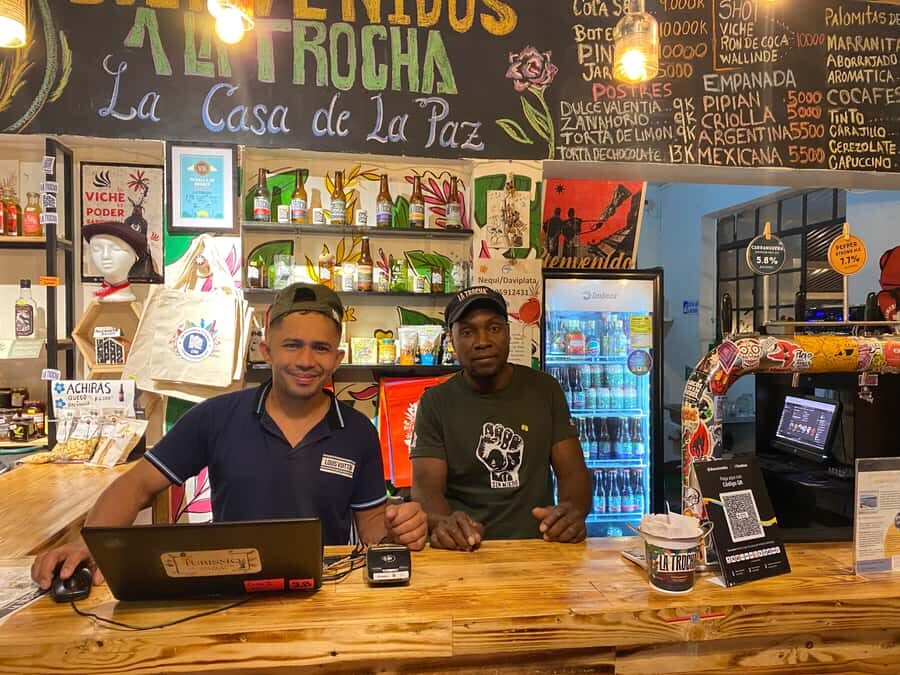
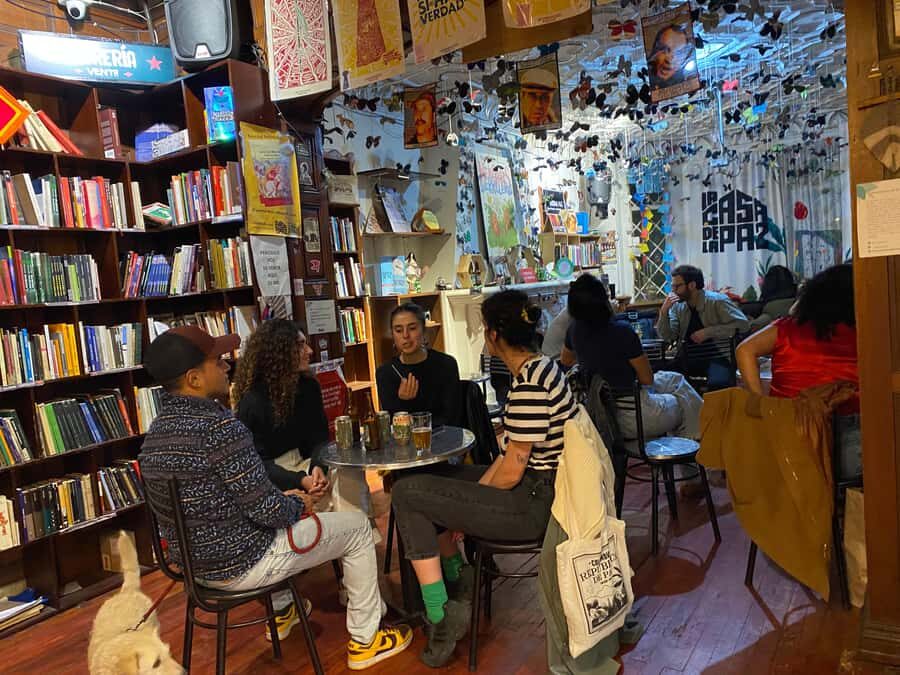
This is the emotional center of the tour. You’ll go to La Trocha, La Casa de la Paz for around 80 minutes, including an arts and crafts market visit.
Here, you taste viche, described as an ancestral sugarcane spirit, and you hear personal stories of transformation. The core idea is that ex-combatants are now building peace and using creativity and trade as part of the rebuilding process.
I really like how this stop turns a difficult subject into something you can engage with directly. You’re not just hearing about conflict as a headline. You’re meeting people shaping a new chapter and talking about what peace-building looks like at street level.
There’s also a safe, arts-facing atmosphere. Depending on what’s happening that day, you might notice performers and makers sharing messages. It can feel less like a lecture and more like a community space where you’re allowed to ask questions and listen.
One consideration: viche is a strong tasting. If you’re sensitive to alcohol or don’t love spirits, just be honest with the guide. The tour is built around tasting, but your comfort matters.
Getting the Most From the Small Group Experience (10 Max)
With small group size and a guide who speaks English, the experience feels less like following arrows and more like shared conversation. Guides can differ by day, and I’ve seen examples like Andrés being praised for making the chicha part both informative and fun, and Michael for keeping the overall flow pleasant and inclusive.
What this means for you: you can ask what you’re seeing and why it matters. You can also clarify terms as they come up—independence-era references, indigenous practices, and the peace-building stories at La Trocha.
In practice, this setup also helps with movement. You won’t get lost in a crowd, and the guide can slow down when someone has a question.
Price and Value: Why $42 for 4 Hours Isn’t Just Cheap or Expensive
At $42 per person for about 4 hours, this tour sits in a reasonable middle zone for Bogotá. What makes it feel like value isn’t only the transportation or the basic sightseeing. It’s the mix of included experiences that cost extra when you book separately.
You’re paying for:
- A hands-on chicha workshop
- Viche tasting
- Entrance to Manu Chao’s house
- Stops connected to historical sites and guided context
- A small-group English tour guide
If you add up typical costs for workshops, guided entry, and guided food tastings, the package starts to make sense. Plus, the human stories at La Trocha are hard to replicate on your own without knowing where to go and how to approach people with respect.
The one trade-off is that you’re not doing a long museum day with free time. You’re doing focused, story-based movement. If that matches your travel style, you’ll likely feel the value immediately.
Practical Tips So You Don’t Fuss While You Learn
Bring comfortable shoes—you’ll do enough walking that you’ll notice your soles. Add sunscreen and a hat because you’ll be outside during parts of the route.
Pack water, even if you think you can buy it. The tour is tight enough that it’s better not to hunt for it mid-route.
If you’re into photos, go for it, but remember the tour includes spaces tied to real communities and real work. Keep your phone use quick, ask permission when appropriate, and focus on listening when the guide is speaking.
Alcohol tastings can be the moment some people get surprised. Don’t. Use it as a chance to learn. Take small sips if needed, and treat it like part of the cultural lesson rather than a test of willpower.
Who Should Book Anti-Tour Bogotá
Book this tour if you want Bogotá with an opinion—one grounded in people, not just monuments. It suits you if you’re curious about independence figures like Policarpa Salavarrieta, interested in indigenous food traditions like chicha, and open to peace-building conversations tied to La Trocha.
It’s also a good fit if you like your guides interactive. The format encourages questions, and the tastings make it easier to connect with the stories.
Skip it if your ideal day is slow wandering through big sights, with lots of free time and minimal discussion of politics or conflict. This tour is more about narratives of resistance and resilience than about ticking off classic tourist icons.
Should You Book This 4-Hour Anti-Tour?
If your goal is to understand Bogotá beyond postcards, I’d say yes. This tour is built around included experiences—chicha, viche, and a visit tied to Manu Chao—and it also uses TransMilenio to show how the city actually moves. The small group size helps the stories land, and the La Trocha stop is the kind of moment that sticks.
If you’re unsure, think about your tolerance for strong tastings and for meaningful conversation. If that sounds like a good day, this one fits nicely. If you want only relaxed sightseeing, you might prefer a more traditional tour.
FAQ
How long is the Anti-tour Bogotá?
The duration is 4 hours.
What language is the tour guide?
The tour is offered in English.
Is it a small group tour?
Yes. The group is limited to 10 participants.
What experiences are included in the price?
Included are a hands-on chicha workshop, viche tasting, entrance to Manu Chao’s house, personal stories of transformation, and visits to historical sites.
What should I bring?
Bring comfortable shoes, a hat, a camera, sunscreen, and water.
Can I cancel for free?
Yes. Free cancellation is available up to 24 hours in advance for a full refund.
What’s the total price?
The price is $42 per person.