REVIEW · BOGOTA
Graffiti Tour: a fascinating walk through a street art City
Book on GetYourGuide →Operated by Capital Graffiti Tours · Bookable on GetYourGuide
Street art turns politics into walking lessons. This Bogotá graffiti walk connects what you see on walls with what’s happening in the city right now, with stops tied to the tallest illegal graffiti in Colombia and political posters focused on current social issues.
I love how the tour treats the street like a classroom. You’ll hear the stories behind the art, and you’ll also get context on Bogotá’s complex past, its present peace process, and what people hope for next. One thing to consider: valuables aren’t allowed, and you’ll be on your feet for about 150 minutes.
In This Review
- Quick hits before you go
- Why Bogotá’s graffiti matters beyond the walls
- Meet at the Gold Museum and get ready for a focused 150 minutes
- The tallest illegal graffiti in Colombia: what to look for
- Political posters and social issues: reading the city in plain sight
- False positives and community resilience in the face of removal
- How the guides connect technique, politics, and real context
- Price, value, and tipping logic for the shared option
- Who this tour suits best (and who might want to skip)
- Should you book this Bogotá graffiti tour?
- FAQ
- How long is the graffiti tour?
- Where is the meeting point in Bogotá?
- What does the tour cost?
- Are there multiple tour languages?
- Is the tour private or shared?
- Is the tour wheelchair accessible?
- What items are not allowed?
- Can I cancel or reserve now and pay later?
Quick hits before you go
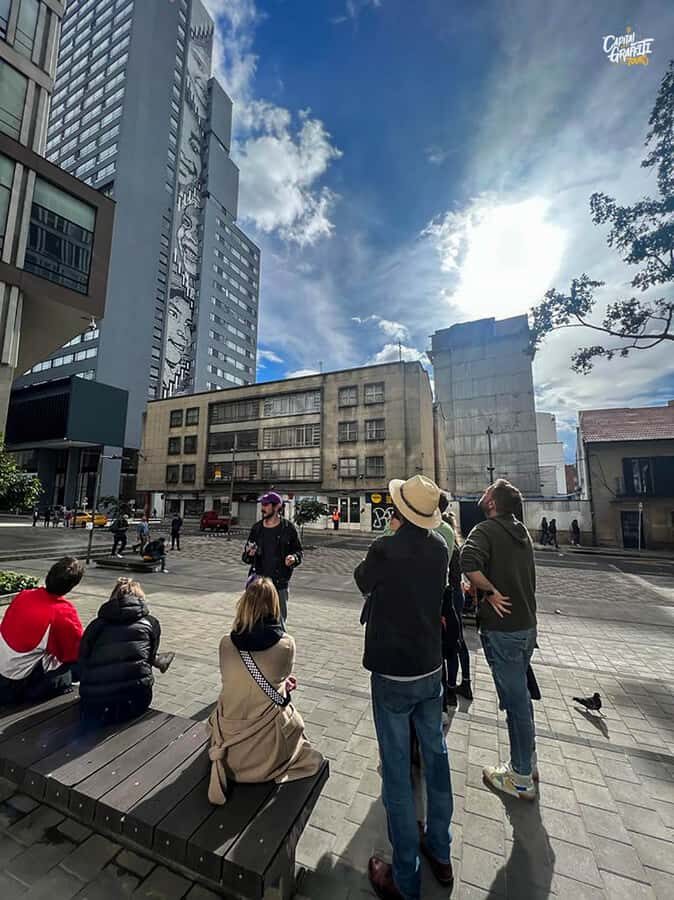
- Tallest illegal graffiti in Colombia: a standout visual proof of risk, craft, and message.
- Political posters with social issues: you’re not just looking, you’re reading the city.
- False positives and resilience: the community’s response to misunderstandings is part of the story.
- Local artists involved: the tour works with community leaders and artists on new murals.
- Artist-guides with political and historical context: you get more than labels for the art.
Why Bogotá’s graffiti matters beyond the walls
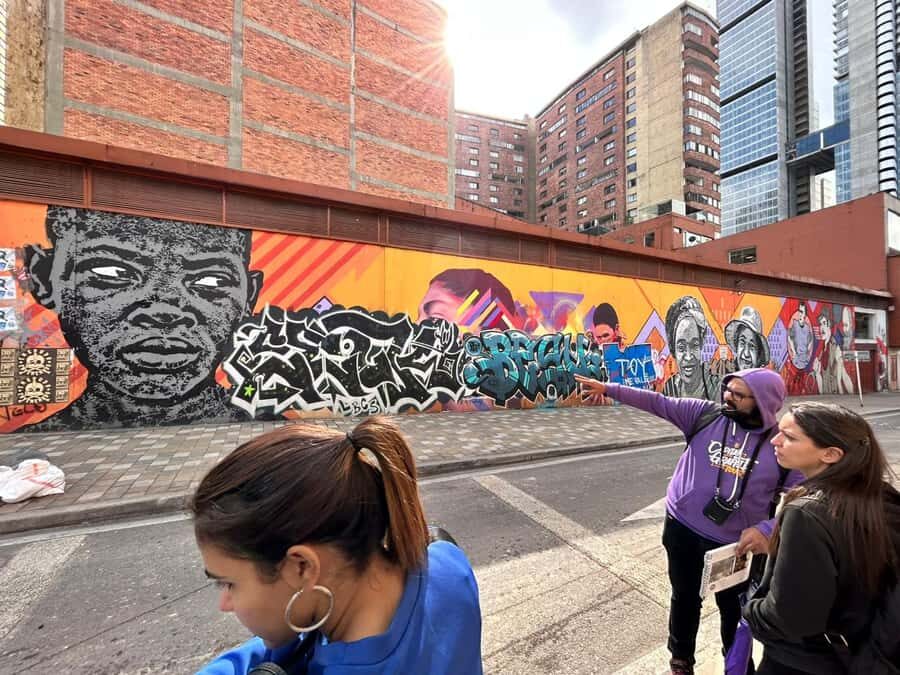
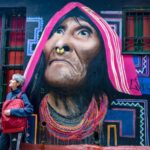
Bogotá street art isn’t only decoration. It’s a public conversation, written in paint, wheat-pasted flyers, and layered murals that respond to politics, trauma, and hope. On this walk, the goal is to help you understand why certain images appear where they do, and why people keep returning to the streets even when authorities or algorithms push back.
The tour is also built around a social impact model, not just a photo stop. Capital Graffiti Tours frames street art as cultural expansion and education, working closely with local artists and community leaders. That matters because it shifts your mindset from consuming street art to appreciating what it costs, what it risks, and who benefits when murals get financed and maintained.
You’ll walk away with a clearer sense of how art can hold space for complicated stories. And you’ll see that the street becomes an archive people update in real time.
You can also read our reviews of more walking tours in Bogota
Meet at the Gold Museum and get ready for a focused 150 minutes
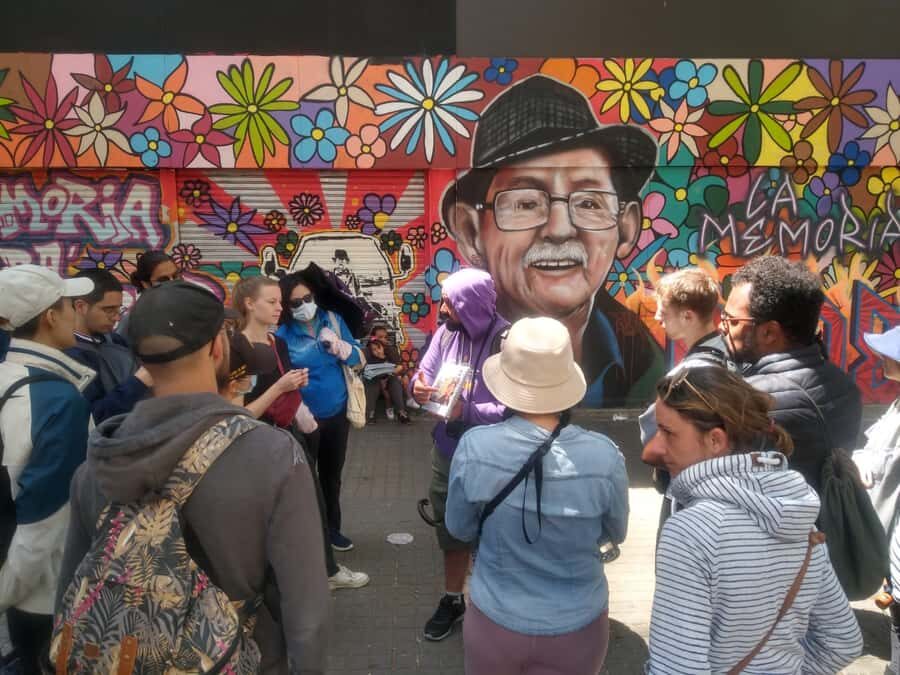
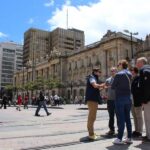
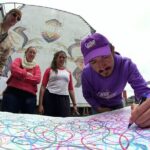
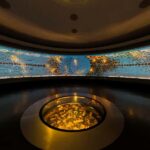
You meet next to the Gold Museum at Carrera 6 # 15-88. Look for your guide wearing a purple hoodie, cap, or carrying an umbrella. It’s a small detail, but it helps a lot when you’re arriving in a busy area and want to start without stress.
The tour runs for 150 minutes, so plan on a solid stretch of walking. Comfortable shoes are the boring answer, but it’s the right one here. You’re not just doing a quick loop for pictures; you’re doing a guided interpretation of multiple street art and graffiti locations.
This is also a live guided experience with English and other languages (you can choose among English, Spanish, Italian, French, and German). If you care about understanding the political context, picking the language you’re most comfortable with is worth it.
The tallest illegal graffiti in Colombia: what to look for
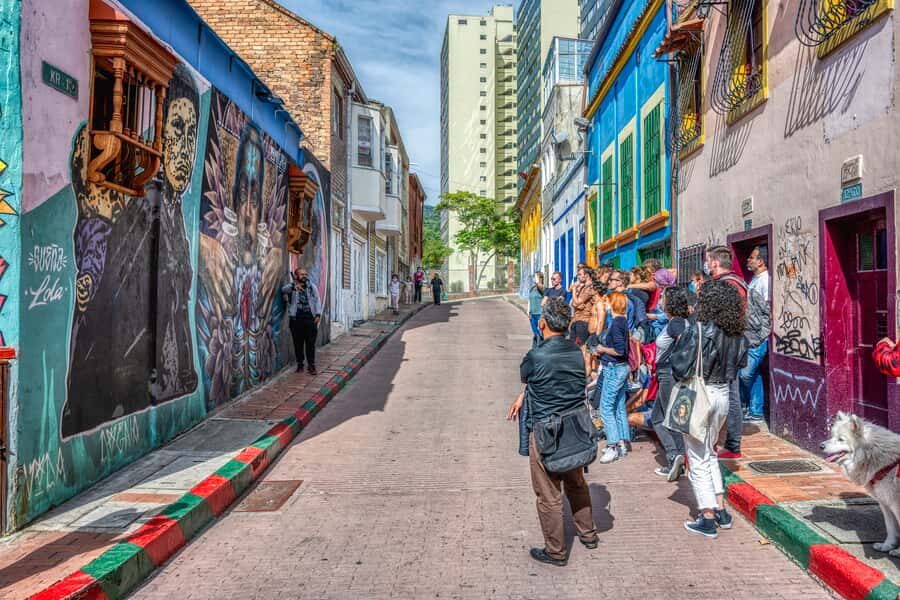
The headline attraction is simple to state and hard to forget: you’ll witness the tallest illegal graffiti in the country. That description matters because height isn’t only about scale. Taller pieces often demand more planning and more courage, and they tend to attract both admiration and attention that can put the artist and community under pressure.
What you’ll get from the guide is the meaning behind the visual choices. The tour is designed around the stories behind the art, so you’re likely to hear how the piece connects to Bogotá’s complex past and the city’s present struggles. Even if you’re not a street art expert, you can still follow the logic: what’s being said, who it’s for, and how the city responds.
A practical note: illegal street art exists in the gray zone of public visibility. That means images can be removed, covered, or contested. The tour’s emphasis on the resilience of the community helps you understand why people keep making art anyway.
Political posters and social issues: reading the city in plain sight
One of the most compelling parts is the area with political posters that address current social issues. This is where street art becomes less about style and more about messaging, framing, and persuasion.
Posters tend to be direct. They can be urgent. They can also be messy, because they’re often created in response to events moving quickly. As you walk through this kind of zone, you’ll start to see how public opinion forms on walls and sidewalks, not just in debates or headlines.
The tour’s description also connects street art with the city’s present peace process and aspirations for a better future. That’s important because it keeps you from treating political art as static. You’re seeing what people want to say now, under current conditions, using the visual language they can access.
Tip for you: don’t rush this section. Give yourself time to read what you can and listen to the guide’s framing. The more you treat it like a conversation, the more satisfying it feels.
False positives and community resilience in the face of removal
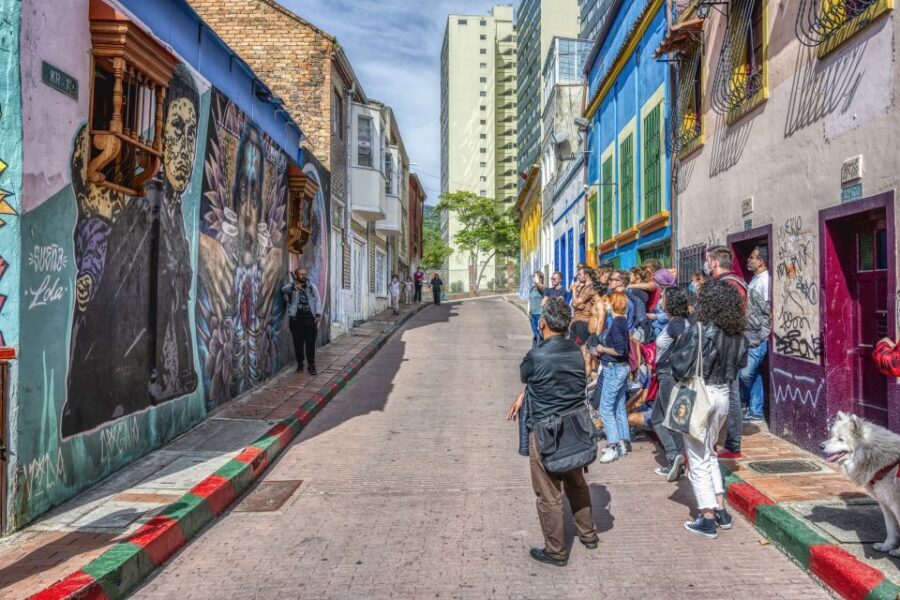
A highlight that deserves attention is the tour’s focus on resilience, specifically in the face of false positives. The idea here is that communities can be judged or targeted based on mistaken assumptions, and that can happen even when the intent is misunderstood.
So instead of treating street art as a passive object, this tour highlights what happens when art is vulnerable to intervention. You’ll see how people respond, how they protect the meaning, and how they continue expressing ideas publicly despite pressure.
This is where the tour feels most human. You’re not only learning about art techniques or styles. You’re learning about how communities carry stories, how they persist, and how they keep building even when circumstances are unfair.
If you like socially engaged travel, this segment is one of the reasons it’s worth your time. It turns street art from background noise into a story with stakes.
You can also read our reviews of more city tours in Bogota
How the guides connect technique, politics, and real context
What sets this experience apart is the guide approach. The tours are led by artists and promoters, not just people reciting facts from a script. That matters because street art interpretation needs more than definitions; it needs a sense of craft and motivation.
The guides introduce you to a range of artists and techniques, and they share sources of inspiration. You also get the political, cultural, historical, and geographical context needed to understand what you’re looking at. In other words, you’re not only learning what the art shows. You’re learning what shaped it, and why it lands with people where it’s painted.
This is also part of a wider social impact plan. The provider says it reinvests in financing and management of new murals that keep transforming the urban landscape. So the tour isn’t just documenting the city. It’s tied to ongoing community creativity.
For your planning: because the guide is central to the experience, language choice really matters. If your Spanish or French is strong, use it. If not, choose English so you catch every political nuance.
Price, value, and tipping logic for the shared option
The price is $15 per person for a 150-minute guided walk in Bogotá’s street art scene. For this time and level of interpretation, that’s a value you should feel good about. You’re paying for multiple stops, an experienced live guide, and explanation that turns visuals into context.
There’s also a specific note for the Shared option. Your payment per person equals the amount the provider suggests to tip the guides and cover their work (minus commission). At the end of the tour, you don’t have to pay anything extra, even if other participants tip.
That kind of transparency helps you budget without guesswork. It also fits the tour’s stated mission of cultural expansion and reinvestment, since the guides’ work is built into what you pay upfront.
If you prefer private time, the tour also offers private or small groups. In that case, you’d likely get a more tailored pace, but the exact pricing for that format isn’t specified in your details, so treat $15 as the shared baseline.
Who this tour suits best (and who might want to skip)
This walk is ideal if you want more than street art photos. It’s for you if you like travel that connects art to politics and community life, and if you enjoy learning from guides who treat murals like messages with meaning.
It also fits well if you’re comfortable walking for about 150 minutes and you can keep your belongings simple, since valuables aren’t allowed. If you’re carrying expensive gear or you don’t want to think about security, leave extras behind at your hotel and just bring what you need.
It may not be the best fit if your idea of street art is purely aesthetic, with no interest in context. The tour is explicitly pedagogical and cultural, and the political framing is part of the point.
Should you book this Bogotá graffiti tour?
If you want street art with a spine, this is a strong choice. The combination of seeing the tallest illegal graffiti in Colombia, stopping in areas tied to political posters, and learning about community resilience in the face of false positives makes the tour feel more purposeful than a standard “let’s look at murals” walk.
I’d book it if you care about understanding Bogotá as a living, changing place where art responds to real events. It’s also a good deal at $15 for 150 minutes with a live guide, especially with the Shared option’s clear tipping logic.
Skip it only if you prefer low-context sightseeing or you know you’ll struggle with a walking-focused 150-minute format.
FAQ
How long is the graffiti tour?
The tour lasts 150 minutes.
Where is the meeting point in Bogotá?
You meet next to the Gold Museum at Carrera 6 # 15-88. Your guide will be wearing a purple hoodie, cap, or carrying an umbrella.
What does the tour cost?
The price is $15 per person.
Are there multiple tour languages?
Yes. Live guides are available in English, Spanish, Italian, French, and German.
Is the tour private or shared?
Both are available. You can choose private or small groups, or the Shared option.
Is the tour wheelchair accessible?
The tour is marked as wheelchair accessible.
What items are not allowed?
Valuables are not allowed.
Can I cancel or reserve now and pay later?
Yes. You can reserve now and pay later, and you can cancel up to 24 hours in advance for a full refund.