REVIEW · BOGOTA
Candelaria Unveiled: Cool-tural Heritage Walking Tour
Book on GetYourGuide →Operated by Timeless Journeys · Bookable on GetYourGuide
Bogotá’s old streets come with real stories. This compact walk through La Candelaria mixes colonial architecture, political history, and art stops so you leave with a mental map that actually sticks. I especially like how the route threads founding myths and liberation-era figures through the places you can still see, and how you end at the Museo Botero instead of just stopping for a photo. One thing to plan for: the route includes cobblestones, so comfortable shoes matter.
The big value here is focus. For $16 per person and about 150 minutes, you get a guided storyline across some of Bogotá’s most important landmarks without feeling like you’re trying to “do everything” at once. If you’re lucky enough to get a guide like Sharik or Jorge (names that show up often in session feedback), you’ll likely get clear, direct answers as you walk.
If you want a slow, sit-down museum day, this isn’t that. Think of it as a guided orientation with a few museum and church entrances, not a full independent deep dive.
In This Review
- Key highlights you’ll care about
- Walking La Candelaria: what this 150 minutes is really for
- Starting at the Policarpa Salavarrieta monument
- La Concordia Market: crafts and the everyday side of culture
- Callejón del Embudo and the story hidden in a street
- Chorro de Quevedo: where Bogotá gets its founding story
- Teatro Colón and the arts side of colonial Bogotá
- Bolívar Square plus the power buildings you can’t miss
- Gabriel García Márquez Cultural Center and Manzana Cultural
- Iglesia San Ignacio and Casa de La Pola: faith and independence
- Palacio San Carlos: an old official residence in modern government territory
- Finishing at the Botero Museum: why the end point matters
- Price and value: $16 for a guided route with entrances
- Who should book this walking tour (and who might not)
- The most praised aspects to take seriously
- Should you book Candelaria Unveiled
- FAQ
- How long is the Candelaria Unveiled walking tour?
- Where does the tour start and meet?
- Where does the tour end?
- How much does it cost?
- What languages are the guides?
- What’s included in the price?
- What isn’t included?
- Is it wheelchair accessible?
- Is it suitable for very elderly participants?
- How flexible is the booking?
Key highlights you’ll care about
- A tight 150-minute route that gives you a usable overview of La Candelaria fast
- Founding-area storytelling at Chorro de Quevedo and the street geometry of Callejón del Embudo
- Politics and liberation on the street via places tied to Policarpa Salavarrieta and central government sites
- A guided stop in the Botero Museum so you finish with a clear art payoff
- Bilingual guide support in English and Spanish (handy if your group mixes languages)
- A price that stays low because the guide and some entrances are included
Walking La Candelaria: what this 150 minutes is really for
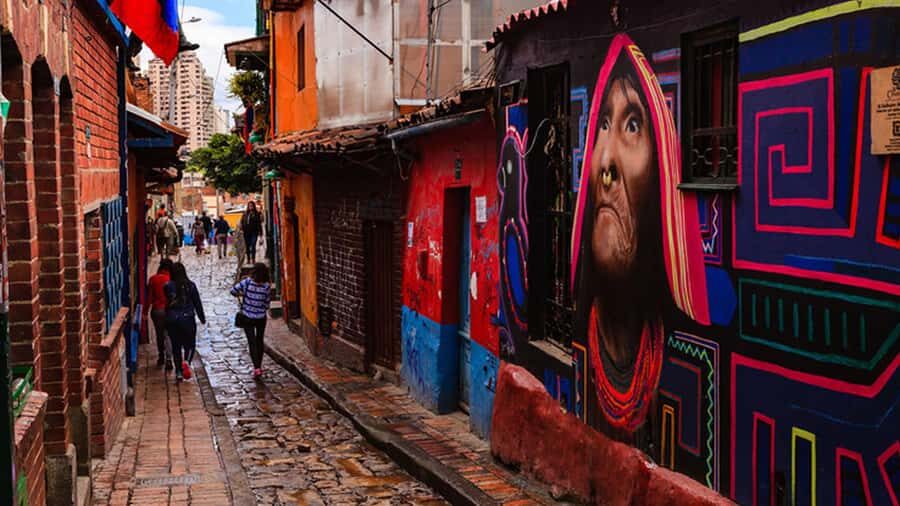
You’re not signing up for a random wander. You’re getting a route built around the ideas that shaped central Bogotá: conquest and founding, independence and propaganda, church power, and the way art shows up once a neighborhood becomes a cultural magnet.
With an experience time of about 150 minutes, you’ll cover enough ground to understand how these spots connect. That matters because La Candelaria can feel like a maze when you’re solo. I like tours that help you place buildings in your head, not just point at them.
Also, you start and end in a way that makes sense. You meet at the Policarpa Salavarrieta monument, then the walk pulls you toward the area’s biggest museum draw: the Botero Museum.
You can also read our reviews of more walking tours in Bogota
Starting at the Policarpa Salavarrieta monument
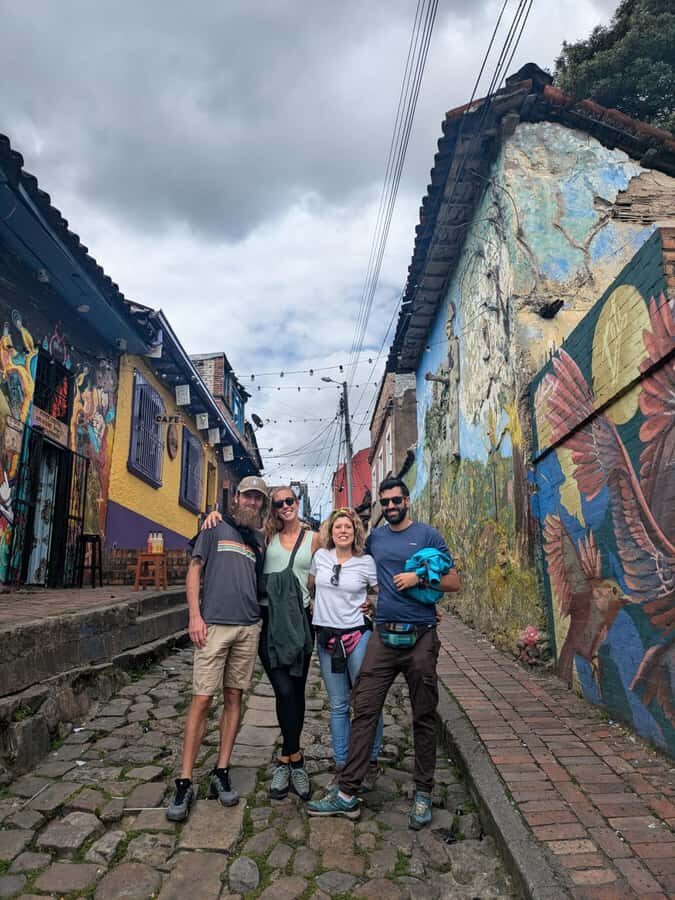
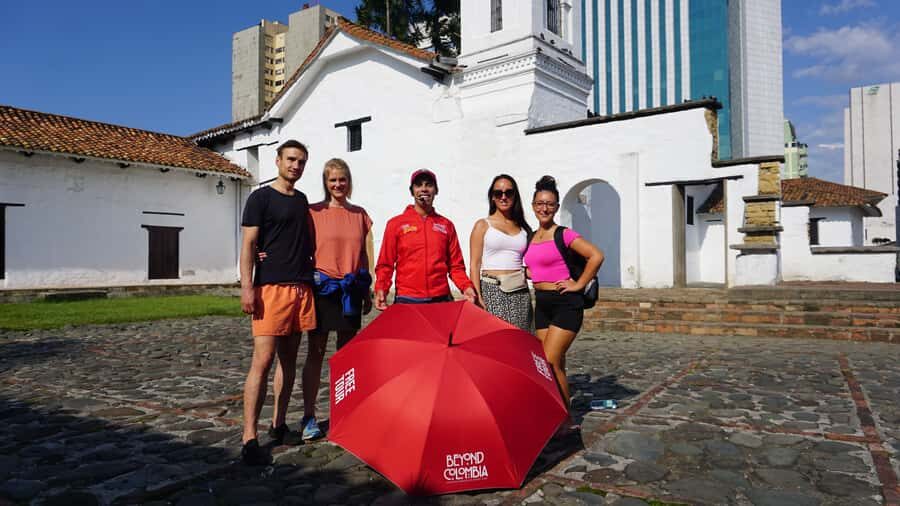
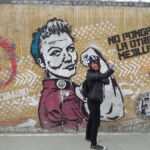
The tour kicks off at the Monumento a Policarpa Salavarrieta. That choice tells you what kind of walk you’re in for. Policarpa isn’t a generic statue; she’s a liberation-era heroine, and using her monument as a starting point frames the rest of the route through Colombia’s independence story.
Right away, you get a sense of the neighborhood’s two layers: the colonial-era architecture around you, and the later political narratives that people still repeat. If you’re into history that feels personal and local, this start is a smart move.
La Concordia Market: crafts and the everyday side of culture
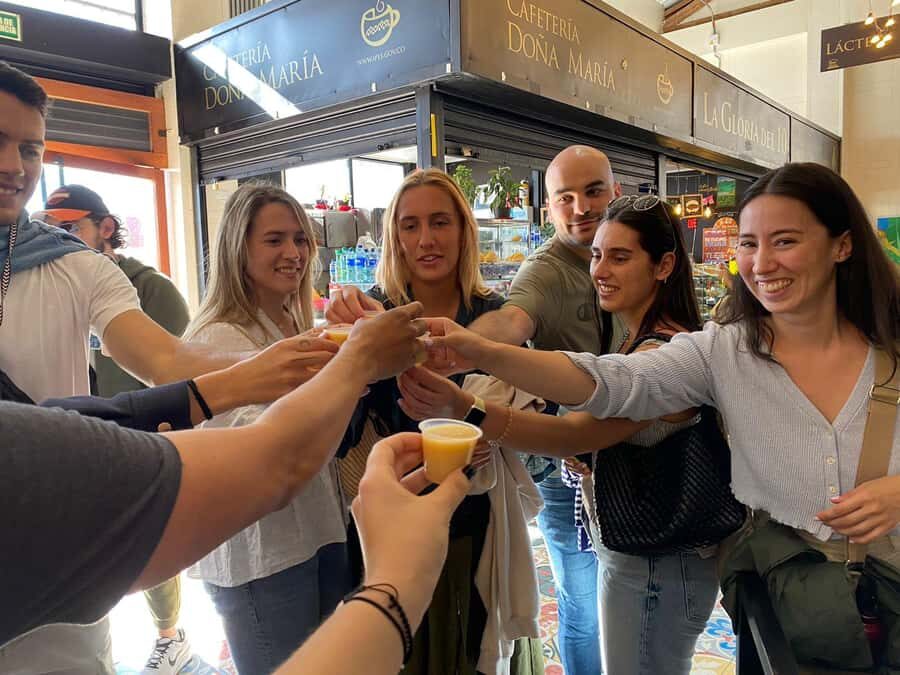
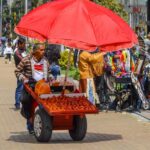
Next up is La Concordia Market at Plazoleta de la Concordia. This stop is more than a break. It’s where you see the “living city” side of La Candelaria: a place that mixes tradition with small shops and a farmers market vibe.
I like adding one market stop to an architecture-heavy walk. It keeps the day from turning into only stone and dates. You’ll also be better prepared for practical decisions after the tour—where to eat, what kinds of snacks and ingredients are popular, and how locals think about the area.
Practical tip: go with a small water plan. Even with guided pacing, you’ll be walking and looking up at buildings, and altitude in Bogotá can sneak up on you.
Callejón del Embudo and the story hidden in a street
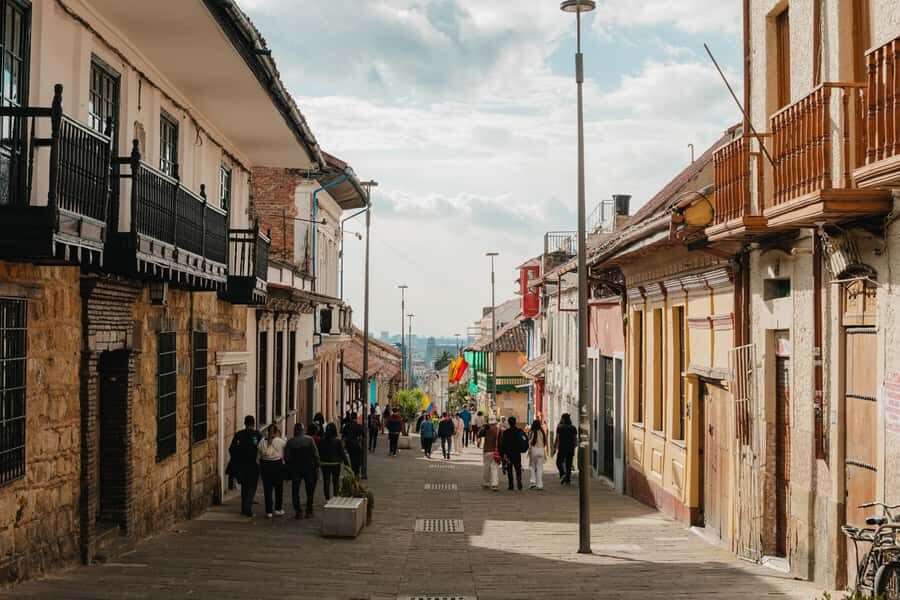
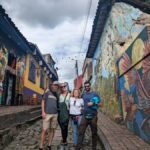
Then you hit Callejón del Embudo, the cobblestone street shaped like a funnel. This is one of those places where the street design is basically a historical artifact. Here, you’re not just seeing a pretty angle—you’re hearing about how the street relates to the edge of the ancient Quebrada de San Bruno.
That connection is the kind of detail that makes a neighborhood click. Water management, urban change, and the way older geography gets converted into streets are all part of why cities look the way they do.
One caution: cobblestones can be slick depending on conditions, and they’re hard on shoes that don’t have grip. If you’ve only got dressy sneakers, swap them for something with a solid sole.
Chorro de Quevedo: where Bogotá gets its founding story
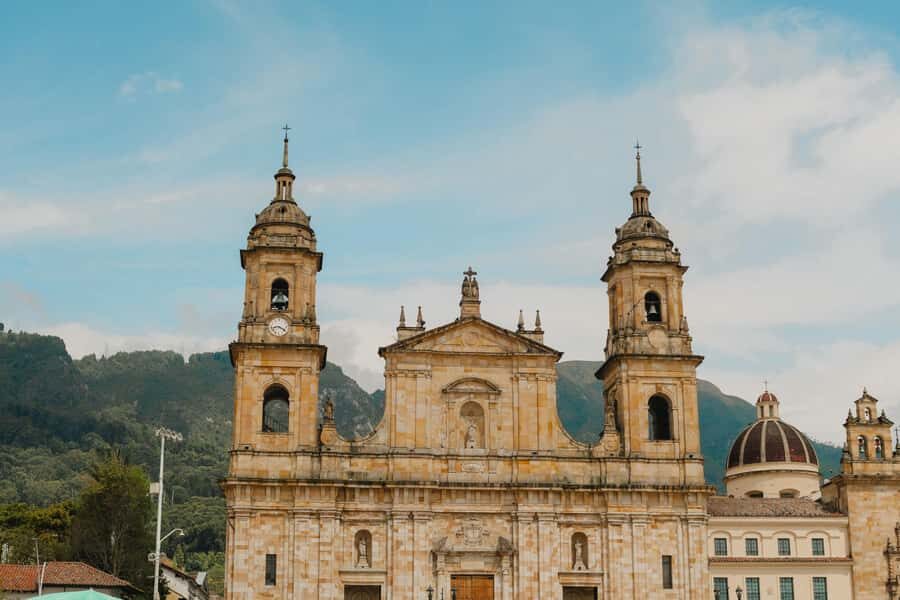
At Chorro de Quevedo Plaza, you’ll get the founding anchor: Bogotá is tied here to the Spanish conquistador Gonzalo Jiménez de Quesada, with the founding date given as 1538. This is a “big story” stop, but what makes it work is that it’s tied to a physical place you can stand in, look around, and connect to the rest of the walk.
I like how this kind of stop reframes everything that follows. When you’ve heard the founding context, the buildings and institutions around Bolívar Square make more sense. It also helps you understand why this neighborhood became central power territory over time.
If you’re the type who usually skips plaques, don’t. This is one of those times where the background turns into better sightseeing.
You can also read our reviews of more historical tours in Bogota

Teatro Colón and the arts side of colonial Bogotá
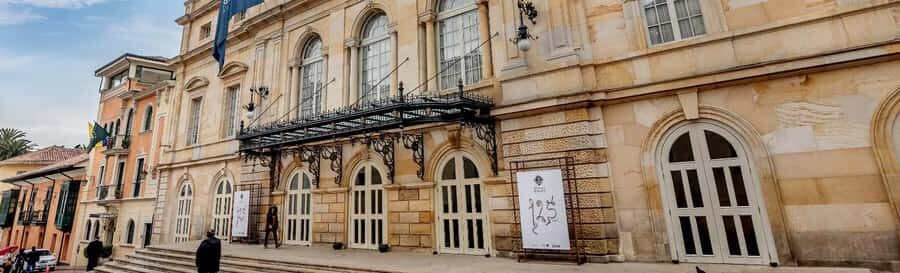
From the founding square energy, the walk continues to Teatro Colón, with guided context along the way. Even if you don’t go inside (the tour includes guided stops here rather than specifying a full performance), the point is to connect the city’s cultural institutions to the neighborhood’s identity.
I like that this tour refuses to be only political history and church exteriors. You get a sense that La Candelaria became a stage where art, prestige, and public life all overlap.
Look up often. In this part of Bogotá, architecture rewards curiosity: facades, balconies, and the way streets funnel toward landmarks.
Bolívar Square plus the power buildings you can’t miss
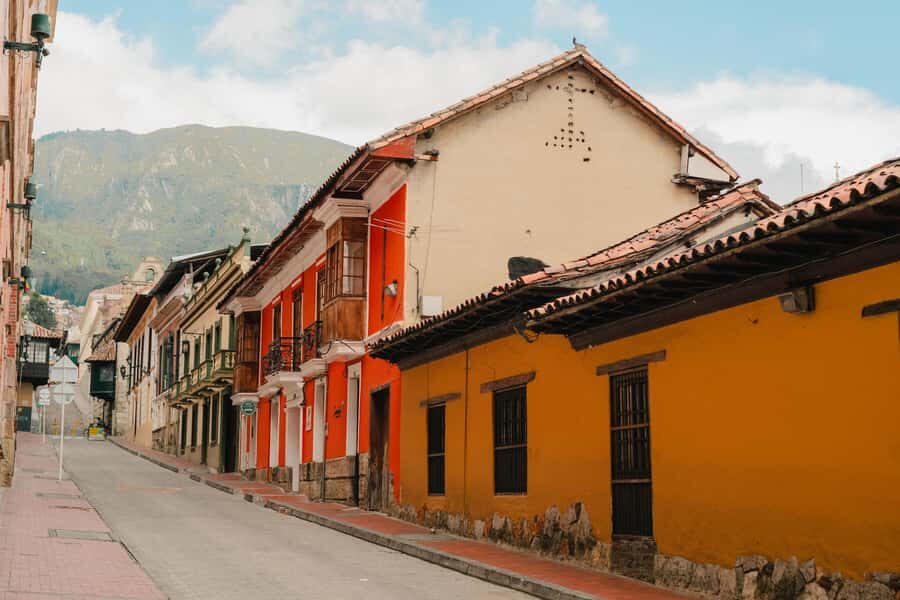
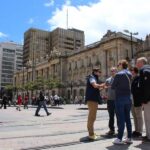
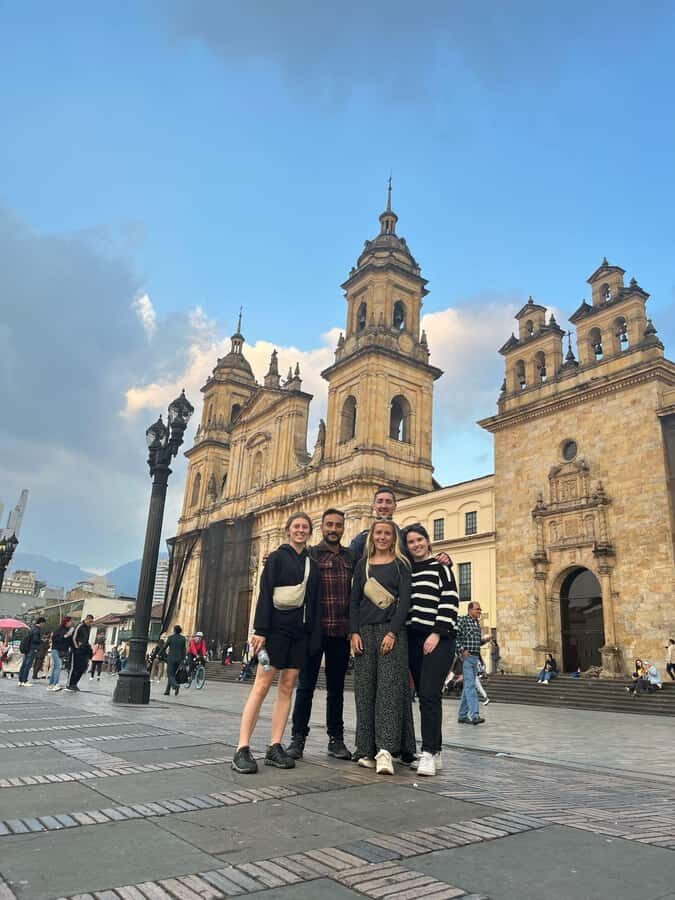
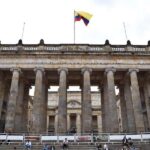
Next is Plaza de Bolívar, the heart of Bogotá, surrounded by landmark institutions like the Palace of Justice and the National Capitol. This stop is about more than photos. It’s the visible core of government power and national identity.
You’ll also likely hear how older colonial influences and later political developments shaped what happens in this area. That’s why Bolívar Square works as a middle-of-the-day anchor: you’re not just walking through; you’re passing by the place where national decisions play out.
Two practical notes:
- If crowds form, you may need a minute to get your bearings. The square is wide, but it can get busy.
- Bring a mental checklist for architecture details you care about—columns, doors, and the layout of adjacent buildings—because the guide will connect what you see to what the city was becoming.
Gabriel García Márquez Cultural Center and Manzana Cultural
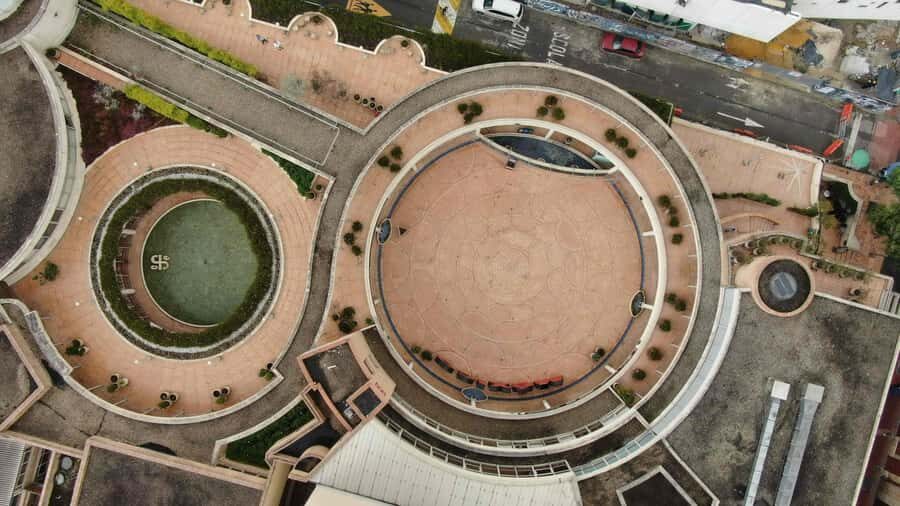
Then you move into the cultural cluster around the Gabriel García Márquez Cultural Center and Manzana Cultural, described as housing three of the most important museums, including the Botero Museum.
This is where the tour gives you an efficient handoff. Instead of sending you off wandering through a museum complex alone, you’re guided into a route that ends at Botero in a way that feels planned.
If you like the “story-to-art” transition, this is a good rhythm. Political and colonial context gives you the mental framework, then the museums and collections help you see how modern Bogotá talks about identity through visual culture.
Iglesia San Ignacio and Casa de La Pola: faith and independence
The route also includes stops tied to Iglesia San Ignacio, a Catholic religious temple built in the 17th century, plus Casa de La Pola, the residence of Policarpa Salavarrieta.
These two places land differently but they support the same theme: power. In one direction you have church influence anchored in a 1600s building. In the other, you have liberation-era memory living inside a residence tied to a specific heroine. Put together, they help you understand that independence wasn’t only battles; it was also messaging and symbolic history.
Iglesia stops are great on a walking tour because they slow you down. Your eyes adjust to textures—stonework, altars, and architectural details you’d miss if you only rushed between squares.
Palacio San Carlos: an old official residence in modern government territory
Another named stop is Palacio San Carlos, listed as the former official residence of the President of Colombia. Even if you’re viewing it from outside, the value is in how the building signals continuity and authority.
This is a good moment to connect the dots. When you’ve just spent time at Bolívar Square and surrounding institutions, Palacio San Carlos helps you see how the government footprint relates to the city’s layout and prestige.
For me, these exterior institutional stops are useful because they’re easy to recognize later, even after the tour ends.
Finishing at the Botero Museum: why the end point matters
You finish at Museo Botero / the Botero Museum. Since the museum is also referenced as part of Manzana Cultural, this end point isn’t random. It’s the “art payoff” after you’ve already learned how the neighborhood became a cultural hub.
This tour isn’t trying to replace spending a full afternoon inside museums. It’s built to get you oriented, then leave you with enough context that your museum time feels smarter. You’ll also already understand why this part of Bogotá is culturally concentrated.
Practical approach once you’re inside: pick a short list of works (the guide can help you choose during your visit), then look for themes instead of trying to see everything.
Price and value: $16 for a guided route with entrances
At $16 per person for about 150 minutes, the math works if you care about two things: guided context and a few included entries. The experience lists an expert guide and entrance to some museums and churches—not just “walk and look,” but also a little paid access.
This is exactly the kind of low-stakes first-day option I recommend when you want to understand a place before you start booking extra museum tickets. You also get bilingual guidance in English and Spanish, which is a real convenience if your travel group isn’t fully one-language.
If you’re trying to see all of central Bogotá independently, you’d spend more time bouncing between sites and guessing what matters most. Here, you’re paying for a route with a point.
Who should book this walking tour (and who might not)
This works especially well if you:
- want a fast, guided orientation to Bogotá’s historic center
- like history that’s tied to specific places, not just a slideshow of dates
- enjoy a mix of architecture, politics, church buildings, and art
It might be less ideal if you:
- need a very slow pace or lots of sit-down time
- dislike uneven surfaces like cobblestones
- want a full museum day with deep independent exploration
Also, it’s noted as not suitable for people over 95 years, even though the tour is listed as wheelchair accessible. If you’re traveling with mobility needs, you’ll want to confirm how the walking portions will fit your comfort.
The most praised aspects to take seriously
Based on the overall pattern of feedback, the two things that consistently make this tour worth it are:
- Guides who keep explanations clear while answering questions, instead of rushing you through stops.
- A good route flow, where the day’s story builds from founding context to independence-era memory, then finishes at a major museum.
If you care about getting your questions answered on the spot, this is the kind of tour where the guide’s style really affects the experience.
Should you book Candelaria Unveiled
Yes, I’d book it if your goal is to understand La Candelaria quickly and feel confident choosing what to do next. The route gives you a solid mix of key historic markers—Chorro de Quevedo, Bolívar Square, church and independence stops—and it ends with a real art destination instead of ending mid-street.
Skip it only if you want long museum hours or you’re allergic to cobblestones and lots of walking. Otherwise, this is a strong value way to start Bogotá with context, not confusion.
FAQ
How long is the Candelaria Unveiled walking tour?
The duration is listed as 150 minutes.
Where does the tour start and meet?
You meet in front of the Monumiento a Policarpa Salavarrieta monument.
Where does the tour end?
The finish point is at the Botero Museum.
How much does it cost?
The price is $16 per person.
What languages are the guides?
The live tour guide is available in English and Spanish.
What’s included in the price?
An expert guide is included, along with entrance to some museums and churches.
What isn’t included?
Anything not specifically listed as included is not included.
Is it wheelchair accessible?
Yes, the tour is listed as wheelchair accessible.
Is it suitable for very elderly participants?
It is noted as not suitable for people over 95 years.
How flexible is the booking?
It offers free cancellation up to 24 hours in advance for a full refund, and it also offers a reserve now & pay later option.